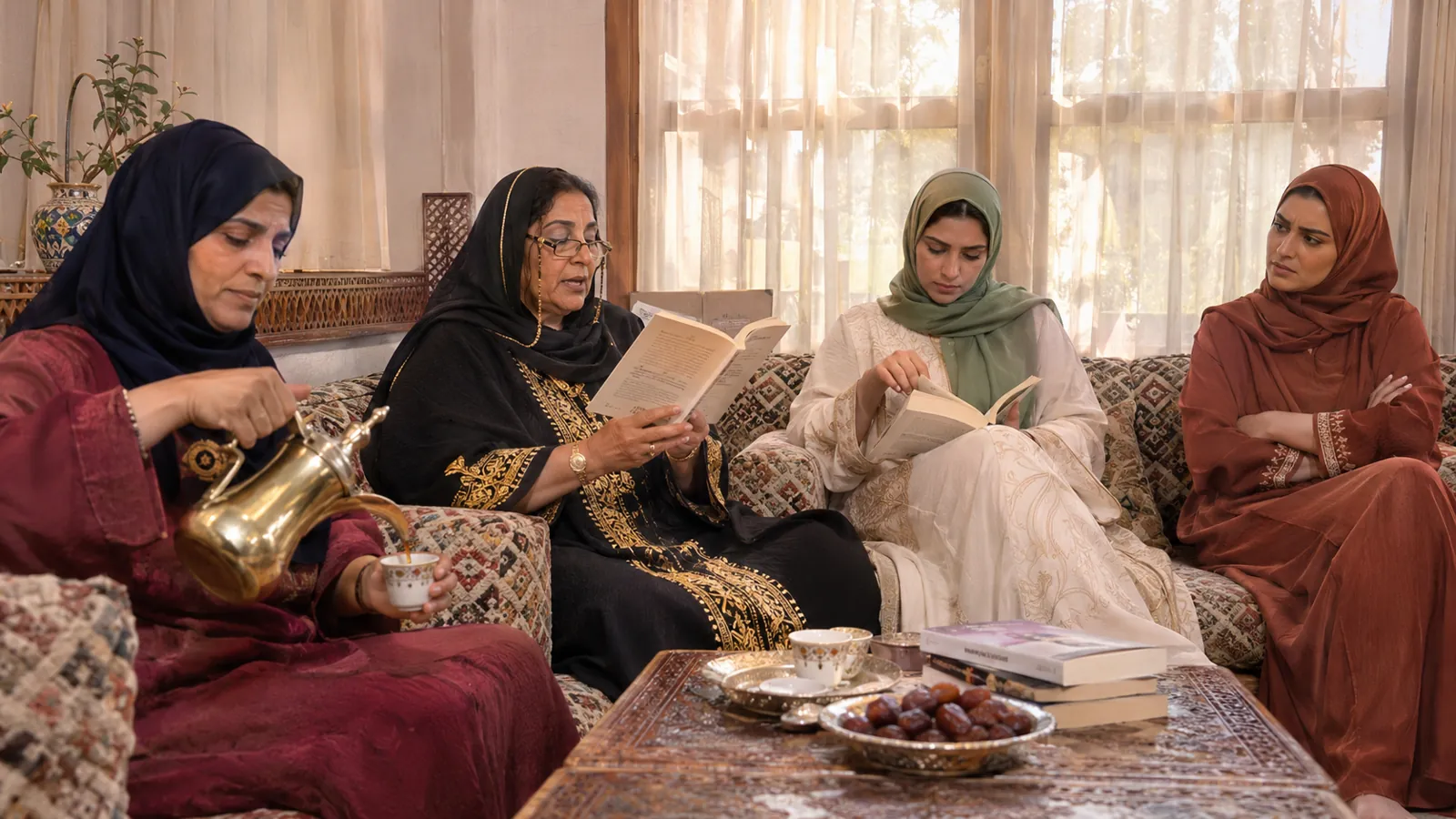
It is a Saturday morning in a café near the Creek. Five people sit round a table built for four, each with the same paperback, most of them with coffee going cold. One of them has read the whole thing twice. One has read half and is honest about it. One hated the ending so much she has brought notes. Nobody here knew anyone else in January. It is now November, and when the one who hated the ending starts talking, the others are already smiling, because they know exactly what she is about to say.
That table is not a real one, but you will find its cousins all over the city. It is also one of the gentlest ways there is to turn strangers into friends, for a reason that has very little to do with literature.
A book gives you something to talk about besides yourselves
The hardest part of meeting new people is the conversation about each other. Where are you from, what do you do, how long have you been here. It is polite and it is exhausting, and after the third round it feels like an interview nobody asked for.
A book takes that away. Everyone at the table has something in common before they have said a word, and the conversation has a subject that is not anybody's CV. You talk about a character, and without noticing, you end up talking about your mother. You argue about whether a decision in chapter twelve was brave or selfish, and you learn more about how the person across from you thinks than you would in a dozen evenings of small talk. The book is a side door. People walk through it and find themselves telling you things.
Why so many book clubs fade
If you have joined a book club before, there is a fair chance it quietly died. Most do, and they tend to die of the same three things.
The first is size. Someone starts a group, posts it online, and twenty-five people say yes. Eight turn up. The next month it is twelve different people, three of whom have read the book. With that many faces nobody gets to know anybody, and a discussion of twelve turns into two people talking while ten wait for a gap. By the spring, the organiser is sending messages into silence.
The second is the books. Somebody enthusiastic picks a seven-hundred-page Russian novel in a month with a work deadline and a school holiday. Half the group falls behind, feels guilty about it, and stops coming rather than turning up unread. A book club that makes people feel like they have failed homework will not last long.
The third, and the most fatal, is the date. "Let's find a time that works for everyone" is where good groups go to die. Every month becomes a round of polls and apologies, the meeting slips from the first week to the third, then to next month, and eventually nobody quite remembers when it was supposed to be.
How to start one that lasts
The fix for all three is mostly subtraction. Keep it small: five to eight people is enough for a proper conversation where everyone speaks, and small enough that a missing member is noticed and asked about.
Fix the slot and never negotiate it. The first Saturday of the month at ten, or the last Tuesday at half past seven, whatever suits the people you have. A fixed date means nobody has to organise anything, and people who miss one know exactly when the next one is. That repetition is the quiet engine of the whole thing. Rebecca Adams, a sociologist who has spent years studying friendship, describes three conditions friendships have always needed: being near each other, meeting again and again without having to plan it, and a setting where people feel able to open up. A monthly book club with a fixed date supplies all three.
Meet somewhere public and easy. A café with a big table and a tolerant manager, a bookshop with seating, a library. Nobody has to host in their flat, nobody has to clean, and new members are walking into a public room rather than a stranger's home, which matters to a lot of people and is simply the sensible way to meet someone new.
Choosing the books, and the host
Book choice is where groups quietly fall out, so give it a simple rule. Keep most picks under about 350 pages. Take turns choosing, and let the chooser pick from two or three options the group votes on, so nobody feels railroaded and nobody gets stuck defending a disaster alone. Mix it up: a novel, then something true, then a translation. Dubai is full of people from everywhere, which makes it a wonderful place to read a book set in someone's home country and then hear from that person what it got right.
Agree one thing early: people who have not finished are welcome. Say it out loud at the first meeting. Half-read is still a seat at the table, and the person who read a third of it will have opinions about that third.
Then rotate the host. The host is not the chooser. The host keeps the time, books the table, asks the first question and gently hands the conversation to whoever has not spoken. When one person does all of that forever, the group becomes theirs, and when they leave Dubai, as people here do, the group goes with them. Rotating the job shares the load and makes everyone feel it belongs to them. If you are nervous about the first one, our guide to hosting a small meetup covers the basics.
Libraries make a good home
It is easy to forget that Dubai has a serious library culture. The Mohammed bin Rashid Library, on the Creek at Al Jaddaf, is a striking building shaped like an open book resting on a traditional lectern, with reading rooms, a large collection in Arabic and English, and plenty of quiet space. It makes a lovely outing for a group that wants a change from a café.
The public libraries run by Dubai's cultural authority are spread across the city too, and many have reading and meeting spaces. Libraries have the great advantage of being places where reading is the point. Nobody hurries you out, and a book club feels at home rather than borrowed.
Sociologists would recognise all of this. Ray Oldenburg called places like these third places: not home, not work, but somewhere you go regularly and are recognised. A book club that meets in the same spot every month turns a building into one of those, and turns its members into regulars.
Joining one instead
You do not have to start from scratch. Bookshops, cafés and community groups around the city run reading groups, and many are friendly to newcomers. When you look at one, ask the three questions above. How many people usually come? How long are the books? Is there a fixed date? A group with small numbers, sensible books and a date that never moves is a group that will still exist in six months.
Then go three times before you decide anything. The first meeting is always a bit stiff, because you are new and everyone else has a history. By the third, someone will remember what you said last month, and you will start to feel less like a guest.
The conversation after the book
Here is the part most people miss. The friendship does not usually happen during the discussion. It happens afterwards, in the car park, on the walk to the metro, over a second coffee that two or three people stay for when the rest have gone.
That is where the talk drifts from the book to everything else: work, family, the flat with the broken air conditioning, the move someone is dreading. It is also where someone says "there's an exhibition in Alserkal next week, anyone want to go?" and the group starts to exist outside the first Saturday of the month. When that happens, protect it. Stay for the second coffee.
It helps to remember how slow this is. Jeffrey Hall at the University of Kansas estimated it takes roughly 50 hours together to go from acquaintance to casual friend, and around 90 to become a proper friend. A monthly book club on its own gives you perhaps two hours a month. The coffee afterwards, the exhibition, the walk are what bring those hours within reach in a year rather than a decade.
Where TruFriend fits
TruFriend has a book lovers circle built for exactly this: a small group of people nearby who like to read, with a quick question every week, so you are already talking about books before you meet. Any member can start a plan, setting the day, time, public place and number of spaces, and others in the circle join until it is full. A book club with six seats at a café on the first Saturday of the month is a plan like any other.
Tru, our assistant, learns what you enjoy, when you are free and how far you will travel, and introduces you to a few people nearby who fit, with the reasons you might get on. A conversation opens only when you both say yes, and every member's photo is checked, so everyone at the table is a real person. The coffee and conversation and art and culture circles are natural neighbours for the second coffee and the gallery trip.
Friendship only, for grown-ups aged 18 and over, and free for founding members. Join TruFriend: it takes a minute.
Don’t just read about it
Join a circle of people in Dubai who enjoy the same things. Members already on TruFriend can join from the app or suggest a plan in any chat.
 Book loversA friendship circle for readers in Dubai: talk about books, swap recommendations and visit libraries and bookshops together.
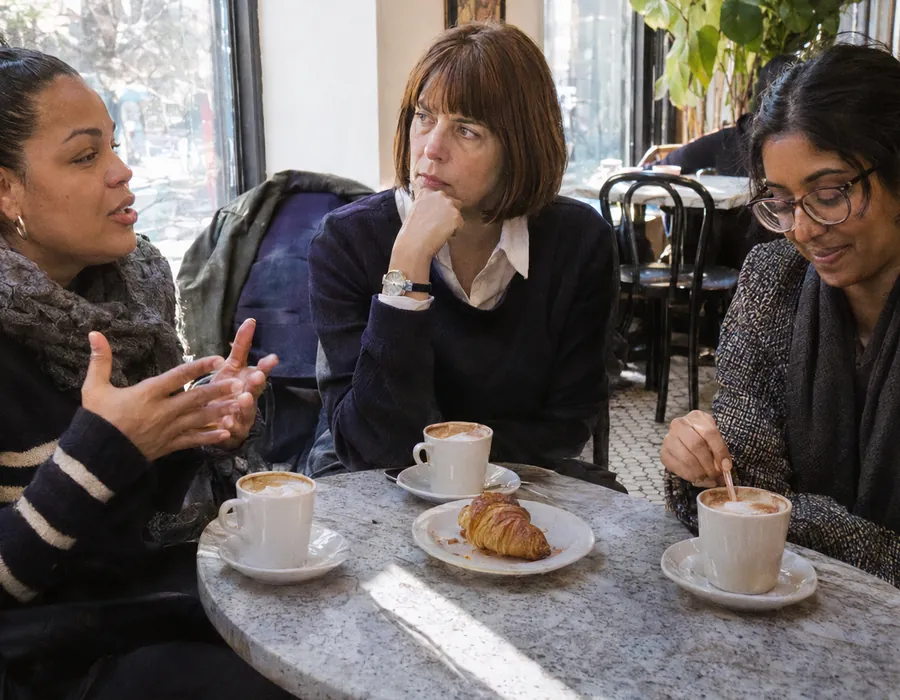 Coffee & conversationA friendship circle for people who enjoy cafés and unhurried conversation in Dubai. Low-pressure first meetings, close to home.
 Art & cultureA friendship circle for galleries, museums, theatre and live music in Dubai. Find people to see shows and exhibitions with.
Where to meet in Dubai
Public places picked for small groups of 3 to 10, sorted by interest and area.
Keep reading
 FriendshipHow to say no to a plan without losing the friend
 CirclesPhoto walks: seeing Dubai through a lens, with someone
 IdeasDubai Fitness Challenge: 30 days to meet people who move
 FriendshipWhen a new friendship feels one-sided
 FriendshipMaking friends after 50 in Dubai, when the house goes quiet
 CirclesWhy padel is Dubai's friendship machine
 FriendshipFriends across cultures: when your new friend grew up somewhere else
 CirclesLearning a language to make friends: the language exchange way
 IdeasMaking friends through volunteering in Dubai
 New in townMaking friends in Dubai when you work from home
 FriendshipMaking friends as a parent in Dubai, beyond the school gate
 IdeasDubai's outdoor season: plans with friends from the desert to the mountains
 ResearchWhy friendships fade, and how to rescue one before it goes
 FriendshipMaking friends as a couple in Dubai (and keeping friends of your own)
 CirclesWhy a board-game night turns strangers into friends
 FriendshipMaking friends in your 30s and 40s in Dubai, when everyone seems busy
 FriendshipMaking friends in Dubai when you work long hours
 FriendshipMaking friends as an introvert in Dubai
 New in townHow to stay friends when people leave Dubai (and how to keep building your circle)
 IdeasHobbies that help you meet people in Dubai
 ResearchFrom acquaintance to friend: the follow-up habits that matter
 IdeasWalking and running spots in Dubai to explore with a friend
 IdeasThings to do with new friends in Dubai this autumn
 CirclesHow to host a small meetup that people actually come to
 FriendshipHow to start a conversation with someone new (without dreading small talk)
 IdeasWhere to meet people in Dubai when brunch and bars are not your thing
 CirclesWhy joining a circle makes friendship so much more likely
 FriendshipIs it normal to feel lonely in Dubai? What to do about it
 IdeasThings to do in Dubai, and the reason your list never happens
 NewsTruFriend is now open in Dubai: real friendships, one good introduction at a time
 FriendshipHow to make friends in Dubai as a grown-up
 New in townNew to Dubai? How to build a social life in your first months
 ResearchHow long does it take to make a friend? What the research says
 SafetyHow to meet new friends safely in Dubai