It usually comes out over coffee, in a slightly apologetic tone. "So — we're moving back in March." And you say the right things, and you mean them, and underneath there is a small private flinch, because this is the third time in two years and you are beginning to wonder what the point of any of it is.
Everyone who stays in Dubai for a while goes through this. It is the tax the city charges for being what it is: a place almost everyone comes to for a chapter rather than a lifetime. And the way most people respond to it is quietly corrosive.
The protective reflex, and why it costs more than it saves
After a couple of departures, a lot of people start holding back without ever deciding to. You meet someone promising and some part of you does the arithmetic — how long are they likely to be here, is this worth the investment — and the answer shapes how much you give. You are friendly, you are good company, and you keep the door slightly closed.
It feels like sensible self-protection. What it actually produces is a permanent state of mild loneliness, in exchange for avoiding an occasional sharp one. Over five years, holding back costs you far more than the goodbyes ever would have.
There is also a false assumption underneath it: that a friendship which ends in a move was wasted. Two good years with someone are two good years. They are not devalued by what happens in year three, any more than a book is ruined by having a last page.
What actually survives a move, and what does not
Be realistic about this, because false expectations are what turn a manageable transition into a disappointment.
What does not survive, in almost every case, is the texture: the Tuesday game, the spontaneous message about nothing, the easy detail of each other's weeks. That was built on proximity and proximity is gone. Mourn it honestly rather than pretending nothing has changed.
What can survive is the relationship itself, at a lower frequency and a different shape. research from the University of Kansas found that friendship is built from accumulated hours, and a long-distance friendship is really a decision to keep accumulating them slowly. A proper catch-up every month or two. Knowing the big things. Being the person they message when something happens. That is a real friendship, just not a daily one.
The friendships that make it tend to have two features: they were genuinely close before the move, and at least one person is deliberate about maintaining them afterwards. The ones that fade are almost never ended by anyone. They just quietly run out of contact, three weeks at a time.
The mechanics of staying in touch
Goodwill is not a plan. Everyone means to stay in touch, and meaning to is exactly what fails.
The thing that works is a fixed point. A standing call on the first Sunday of the month, whatever the time zone costs. Something in the calendar, recurring, that neither of you has to propose each time — because proposing each time is the step that stops happening around week five.
Between those, send things with no occasion attached. A photo of the café you both used to go to. A screenshot of something they would find funny. "Saw this and thought of you" is a small act with a disproportionate effect: it says you think of them when they are not there, which is most of what a long-distance friendship is.
Ask about specifics rather than generalities. "How's the new city?" gets a polite non-answer. "Did the flat thing get sorted?" gets a real one, and it shows you were paying attention when they told you.
And be forgiving about the first few months. Someone who has just moved is drowning in admin and loneliness of their own, and their replies will be slow. That is not a signal about the friendship; it is week three in a new country, which you probably remember.
Time zones decide more than anyone expects
Whether a friendship survives a move often comes down to something completely unromantic: how many hours of overlapping free time you have left.
Someone who moves to London or Europe keeps a workable overlap — their morning is your afternoon, their evening is your late evening, and a call is easy to arrange. Someone who moves to India or Pakistan barely notices a difference. Someone who goes to the US west coast has effectively moved into your night, and every call becomes a negotiation that one of you loses; those are the friendships that fade fastest, and it is rarely about how much either person cared.
Knowing that in advance is useful, because it tells you where to put the effort. If the overlap is bad, stop relying on live calls and switch to long voice notes, which both of you can send and answer whenever you happen to be awake. It is a lower-grade form of contact and it is far better than three months of failing to find a mutual hour and then quietly giving up.
Visits change the arithmetic
One visit does more than a year of messages, and it converts a fading friendship back into a live one almost immediately.
This works in both directions, and Dubai is unusually good for it: people come back through here constantly, for work, for family, in transit. A friend with a nine-hour layover is a lunch. Ask people to tell you when they are passing through, and tell them when you are passing through theirs. Say it explicitly, because most people assume you are too busy and do not want to impose.
And when someone announces they are leaving, use the weeks before. People tend to go slightly quiet in that period — everyone is busy, it feels sad — and then regret it. Do the thing you kept saying you would do. Make the last few weeks count rather than politely disappearing early.
When it is you who is leaving
The same rules apply in reverse, with one addition: the person staying will assume you have moved on, because that is how it usually goes. Being the one who messages first in the early months does most of the work of keeping the friendship alive, and it is easy to forget when your own life is upside down.
Tell people specifically what you want. "I'd like us to keep this going — can we do a call every few weeks?" is a slightly awkward sentence to say out loud and it is worth far more than a vague promise to stay in touch, because it converts good intentions into something with a shape.
The side of it nobody mentions: being the one who stays
There is a specific fatigue that comes from being the person who remains. You are the one whose social circle keeps being rebuilt. You are always the one showing someone new around, always at the start of something, never in the settled middle.
Two things help. The first is to keep more than one or two close friendships going at a time, so a single departure does not empty the calendar. That sounds calculating and it is simply prudent in a city with this much turnover.
The second is to keep meeting people during the period when someone is leaving, not after. The instinct is to wait until the goodbye is done and then start again, which produces a gap of several months every time. Overlapping is how people end up with a stable social life here despite the churn.
Where TruFriend fits
We built TruFriend for a city where this is normal. Introductions are matched on where you live, when you are free and what you enjoy, so the friendships that form have the best chance of becoming regular rather than occasional — and regular is what survives.
Circles matter more than usual here too: a circle outlives any individual member, so when someone leaves the group carries on and you are not starting from nothing. That is a quietly important thing to have in Dubai.
Friendship only, for grown-ups aged 18 and over, and free for founding members. Request an invite and we will email you a personal invitation.
Don’t just read about it
Join a circle of people in Dubai who enjoy the same things. Members already on TruFriend can join from the app or suggest a plan in any chat.
 New in DubaiA friendship circle for people who have recently moved to Dubai: settle in, explore the city and build a social life with others doing the same.
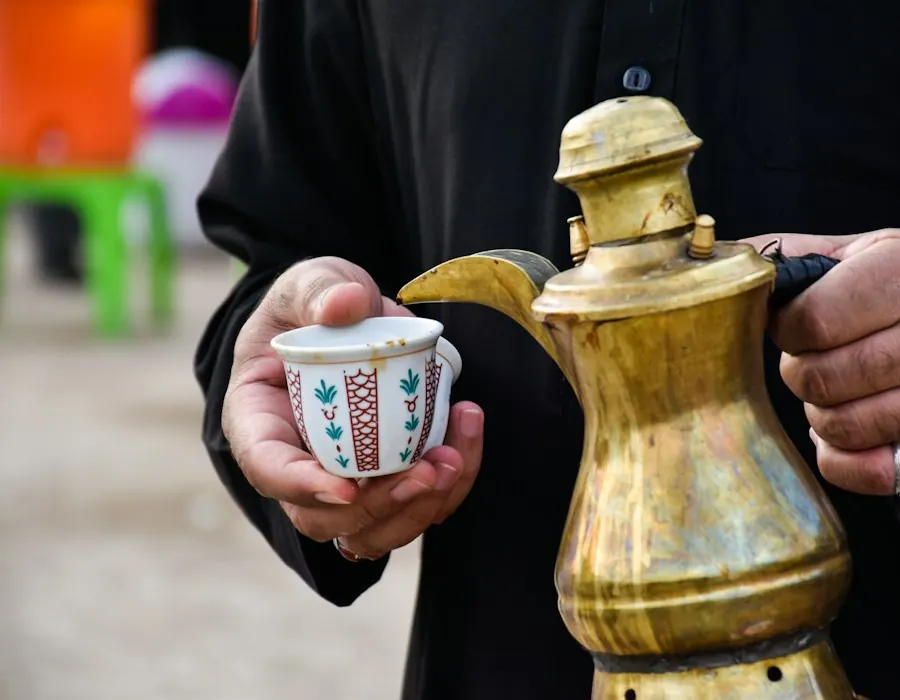 Coffee & conversationA friendship circle for people who enjoy cafés and unhurried conversation in Dubai. Low-pressure first meetings, close to home.
 Food explorersA friendship circle for people who love trying new restaurants, street food and home cooking in Dubai, and would rather explore with company.
Keep reading
 FriendshipMaking friends as a couple in Dubai (and keeping friends of your own)
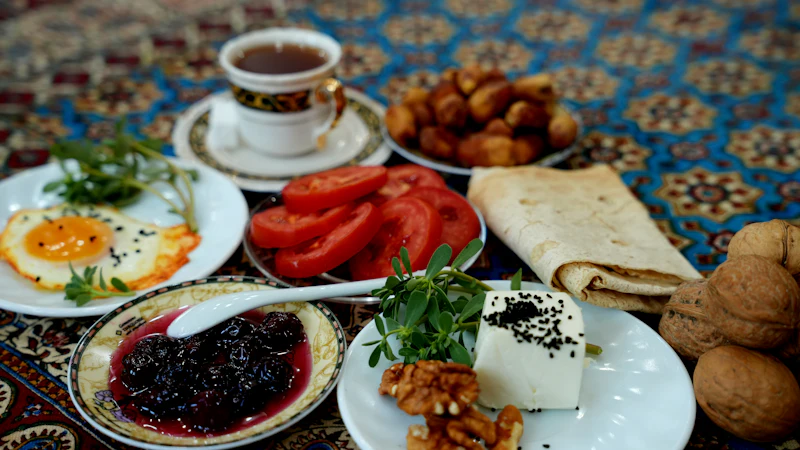 CirclesWhy a board-game night turns strangers into friends
 FriendshipMaking friends in your 30s and 40s in Dubai, when everyone seems busy
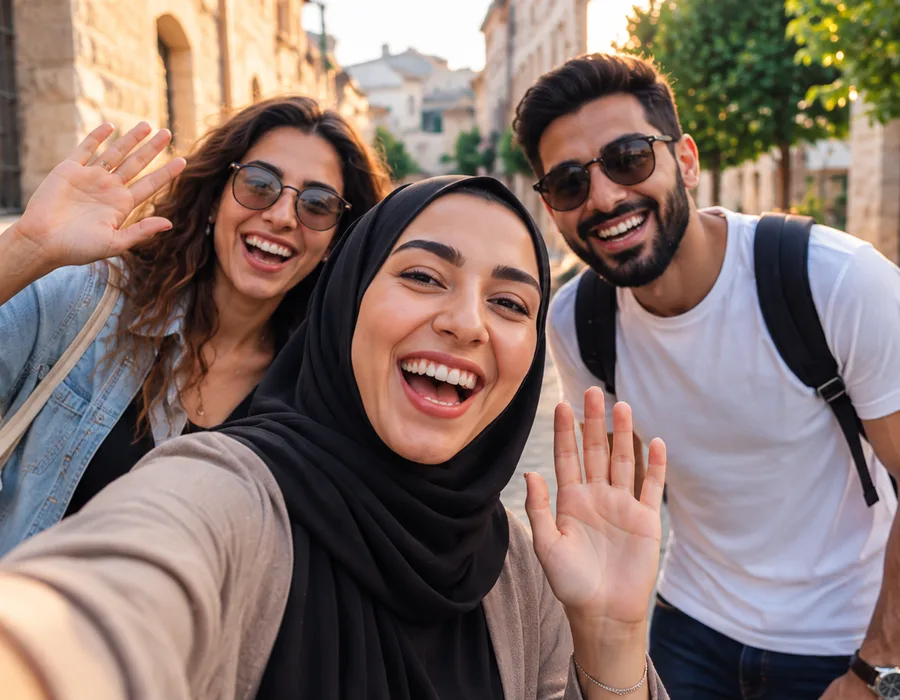 FriendshipMaking friends in Dubai when you work long hours
 FriendshipMaking friends as an introvert in Dubai
 IdeasHobbies that help you meet people in Dubai
 ResearchFrom acquaintance to friend: the follow-up habits that matter
- IdeasWalking and running spots in Dubai to explore with a friend
- IdeasThings to do with new friends in Dubai this autumn
- CirclesHow to host a small meetup that people actually come to
- FriendshipHow to start a conversation with someone new (without dreading small talk)
- IdeasWhere to meet people in Dubai when brunch and bars are not your thing
 CirclesWhy joining a circle makes friendship so much more likely
- FriendshipIs it normal to feel lonely in Dubai? What to do about it
- IdeasThings to do in Dubai, and the reason your list never happens
- NewsTruFriend is now open in Dubai: real friendships, one good introduction at a time
- FriendshipHow to make friends in Dubai as a grown-up
- New in townNew to Dubai? How to build a social life in your first months
- ResearchHow long does it take to make a friend? What the research says
- SafetyHow to meet new friends safely in Dubai