Picture a woman called Maya. She is a composite, but you have probably met her, or been her. She is 38, she has lived in Dubai for six years, and one Thursday evening in October she realises that she has not seen a single person outside work and family for a month. Not because anything went wrong. The two friends she used to meet for dinner in Jumeirah have moved, one to Lisbon, one to Muscat. Her colleagues are pleasant and busy. Her weekends go on school runs, a supermarket, a birthday party for somebody else's seven-year-old, and the washing.
She scrolls through her phone looking for someone to message and finds plenty of names, none of which feel like the right one to send "fancy a coffee on Saturday?" to without it being slightly strange. So she does not send anything. She goes to bed telling herself it is just a busy season.
It is not just a busy season. It is one of the most common and least discussed things about being in your thirties and forties, and it is worth taking seriously, because it is also very fixable.
Why it got harder, and why it is not your fault
At twenty, friendship happened to you. You shared a corridor, a lecture hall, a first job with thirty other graduates, a flat with people you had not chosen. The sociologist Rebecca Adams has described three conditions that friendships tend to grow from: being physically close, bumping into each other repeatedly without having to plan it, and a setting relaxed enough to confide in one another. University supplies all three without anyone lifting a finger.
Mid-life quietly removes them. You drive rather than walk, so you see nobody by accident. Your time is booked in blocks — work, children, parents, a partner, a mortgage or a visa renewal — and the unplanned hours in which friendships used to form have almost vanished. When you do have a free evening, so does nobody else, because their calendar is shaped exactly like yours.
Dubai sharpens all of this. Most people here arrived as grown-ups, so there is no school friend down the road and no cousin nearby. And people leave, often for good reasons, which means the friendships you built at 32 may not be here at 38. None of that says anything about whether you are likeable. It says the default settings have gone, and you now have to build what used to be handed to you.
The quiet assumption that everyone else is sorted
The thing that stops most people in Maya's position is not time. It is a belief: that everyone else their age already has their people, and that reaching out would look needy. You see the photos from other families' beach days and assume those groups are closed.
Mostly they are not. Many of the people who look settled are in exactly the same position, holding a handful of thinning friendships and waiting for somebody else to make the first move. The mother at the school gate who always seems in a hurry, the colleague who goes home straight after work, the neighbour you nod to in the lift — a surprising number of them would say yes to a coffee. They are simply not going to be the one who asks.
Being the one who asks
This is the part that takes a bit of courage, and it is worth naming because it gets harder with age. At twenty, rejection is cheap. At forty, you have a reputation, a sense of dignity and a strong preference not to feel like the new child in the playground.
But the ask itself is small, and it works best when it is specific. Not "we should get together sometime", which commits nobody to anything, but "I'm walking at Safa Park on Saturday at eight, do you want to come?" A clear time, a public place, an easy way to say no. If they say no, you have lost nothing. If they say "not this week, but yes", you have a friend in the making.
It also helps to accept that, for a while, you will be the organiser. That can feel unfair. It is also, in practice, how almost every grown-up friendship begins: one person decides to go first, and keeps going first until the other side starts to reciprocate. If you want some openers that do not feel forced, we collected a few here.
The maths of fewer hours
Research by Jeffrey Hall at the University of Kansas suggests it takes roughly 50 hours together to go from acquaintance to casual friend, around 90 to become a friend, and more than 200 to become close. At university you could rack those up in a term. With a job and a family, 200 hours looks faintly absurd.
It is less absurd when you stop thinking about big evenings and start thinking about repetition. An hour a week with the same person is 50 hours by the end of the year. That is one Saturday walk, one standing coffee, one book group. The hours do not need to be long. They need to be regular, and they need to be with the same people, which is why one-off events almost never work for people with full lives. We went through the numbers in more detail here.
Choose the setting that does the work for you
When Maya finally does something about it, she does not go to a networking evening or a brunch. She picks three small, repeating things that fit the life she already has.
The first is a Saturday morning walk. From October to April, Dubai's mornings are the best part of the week, and Safa Park, Kite Beach, Al Barsha Pond Park and the Creek are full of people doing the same loop at the same hour. Walking side by side is easier than sitting across a table. Nobody has to hold eye contact, and when the conversation pauses, the view fills the gap.
The second is coffee and conversation: the same café on the same weekday morning, with a small group who have agreed to show up. It sounds almost too simple. Its value is that it asks nothing except that you turn up, and after a few weeks the faces are familiar enough that talking stops being an effort.
The third is a book group. Mid-life readers are a particularly good crowd for friendship, because a novel gives you something to disagree about that is not politics or school fees, and people reveal a lot about themselves through what moved them and what annoyed them. Dubai has a real reading culture — Kinokuniya at Dubai Mall, independent bookshops and the Emirates Airline Festival of Literature every year — and a monthly book group is one of the easiest commitments to keep.
Why it is often deeper this time
Here is the part people do not expect. Friendships made at 38 or 45 are often better than the ones made at 20, not worse.
You know who you are. You are less interested in being impressive and more interested in being understood. You can spot quickly who is kind, who is reliable and who you actually enjoy, and you waste less time on the rest. You have lived through enough — a move, a loss, a career change, a child who does not sleep — to talk about real things early. Two people who have both been through a difficult year can reach in three months the kind of honesty that used to take three years.
Robin Dunbar's work suggests most of us have room for about five very close people and around fifteen good friends. In your thirties and forties you do not need to fill all of those layers at once. Two or three new friendships, properly tended, can change how living in this city feels.
Keeping it going once it starts
Dunbar's research also points out that friendships fade without contact, and mid-life friendships fade quietly. Nobody falls out. A few weeks pass, then a few months, and the thread is gone.
The fix is the same one that got it started: something that repeats. A standing Saturday walk, the first Tuesday of the month, a book group that meets whether or not everyone has finished the book. When you cannot make it, say so and suggest the next date in the same message. And when a new friend goes quiet, assume they are busy rather than uninterested, and ask once more. At this age, that second ask is often the one that makes the friendship. There is more on this in our piece on going from acquaintance to friend.
Where TruFriend fits
TruFriend was built for exactly Maya's Thursday evening. Tru, our assistant, learns what you enjoy, when you are genuinely free — early Saturdays, a weekday lunch, whatever your life allows — and how far you will travel, then introduces a few people nearby who fit, with the reasons you might get on. A conversation opens only when both of you say yes, so the hardest part of asking is already done.
Circles give you the repetition that mid-life removes. They are small groups around one interest, including coffee and conversation, walks and runs, and books, with a quick question every week so you already know a little about people before you meet. Any member can start a plan with a day, a time, a public place and a number of spaces, and others join until it is full. Every member's photo is checked, so everyone is a real person.
Friendship only, for grown-ups aged 18 and over, and free for founding members. Request an invite and we will email you a personal invitation.
Don’t just read about it
Join a circle of people in Dubai who enjoy the same things. Members already on TruFriend can join from the app or suggest a plan in any chat.
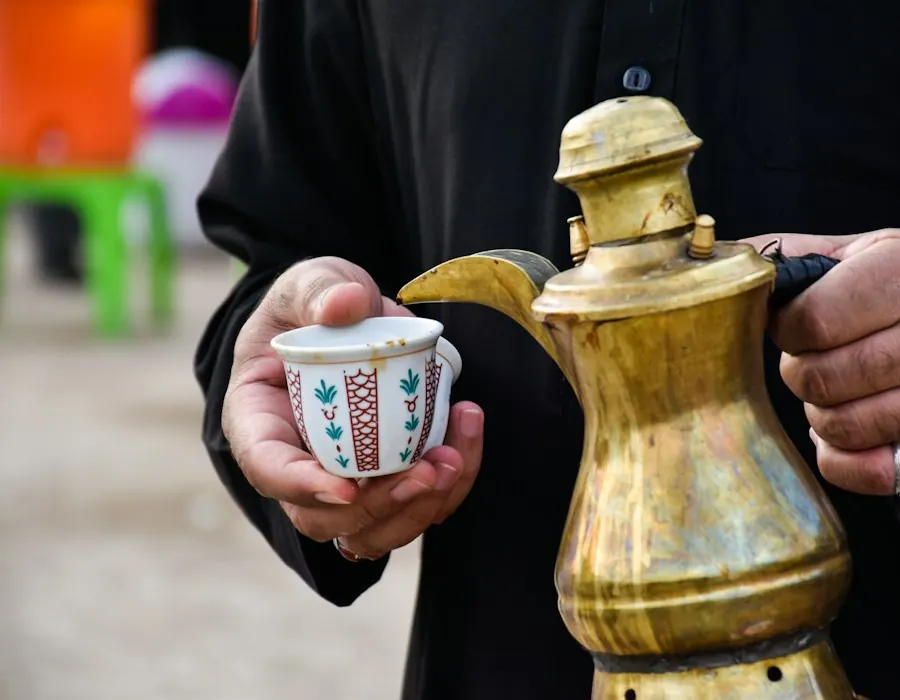 Coffee & conversationA friendship circle for people who enjoy cafés and unhurried conversation in Dubai. Low-pressure first meetings, close to home.
 Book loversA friendship circle for readers in Dubai: talk about books, swap recommendations and visit libraries and bookshops together.
 Walkers & runnersA friendship circle for people who like morning walks, evening runs and beach paths in Dubai. Find a regular partner at your own pace.
Keep reading
 FriendshipMaking friends as a couple in Dubai (and keeping friends of your own)
 CirclesWhy a board-game night turns strangers into friends
 FriendshipMaking friends in Dubai when you work long hours
 FriendshipMaking friends as an introvert in Dubai
 New in townHow to stay friends when people leave Dubai (and how to keep building your circle)
 IdeasHobbies that help you meet people in Dubai
 ResearchFrom acquaintance to friend: the follow-up habits that matter
- IdeasWalking and running spots in Dubai to explore with a friend
- IdeasThings to do with new friends in Dubai this autumn
 CirclesHow to host a small meetup that people actually come to
- FriendshipHow to start a conversation with someone new (without dreading small talk)
- IdeasWhere to meet people in Dubai when brunch and bars are not your thing
- CirclesWhy joining a circle makes friendship so much more likely
- FriendshipIs it normal to feel lonely in Dubai? What to do about it
- IdeasThings to do in Dubai, and the reason your list never happens
- NewsTruFriend is now open in Dubai: real friendships, one good introduction at a time
- FriendshipHow to make friends in Dubai as a grown-up
- New in townNew to Dubai? How to build a social life in your first months
- ResearchHow long does it take to make a friend? What the research says
- SafetyHow to meet new friends safely in Dubai