Nobody warns you that friendship becomes a skill. At school and university it was weather — it happened to you, because you were in the same room as the same people for years at a stretch, with nothing much else to do. Then you start working, you move cities, and one day you notice that the last close friend you made was seven years ago, and you have no idea what the mechanism even was.
In Dubai this arrives faster than elsewhere. Almost everyone here landed from somewhere else, most people's oldest friendships are in another time zone, and a good proportion of the ones they build here will leave within two years. It is a city with an unusual number of people who are sociable, well liked, busy — and who could not tell you who they would call on a bad Tuesday.
The encouraging part is that friendship is not mysterious. It runs on a small number of conditions, and once you know what they are you can arrange your life to produce them on purpose.
The conditions, plainly
Repeated contact with the same people, in a setting where talking is natural, over a long enough period. That is essentially it. Everything that follows is a way of manufacturing those three things in a city that does not hand them to you.
Notice what is not on the list: charisma, free time in large blocks, or a big existing social circle. The reason making friends gets harder with age is not that people become less likeable. It is that grown-up life stops producing repeated contact automatically. Offices half-empty with hybrid work, gyms where everyone wears headphones, buildings where you have lived for two years without learning a neighbour's name. The raw material has gone, so you have to supply it yourself.
Choose two or three things and keep going back
The most common mistake is variety. People sign up for a run club one week, a networking evening the next, a pottery taster after that, meet forty interesting people, and end the month with forty acquaintances and no friends. Forty single encounters do not add up to one friendship. Five encounters with the same four people almost certainly do.
So pick a small number of things you would genuinely enjoy even if nobody spoke to you — a weekly padel game, a running group, a class, a volunteering shift, a board-game night — and go back to them for at least two or three months. The early weeks feel unproductive. You go, you nod at people, you go home. Around week four something shifts: someone remembers your name, you end up walking to the car park together, and the conversation starts before the activity does rather than after it.
That shift is the entire return on the investment, and most people quit one or two weeks before it arrives.
Make it easy for the city to work in your favour
Dubai's geography is not neutral. A thirty-minute drive at eight in the evening will quietly kill a friendship that a fifteen-minute one would have sustained, and neither of you will ever name distance as the reason; it will just feel like you both got busy.
So weight your choices towards what is near you, near your work, or near your regular route. The neighbourhood gym you can walk to will get more of your life than the better one across town. A weekly coffee in your own area will survive a bad week; a monthly dinner in Deira when you live in the Marina will not. This sounds unromantic, and it is the single most reliable predictor of which of your new connections is still in your life next year.
Learn to make the small, specific ask
There is a sentence that has never produced a meeting in the history of the world: "we should hang out sometime". It feels friendly and it commits nobody. The version that works is smaller and more specific: "there's a quiz at that place on Tuesday, are you free?" "I'm walking the canal at six on Saturday, come along if you want." "Coffee near yours on Friday morning?"
The specificity does the work. It converts an open-ended obligation, which the other person has to plan, into a single yes-or-no question, which takes them two seconds. It also silently offers to do the organising, which is the real favour.
Keep the first one short. An hour with a natural end is far easier to accept than an evening that might run to four, particularly from someone you barely know. Nobody has ever regretted a plan that ended slightly too early.
Be the one who asks, and keep being that person
Almost everybody is waiting for someone else to suggest something. They would come if they were invited. They are not going to invite you, not because they dislike you, but because asking feels like exposure and most people avoid it indefinitely.
Which means the role is available, and whoever takes it ends up with the circle. Be the person who sends the message. Yes, sometimes people say no, or say yes and cancel, and it stings slightly. The ratio is worth it: a few hours of mild awkwardness spread over a year, in exchange for having a social life rather than waiting for one.
The other half of this is the follow-up, and it is where most new friendships in Dubai quietly die. The first meeting goes well, both people mean it when they say let's do this again, then the week starts and nobody writes. Send the message within a few days, while there is still something to refer back to. It does not need to be clever — "that was good, same time in two weeks?" is enough, and it is the difference between a pleasant afternoon and an actual friendship.
Groups first, then one to one
Meeting several people at once is much less exposing than meeting one, for both sides. Nobody is responsible for keeping the conversation alive, you can drift and listen, and you get to see who you naturally gravitate towards without having to decide in advance.
But a group is where friendships start, not where they deepen. At some point you have to take one person out of the group and suggest something just with them. That is the moment an acquaintance becomes a friend, and it is entirely on whoever is willing to say it first.
Expect it to take longer than it should
Research on how friendships form — Jeffrey Hall's 2018 study at the University of Kansas summary — suggests it takes a substantial number of hours together before someone moves from acquaintance to friend, and rather more again before they become a close one — we went through the numbers here. Spread across weekly coffees, that is months, not weeks.
This matters because of what people conclude in the meantime. Meeting three times and still feeling polite rather than close is not evidence that it is not working. That is exactly what the middle of the process feels like. Most people read it as failure and stop, which guarantees the outcome they were worried about.
The other thing worth knowing: you will invest in people who leave. Dubai does that. It is not a reason to invest less — the friendships are still worth having while they last, and some of them survive the move — but it is a reason to keep more than one or two going at a time.
Pick your regular place before you need it
Here is a small habit that makes all of the above easier: decide in advance where you take people. Not a list of twenty, just two or three places near you that you know work for a small group. A café with a big table and staff who do not rush you. A walking route with somewhere to sit at the end. A board-game café where nobody minds if you stay for three hours on one pot of tea.
When the place is already settled, the small, specific ask almost writes itself. "Coffee at the usual place on Friday?" is easier to send than a message that opens a discussion about where to go, and it is easier to accept, because the other person can picture it. After the third time it stops being a venue and becomes your place, which is quietly one of the things that makes a group feel like a group.
If you are still looking, we keep a list of places in Dubai that suit small groups of three to ten, sorted by interest and area: cafés where a long conversation is welcome, walking and running spots, and board-game cafés, among others. Choose the one closest to you, not the most impressive one. Closeness is what gets you back there in week four.
What TruFriend does about it
Everything above is harder if you do not know anyone to start with. That is the gap TruFriend fills: not another feed of strangers, and not an events listing, but a small number of introductions to people near you who would actually enjoy the same Saturday.
Tru, our assistant, learns what you enjoy, when you are usually free and how far you are happy to travel, then suggests a few people who fit, with the reasons you might get along. A conversation only opens when you both say yes, so nobody is turned down in public. Plans happen in public places. And circles exist precisely to supply the repetition this whole thing depends on — the same people, around one shared interest, week after week.
Friendship only, for grown-ups aged 18 and over, and free for founding members. Request an invite and we will email you a personal invitation.
Don’t just read about it
Join a circle of people in Dubai who enjoy the same things. Members already on TruFriend can join from the app or suggest a plan in any chat.
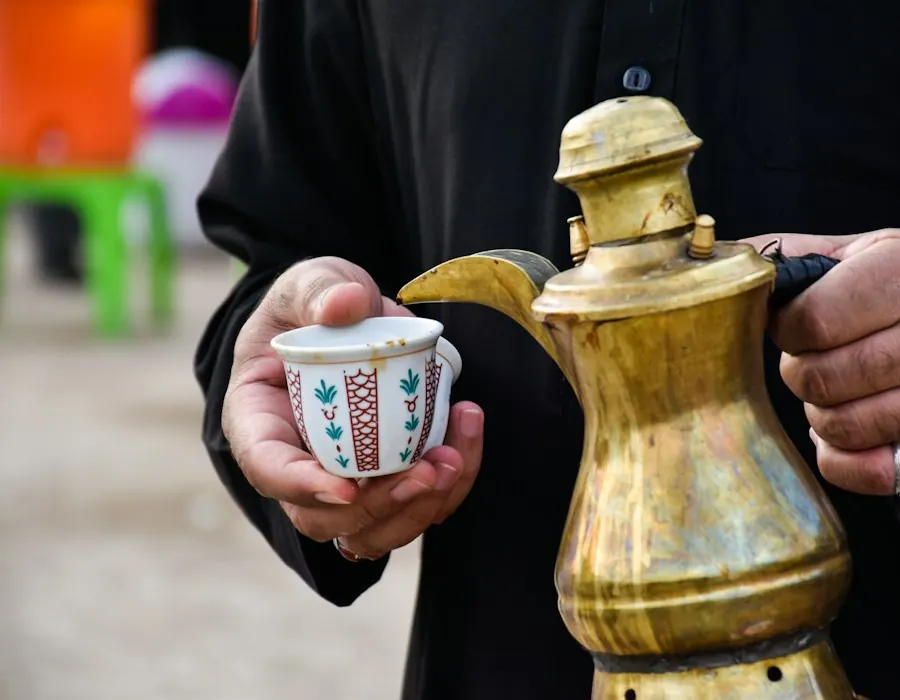 Coffee & conversationA friendship circle for people who enjoy cafés and unhurried conversation in Dubai. Low-pressure first meetings, close to home.
 Walkers & runnersA friendship circle for people who like morning walks, evening runs and beach paths in Dubai. Find a regular partner at your own pace.
 Board games & quizzesA friendship circle for board games, card games and quiz nights in Dubai. Meet people for friendly competition and easy conversation.
Keep reading
 FriendshipMaking friends as a couple in Dubai (and keeping friends of your own)
 CirclesWhy a board-game night turns strangers into friends
 FriendshipMaking friends in your 30s and 40s in Dubai, when everyone seems busy
 FriendshipMaking friends in Dubai when you work long hours
 FriendshipMaking friends as an introvert in Dubai
 New in townHow to stay friends when people leave Dubai (and how to keep building your circle)
 IdeasHobbies that help you meet people in Dubai
 ResearchFrom acquaintance to friend: the follow-up habits that matter
- IdeasWalking and running spots in Dubai to explore with a friend
- IdeasThings to do with new friends in Dubai this autumn
- CirclesHow to host a small meetup that people actually come to
- FriendshipHow to start a conversation with someone new (without dreading small talk)
- IdeasWhere to meet people in Dubai when brunch and bars are not your thing
- CirclesWhy joining a circle makes friendship so much more likely
- FriendshipIs it normal to feel lonely in Dubai? What to do about it
- IdeasThings to do in Dubai, and the reason your list never happens
- NewsTruFriend is now open in Dubai: real friendships, one good introduction at a time
- New in townNew to Dubai? How to build a social life in your first months
- ResearchHow long does it take to make a friend? What the research says
- SafetyHow to meet new friends safely in Dubai