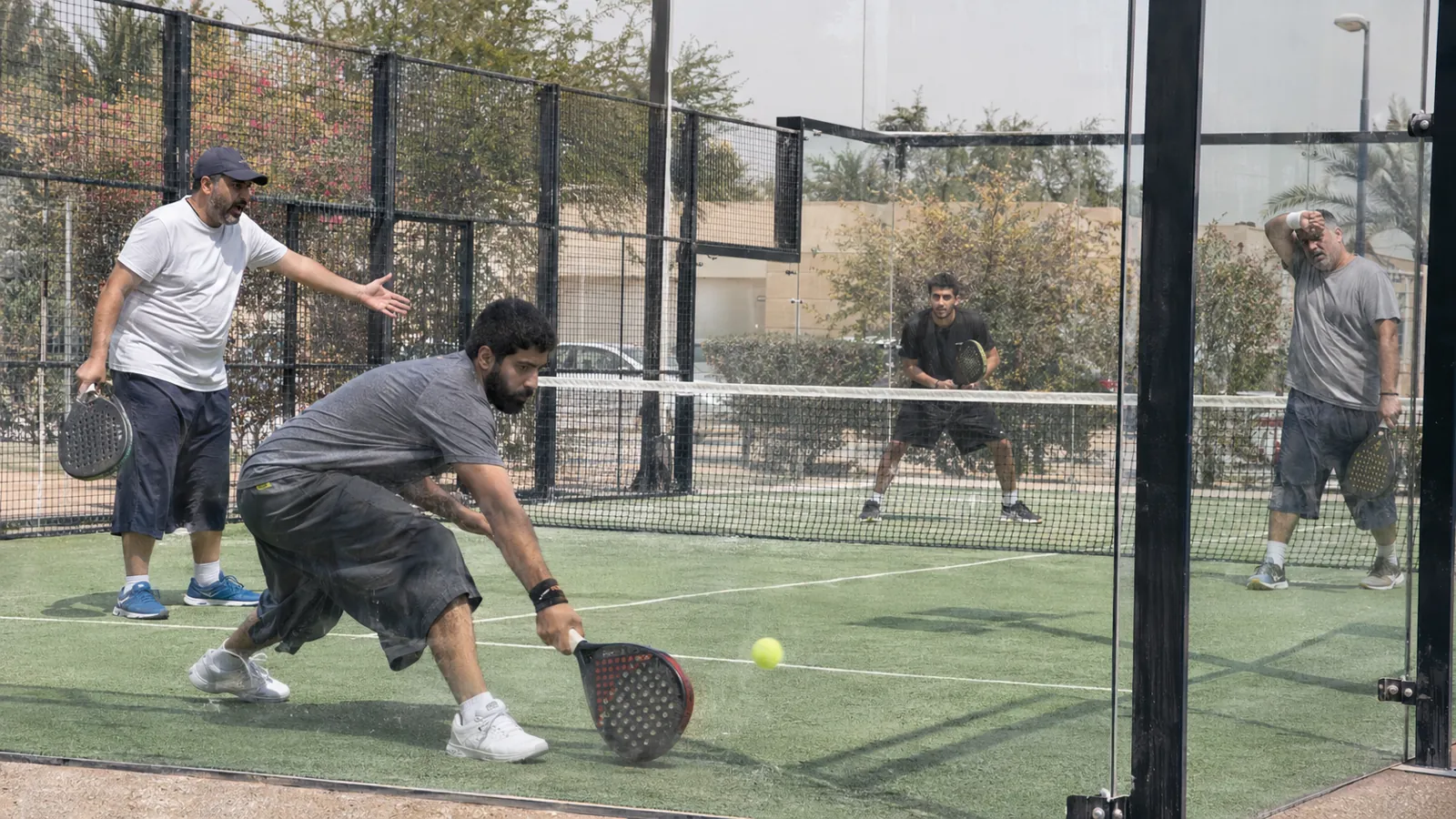
Fahad had played football every week through university, and then, the way it happens to so many people, he simply stopped. A new job, longer hours, friends who married and moved to other areas, and suddenly he was thirty-one and the most exercise he got was the walk from the car park to the office. A colleague mentioned that a few people from another department played padel on Tuesday evenings and needed a fourth. Fahad had never held a padel racket. He said yes mostly because it felt rude to say no.
That first Tuesday he hit the glass more often than the ball, apologised constantly and laughed more than he had in weeks. Afterwards the four of them sat outside the court with water and karak, still out of breath, and talked for forty minutes about nothing in particular. Driving home, Fahad realised he had not looked at his phone once all evening. Eight months later, that Tuesday game is the fixed point of his week, and two of the men he met there are among the first people he calls when something good or bad happens.
Why padel took hold in Kuwait
Anyone who has driven around Kuwait in the past few years has seen the courts appear: in sports clubs, beside malls, on rooftops and in converted warehouses, many of them indoors and air-conditioned so that the game survives the long summer. Padel suits the country well. It is quick to learn, the rallies are long even for beginners, and it is played in fours, which makes it social by design. You cannot really play padel alone, and you rarely play it in silence.
It also fits the rhythm of life here. A game lasts about an hour to an hour and a half, it can be booked for the evening after work, and it works across ages and fitness levels. A forty-five-year-old who has not played sport in years can rally comfortably with a twenty-five-year-old after a few sessions. That is unusual, and it is part of why padel groups in Kuwait often mix people who would never otherwise have met.
On the court, job titles disappear. Fahad’s group includes an engineer, a teacher, a man who runs a small family business and a recent graduate still looking for his first job. Off the court, their paths might never have crossed. On it, what matters is whether you call the ball, cover your partner and laugh when you miss. That equality is part of why friendships form so easily. Nobody is performing their status. Everyone is just a player who wants the next rally to be a good one.
Why a game makes friends faster than a dinner
Friendship researchers often point to three things: repeated contact, shared activity and a little vulnerability. Padel offers all three in a single hour. The same four people meet at the same time each week. They do something together rather than sitting across a table searching for topics. And everyone looks a little silly at some point, missing an easy shot, mistiming a smash or running into the glass. Laughing at yourself in front of others is one of the fastest ways to make people comfortable around you.
There is also something about standing side by side rather than face to face. Many people, men especially, find it easier to talk while doing something together. Conversation on a padel court starts with the score and the shots, then drifts. By the third or fourth week, the chat between games includes work, family and the small news of the week. Nobody planned it. The game simply gave the friendship a reason to keep happening.
The weekly slot is the secret
The single most important decision Fahad’s group made was not about rackets or courts. It was to fix the time. Every Tuesday at eight, the same court if possible, booked in advance by whoever’s turn it was. Because the slot was fixed, nobody had to organise anything each week. Nobody had to ask “are we playing?” The answer was always yes unless someone said otherwise.
Groups that try to find a time each week by group message tend to fade within a month. There is always a reason why this week is difficult, and without a default, the difficult weeks win. A fixed slot turns friendship from something you arrange into something that just happens. If you are starting a padel group, agree on one evening and protect it the way you would protect a regular meeting at work.
It helps to rotate the small jobs. One person books the court this month, another next month. One person brings the spare balls. When the effort is shared, nobody quietly becomes the organiser who resents carrying everyone, and nobody feels like a guest who could disappear without being missed.
Finding your level, and your people
The most common worry newcomers have about padel is that they will not be good enough. In practice, padel groups sort themselves out quickly. Some people want competitive matches and keep score seriously. Others are there for the exercise and the conversation, and the score is a rough idea at best. Both are fine, but it helps to be honest early about which you are looking for. A beginner in a fiercely competitive four will feel awkward, and a strong player in a gentle social game will get bored.
If you have never played, a beginner lesson or two with a coach is worth it, mostly so that you learn the basic rules about the walls and the serve and feel less lost. Many clubs in Kuwait offer group sessions for beginners, which are themselves a good place to meet people at the same stage. Someone who struggled with the same shot as you on a Saturday morning is already halfway to being a padel partner.
What happens after the game
Ask anyone in a long-running padel group, and they will tell you the friendship is built as much off the court as on it. The twenty minutes after the game, sitting outside with a drink, cooling down and replaying the best point, is where people start to know each other. Fahad’s group has a simple habit: nobody rushes off straight after the last point. Even on busy weeks, they sit for a quarter of an hour.
Over time, that habit grew. First it was karak after the game. Then it became a monthly dinner on a Saturday, then a group chat that is about far more than court bookings. When one of the four was in hospital for a minor operation, the other three visited together. None of that would have happened if they had only ever met to play, and none of it would have happened without the game to bring them back each week.
Keeping the group together
Padel groups face the same problems as any friendship group. People travel, change jobs, get injured or have a new baby. The groups that last plan for this. A good idea is to have a slightly larger circle of five or six people for a four-person game, so that one or two absences do not cancel the evening. Someone who misses three weeks is still in the chat, still invited, and welcomed back without fuss.
It is also worth being generous with newcomers. When someone mentions they have just moved to Kuwait or just started playing, invite them to make up the numbers. Every group was new once, and today’s substitute player is often next year’s closest friend.
Finally, keep it safe and comfortable. Play at well-known clubs and public courts, warm up properly, drink plenty of water, and do not push an injury for the sake of a game. In the warm months, choose air-conditioned indoor courts or late evening slots. A friendship built on a sport should not cost anyone their knee.
Where TruFriend fits
The hardest part of padel is often the first step: finding three other people at a similar level who are free on the same evening. That is something TruFriend can help with. It is a free platform for friendship only, for grown-ups aged 18 and over, and it is open in Kuwait City. Tru, our assistant, learns what you enjoy, your level and when you are usually free, then introduces you to a few compatible people nearby. A conversation only opens when both of you say yes, and every plan happens in a public place.
The Padel and tennis circle brings together people who want a regular game, and the Fitness buddies and Coffee and conversation circles are there for the moments around it. Groups are small, from three to ten people, so you see the same faces again and the game has a chance to become a friendship.
Fahad still remembers hitting the glass on his first night. Now he is the one who invites newcomers to make up the four. If you would like a weekly game of your own, join TruFriend: it takes a minute.
Don’t just read about it
Join a circle of people in Kuwait City who enjoy the same things. Members already on TruFriend can join from the app or suggest a plan in any chat.
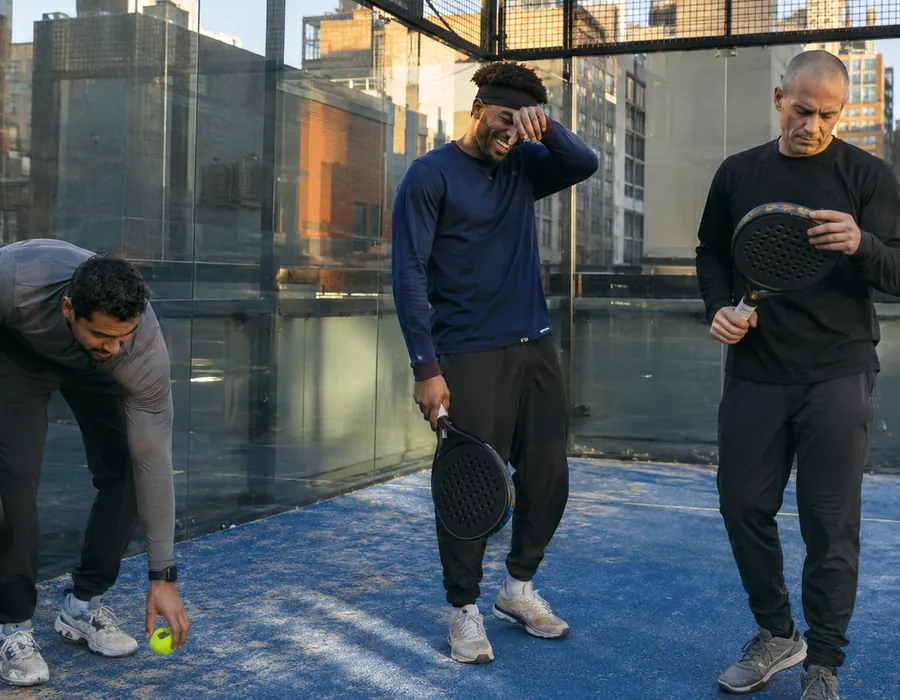 Padel & tennisA friendship circle for padel and tennis players in Kuwait, from beginners to regulars, looking for friendly games and people to play with.
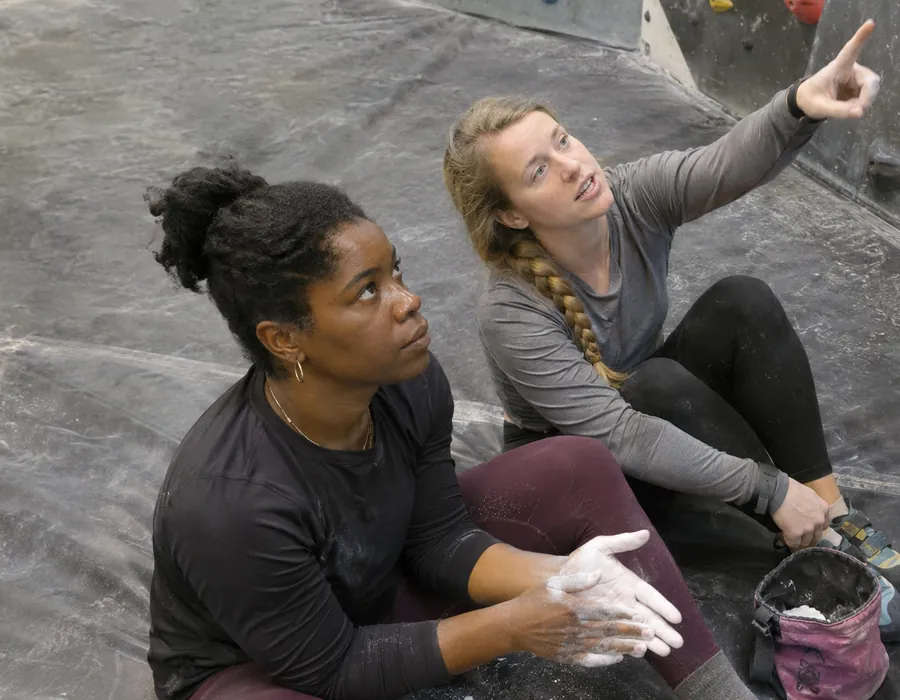 Fitness buddiesA friendship circle for people in Kuwait who want company at the gym, in classes or outdoors, so it’s easier to keep going.
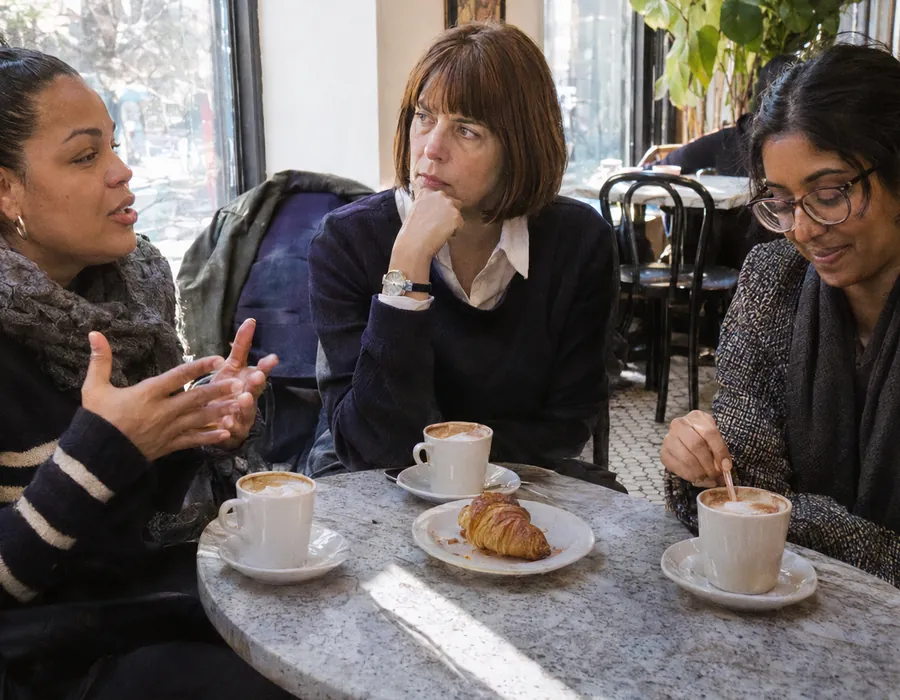 Coffee & conversationA friendship circle for people who enjoy cafés and unhurried conversation in Kuwait. Low-pressure first meetings, close to home.
Where to meet in Kuwait City
Public places picked for small groups of 3 to 10, sorted by interest and area.
Keep reading
 CirclesMeeting people through AI and tech in Kuwait: from a course to a circle that learns together
 IdeasBeyond the mall: discovering Kuwaiti food with friends
 IdeasLanguage exchange in Kuwait: Arabic, English and the friendship that grows over coffee
 FriendshipMaking friends in Kuwait as a woman: where to start, and how to build a circle at your own pace
 CirclesBoard games and quiz nights in Kuwait: how a table of strangers becomes a weekly circle
 IdeasKashta season: how a weekend in Kuwait’s desert turns new friends into old ones
 IdeasWalking Arabian Gulf Street with a friend: why the same walk every week builds friendship
 IdeasBook lovers in Kuwait: reading circles, bookshops and the friends a shared book brings
 IdeasWhen the first rain comes: small autumn rituals with friends in Kuwait
 FriendshipBack from studying abroad: rebuilding your circle in Kuwait
 FriendshipFriends at work, friends outside it: why you need both in Kuwait
 IdeasMuseums and culture in Kuwait, better with a friend
 FriendshipFriends, when Fridays and weekends belong to family
 IdeasWhere people meet in Salmiya, Kuwait City and beyond: friendship within 15 minutes of home
 IdeasAn evening in Souq Al-Mubarakiya with new friends
 FriendshipWhat the diwaniya teaches about friendship, and how to build your own weekly table
 FriendshipHow to make friends in Kuwait as a grown-up
 IdeasWinter in Kuwait: outdoor plans for a new circle
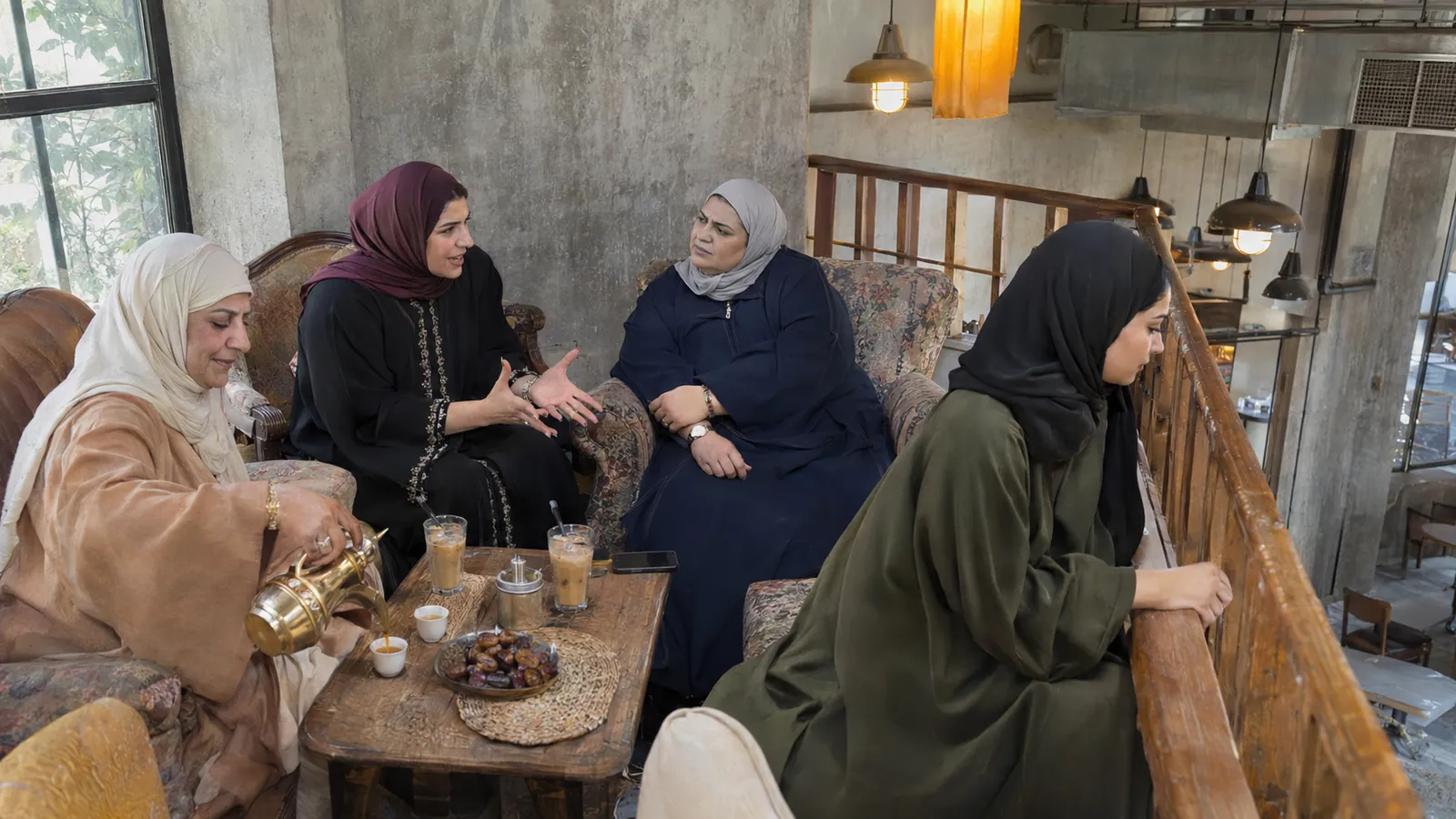 IdeasKuwait’s café culture, and where a small group can really talk
 New in townNew in Kuwait: making friends after the move