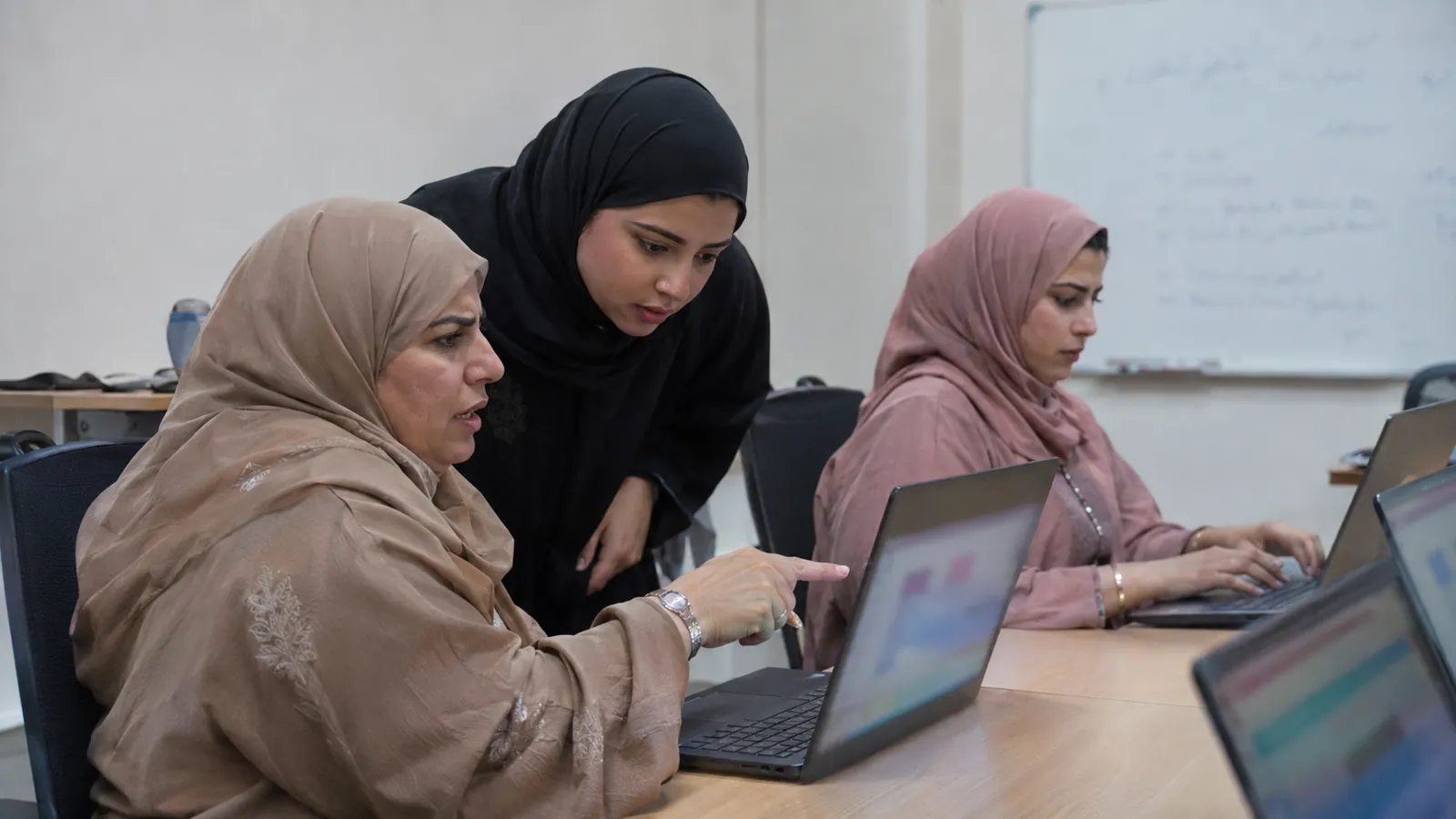
Bader first took artificial intelligence seriously on an ordinary Tuesday, when a manager at his firm showed the team how a tool had summarised a long report in under a minute. Everyone laughed and said how useful it was. Bader, an accountant of thirty-four with a young family and a mortgage, laughed too, and then spent the drive home along the Fifth Ring Road wondering what it meant for his job. That night he did what many people do when they feel uneasy. He searched for a course.
He found an evening programme at a training centre in Kuwait City, two nights a week for six weeks, aimed at professionals rather than programmers. He signed up mostly out of worry. He did not expect that the most valuable thing he would take away from it was not a certificate, but three friends and a Saturday morning habit that is still going a year later.
Why learning together builds friendship
Learning something new in a group creates exactly the conditions friendship needs. You see the same people repeatedly. You have a shared purpose, so there is always something to talk about. And everyone is a little out of their depth, which makes people honest and generous with each other. In Bader’s class there was a doctor, a teacher, a designer, two engineers and a retired officer, all equally confused by the same exercise in week two, and that shared confusion did more to break the ice than any introduction.
Technology is a particularly good subject for this because it changes so quickly. Nobody, not even the instructor, can know everything, so the conversation naturally becomes an exchange. One person has found a clever use for a tool at work, another has discovered a mistake it makes, a third has read about something new. Each meeting gives you a reason to say, “Wait, show me how you did that.”
The coffee after class
The turning point came in week three. Class ended at nine, and instead of rushing to their cars, Bader and two classmates, Yousef, a civil engineer, and Fahad, who ran a small family trading business, stayed behind at a café downstairs to go over the exercise they had all struggled with. They solved it in twenty minutes and then talked for another hour about everything else: work, children, football, what their fathers made of all this.
That coffee became a ritual. Every class night ended at the same table, and when the course finished, none of them wanted to stop. Fahad suggested meeting on Saturday mornings instead, laptops open, each working on a small project and helping the others when they got stuck. It was the kind of simple, repeatable plan that friendships are built on.
Small projects, real progress
What they worked on was refreshingly practical. Bader built himself a set of prompts and checklists to speed up the monthly reports he hated. Fahad used AI tools to draft product descriptions in Arabic and English for his family’s shop, and then rewrote them so they sounded like a real person. Yousef learned to organise site notes and photos so he could find anything in seconds. None of it was dramatic. All of it saved them hours, and each small success was something to celebrate together over coffee.
They also learned some careful habits along the way, and they are worth repeating. Never paste confidential work documents, client details or personal information into a public tool. Check every figure and every fact an AI gives you, because it can sound confident and still be wrong. And follow your employer’s policy before using any tool on work material. Talking these rules through as a group made them stick far better than reading them alone.
Explaining it to the diwaniya
One of Bader’s favourite moments came at his father’s diwaniya, when an older relative asked, half joking, whether the computers were going to take everyone’s jobs. A year earlier Bader would have shrugged. Now he took out his phone, showed how he used a tool to check his budget spreadsheet, and explained what it did well and where it still needed a human. The room was fascinated, and his father, who rarely said such things, told him afterwards that he was proud.
That is one of the hidden benefits of learning with others. When you have talked something through with friends, you understand it well enough to explain it to anyone, including the people whose opinion matters most to you.
If you feel behind, you are not
Many people stay away from technology groups because they assume everyone else already knows more. Bader felt exactly that on the first night, convinced he was the only one who had never written a line of code. He was wrong. Most people in the room were there for the same reason he was: curiosity mixed with a little worry. A good learning circle welcomes the person who asks the basic question, because that question is usually on everyone’s mind.
The same goes for age and background. The retired officer in Bader’s class turned out to be the most patient tester of anything new, and the designer taught the engineers more about clear thinking than any tutorial. Variety is what makes these groups interesting.
Where to start in Kuwait
Kuwait offers plenty of ways in. Universities, training centres and professional associations run short courses and evening programmes, many of them designed for people with no coding background. Talks and workshops on technology and innovation take place through the year at cultural centres and conferences, and many companies now run their own internal sessions. Libraries and online courses are useful too, though learning alone is harder to sustain.
Whatever you choose, the friendship part depends on one small act of courage: staying behind. Ask the person next to you whether they understood the last exercise. Suggest a coffee after class. Offer to share notes. Most people in a room like that are hoping someone will make the first move.
Keeping a learning circle alive
After the course ends, structure keeps a group going. Bader’s group settled on a few simple habits. They meet at the same café at the same time, so nobody has to organise anything. Each person brings one thing to share: a tool, a trick, a question or a mistake. Once a month someone shows a small finished project. And they keep the group small, never more than six or seven, so everyone gets time to talk and nobody becomes an audience.
They also made room for life beyond screens. Some Saturdays the laptops stay closed and they walk in Al Shaheed Park instead, or go for breakfast. The technology brought them together, but the friendship now stands on its own.
A circle, not a crowd
Large tech events can be exciting, but they are hard places to make friends. You meet forty people for two minutes each and remember almost none of them. A small circle that meets again and again is different. You learn how each person thinks, what they are working on and what they find difficult, and over time you become the people they call when they are stuck, on a project or in life.
Where TruFriend fits
If you would like a learning circle of your own, TruFriend can help you find the people. It is a free platform for friendship only, for grown-ups aged 18 and over, and it is open in Kuwait City. Tru, our assistant, learns what you are curious about and when you are usually free, then introduces you to a few compatible people nearby. A conversation only opens when both of you say yes, and every plan happens in a public place. The AI and tech and Coffee and conversation circles bring together small groups of three to ten people who would rather learn alongside someone than alone.
Bader still uses AI at work every day, and he no longer worries about it on the drive home. He thinks about Saturday instead. If you would like a table like his, join TruFriend: it takes a minute.
Don’t just read about it
Join a circle of people in Kuwait City who enjoy the same things. Members already on TruFriend can join from the app or suggest a plan in any chat.

Where to meet in Kuwait City
Public places picked for small groups of 3 to 10, sorted by interest and area.
Keep reading
 IdeasBeyond the mall: discovering Kuwaiti food with friends
 IdeasLanguage exchange in Kuwait: Arabic, English and the friendship that grows over coffee
 FriendshipMaking friends in Kuwait as a woman: where to start, and how to build a circle at your own pace
 CirclesBoard games and quiz nights in Kuwait: how a table of strangers becomes a weekly circle
 IdeasKashta season: how a weekend in Kuwait’s desert turns new friends into old ones
 IdeasWalking Arabian Gulf Street with a friend: why the same walk every week builds friendship
 IdeasBook lovers in Kuwait: reading circles, bookshops and the friends a shared book brings
 IdeasPadel in Kuwait: how a weekly game becomes a group of friends
 IdeasWhen the first rain comes: small autumn rituals with friends in Kuwait
 FriendshipBack from studying abroad: rebuilding your circle in Kuwait
 FriendshipFriends at work, friends outside it: why you need both in Kuwait
 IdeasMuseums and culture in Kuwait, better with a friend
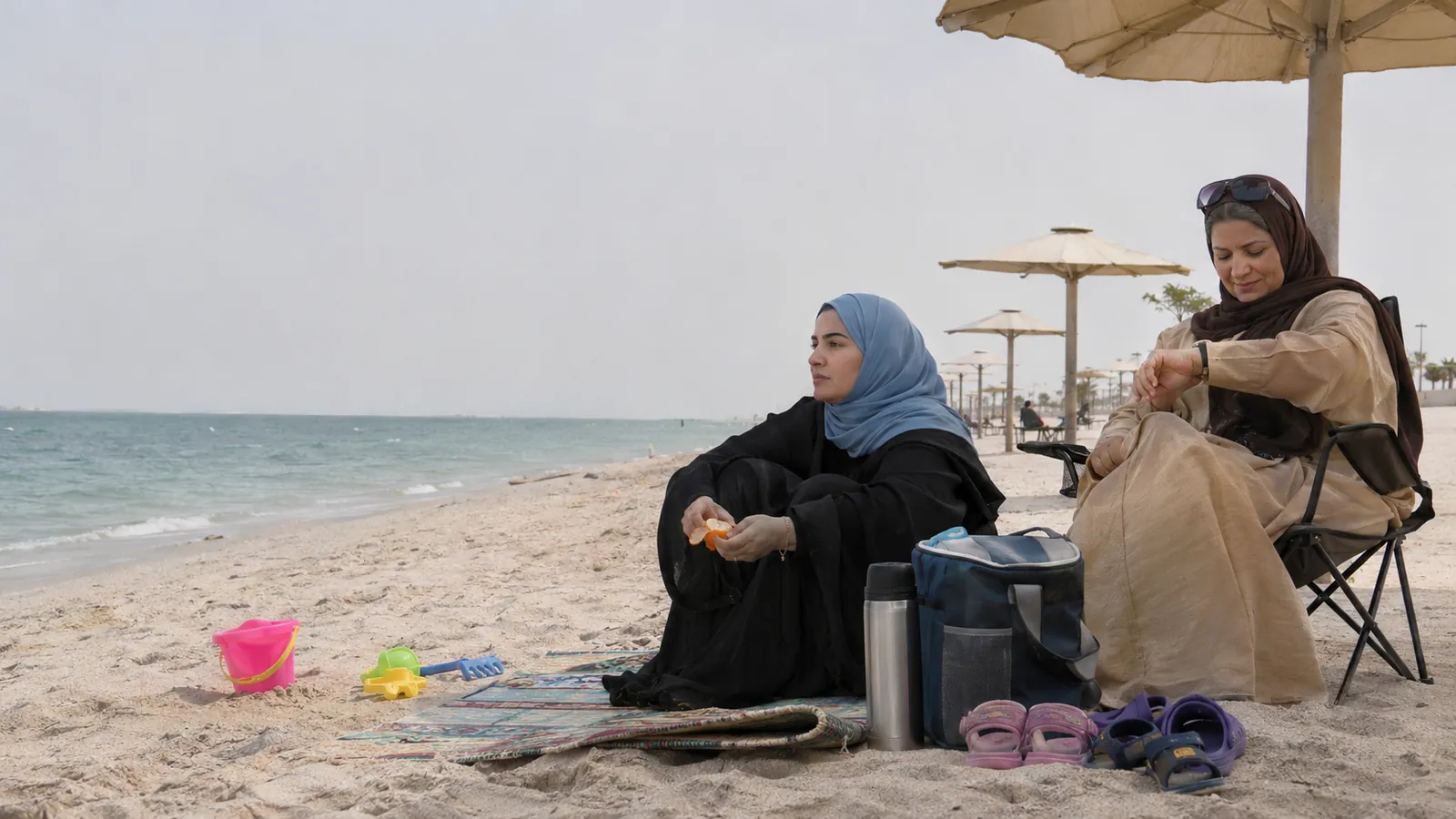 FriendshipFriends, when Fridays and weekends belong to family
 IdeasWhere people meet in Salmiya, Kuwait City and beyond: friendship within 15 minutes of home
 IdeasAn evening in Souq Al-Mubarakiya with new friends
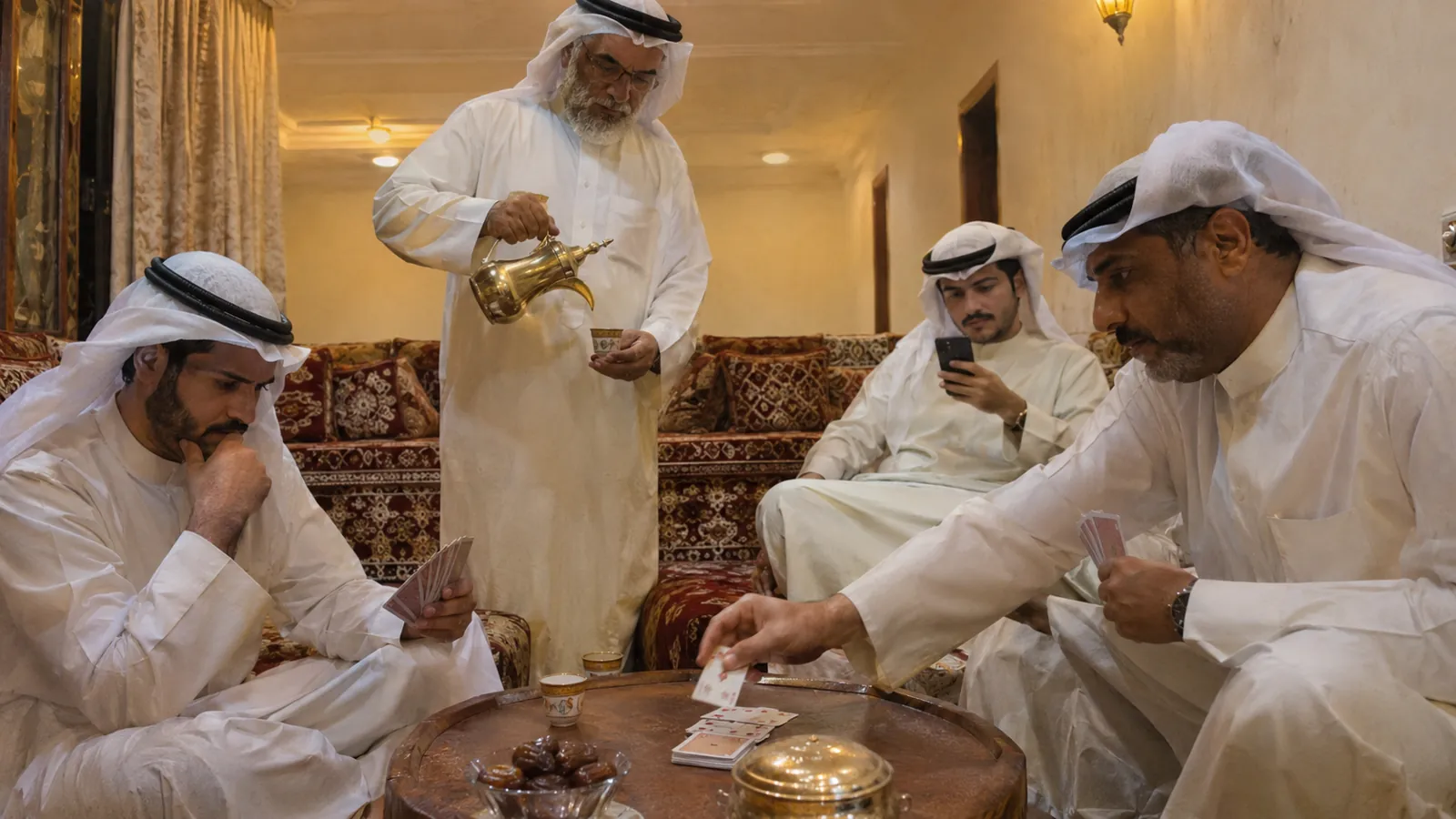 FriendshipWhat the diwaniya teaches about friendship, and how to build your own weekly table
 FriendshipHow to make friends in Kuwait as a grown-up
 IdeasWinter in Kuwait: outdoor plans for a new circle
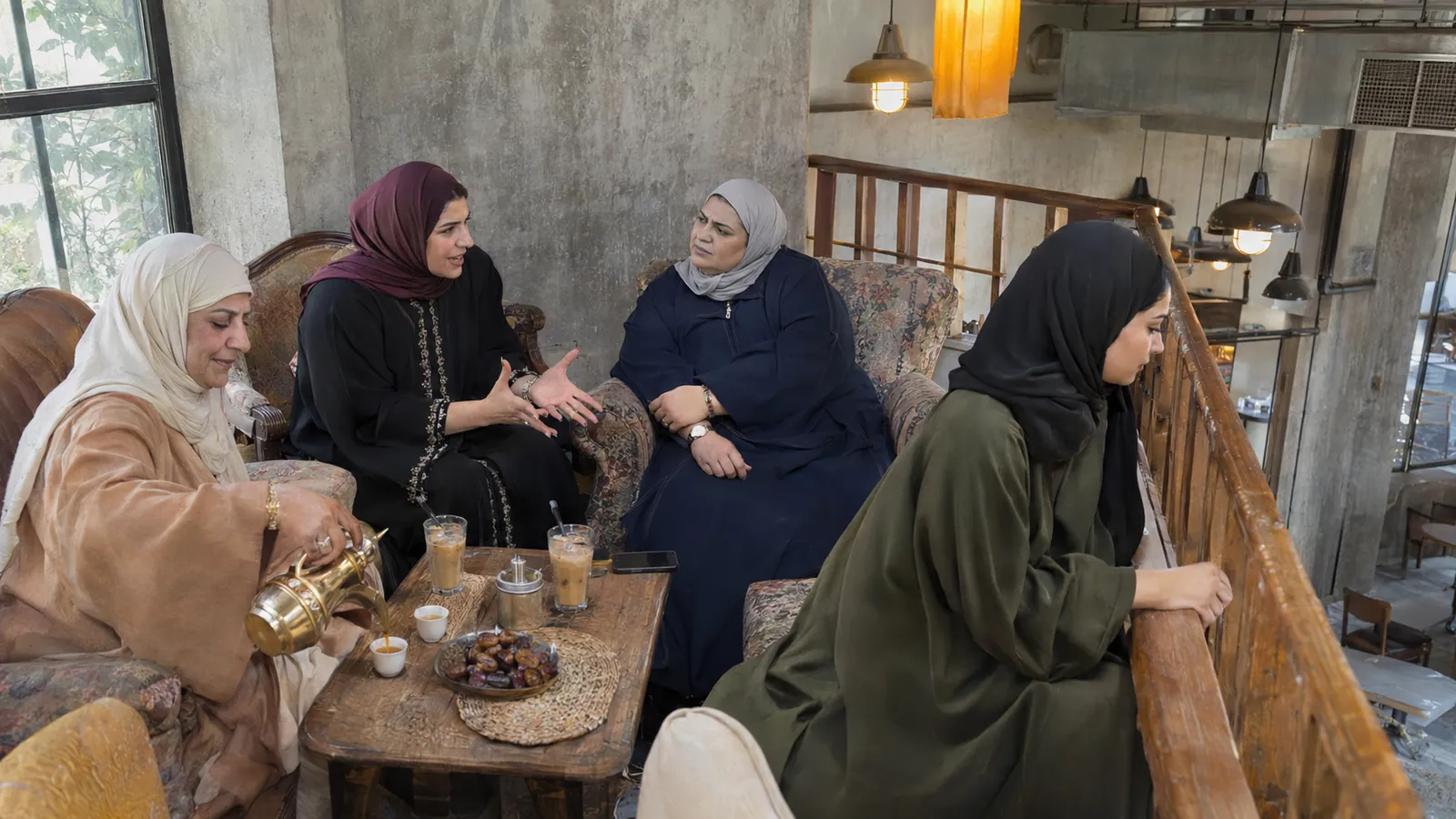 IdeasKuwait’s café culture, and where a small group can really talk
 New in townNew in Kuwait: making friends after the move