It started with a complaint. Yousef had invited two new colleagues for lunch, and both of them, after six months in Kuwait, suggested the same food court in the same mall. Arjun, who had moved from Chennai, admitted he ate there most weekends because it was easy. Omar, from Cairo, said he had never tried Kuwaiti food at all, apart from the dates on his desk at work. Yousef, who grew up eating his grandmother’s machboos every Friday, put his fork down and said, “That is a problem. We are going to fix it.”
He meant it as a joke. It turned into a standing plan. Once a fortnight, for the whole of that winter, the three of them, and soon a fourth, Yousef’s old school friend Fahad, went somewhere to eat something that was not in a mall. They did not follow a guidebook. They followed recommendations from parents, aunts, taxi drivers and the man who sold them tea. And somewhere between the first plate of rice and the last cup of tea, three colleagues and an old friend became a group.
Why food is such a good start
Eating together is one of the oldest ways people become close, and it works especially well in Kuwait, where hospitality runs deep and food is how people show care. A shared meal gives you something to do with your hands and something to talk about. Nobody has to perform. If the conversation pauses, someone asks what is in the rice, or argues about whether the bread was better last time, and you are off again.
Food also creates stories. The evening the order went wrong and you ended up with twice as much fish. The sweet that tasted like perfume. The old man at the next table who insisted on telling you how it was cooked fifty years ago. These small shared stories are the raw material of friendship, the jokes you refer back to for months.
Machboos, the first lesson
Yousef insisted they begin with machboos, the dish many Kuwaitis call the national plate: spiced rice cooked with chicken, lamb or fish, fragrant with loomi, the dried black lime, along with cardamom, cinnamon and a little saffron. He explained that every family has its own version and that arguments about whose mother makes it best can last an entire evening. For their first outing he chose a small, old-fashioned restaurant in the city, the kind with a handwritten menu and a long family history, and ordered machboos laham with daqqus, the tangy tomato sauce served on the side.
Arjun, who had grown up on rice, was delighted to find the spices both familiar and completely different from home. Omar asked for the recipe. Fahad, who had eaten machboos all his life, discovered he had never actually noticed the black lime until he had to explain it to someone else. That is one of the quiet gifts of exploring your own city’s food with newcomers: you start to see it again.
The old souq and the bread ovens
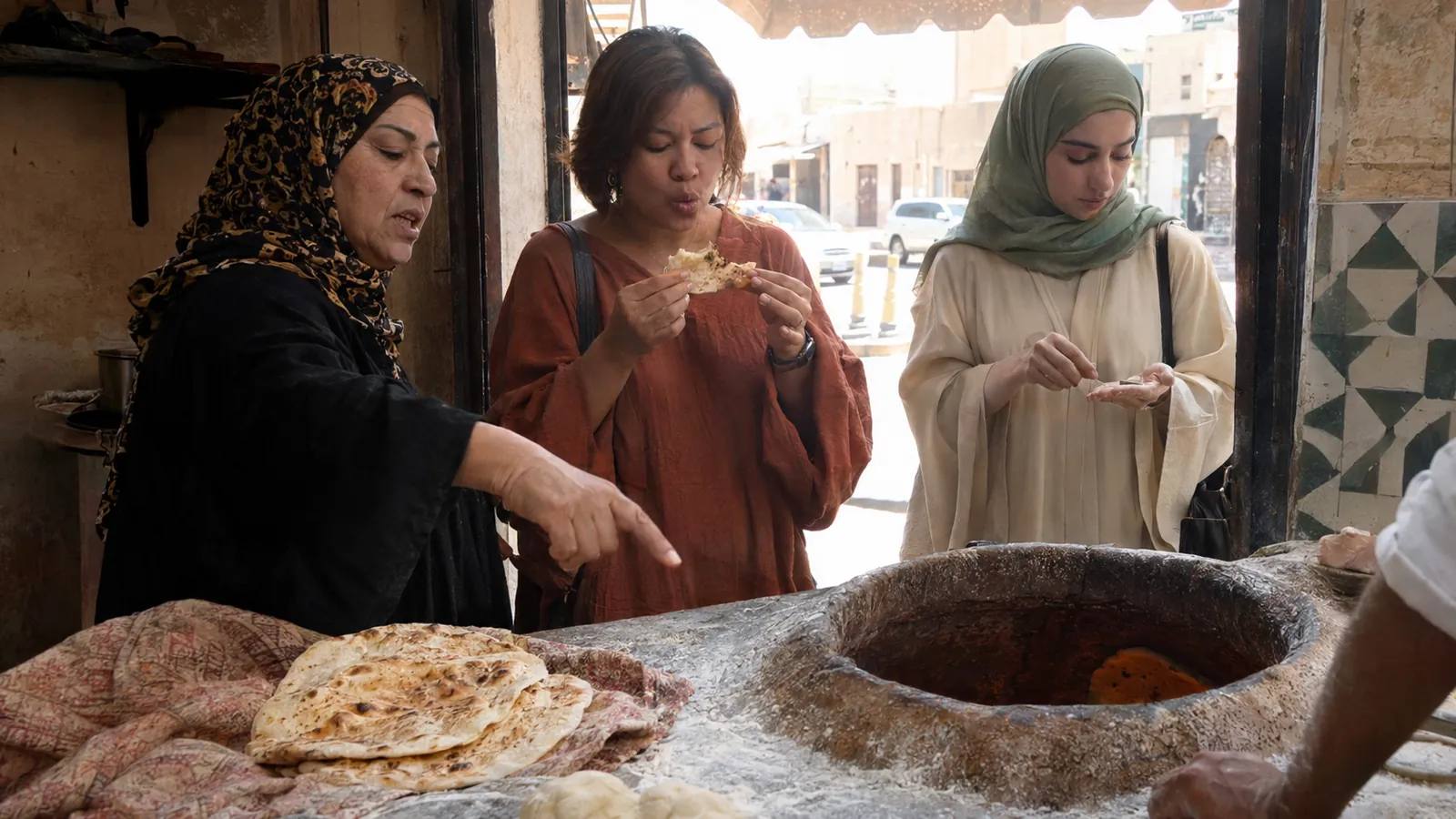
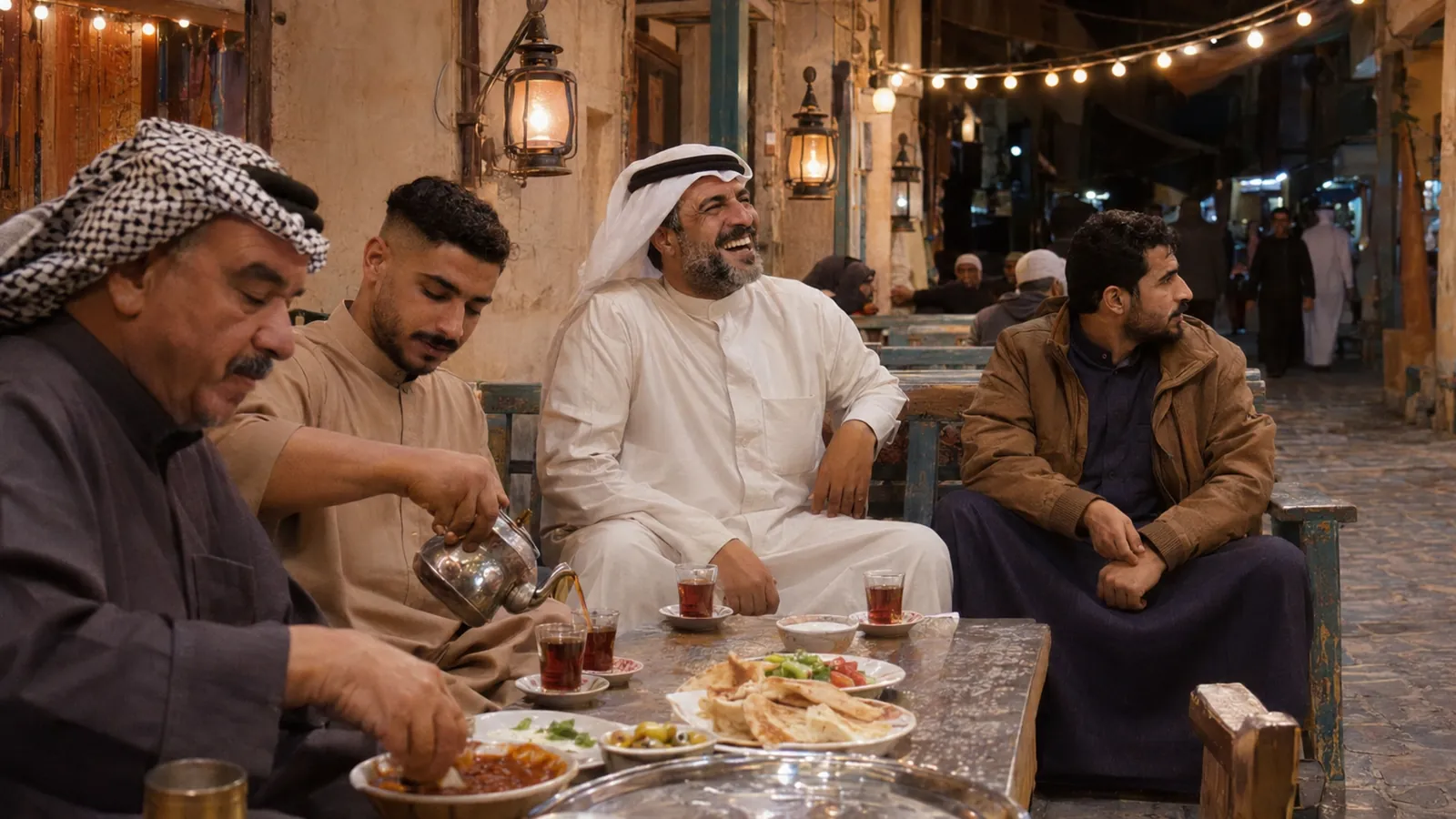
Their second outing was Souq Al Mubarakiya, which is where many people in Kuwait would tell you to begin. Between the lanes of dates, spices, perfumes and old shops, the group found small restaurants serving grilled meat and fish, and the bakers sliding flatbread out of hot ovens. They ate standing up, tore bread straight from the paper, and wandered for an hour afterwards with no particular aim, buying a bag of dates for each of their offices.
The souq is also a good place to learn that Kuwaiti food has always been shaped by trade. Rice and spices from India, influences from Iraq, Iran and the wider Gulf, fish from the sea that was once the centre of life here. Omar, who loved history, kept stopping to ask shopkeepers how long their families had been there, and more than once the answer was two or three generations.
Fish, and the sea behind it
Fahad’s choice for the third outing was fish. He took them to try mutabbaq zubaidi, pomfret served over seasoned rice, a dish he associated with his father and summers by the sea. Before they ate, they walked through the fish market near Souq Sharq, looking at the morning’s catch and listening to Fahad explain which fish people prize most and why zubaidi season is talked about with such affection. The meal afterwards tasted better for having seen where it came from.
Home-style kitchens and the hidden places
Some of the best food in Kuwait is not in restaurants at all. Many families sell home-cooked dishes through small kitchens and home businesses, and word of mouth decides which ones are good. Yousef’s aunt recommended one that made harees and jireesh, slow-cooked wheat dishes that are especially loved during Ramadan, and the group ordered a spread and ate it together in a quiet park in the cool evening air, sitting on a picnic mat Fahad kept in his car.
That evening was when Arjun said the thing they all remembered: that he had lived in Kuwait for half a year and had only now felt he was actually living here. Food can do that. It turns a place you work in into a place you know.
Sweets and tea, the slow ending
Every outing ended the same way, with something sweet and a cup of tea. They tried luqaimat, small golden dumplings drizzled with date syrup, still hot from the pan. They tried gers ogaily, a light saffron and cardamom cake that Omar declared his favourite thing in the country. On one cold morning they met for a late breakfast of balaleet, sweet vermicelli topped with a thin omelette, which confused everyone until the second bite. And always there was tea: karak for some, Arabic coffee with cardamom and dates for others, cups refilled until someone finally looked at the time.
Those slow endings mattered more than the food. Over sweets, people talk about things that do not come up over the main course: family, worries, plans for next year. By the end of the winter the four of them knew each other in a way that years of shared office corridors would not have managed.
A little etiquette goes a long way
Along the way the newcomers picked up the small customs that make a meal in Kuwait go smoothly. Eat with your right hand when sharing from a common plate. Accept the first cup of Arabic coffee, and when you have had enough, gently shake the cup from side to side before handing it back. Never be in a hurry to leave a table where someone has just ordered more tea. And if a Kuwaiti friend insists on paying, a sincere thank you and a promise that the next one is yours usually works better than an argument at the counter.
Making it your own
You do not need a Kuwaiti friend with strong opinions to start, though it helps. Ask colleagues and neighbours where their families go for machboos or sweets, and keep a shared list on your phone. Pick one dish or one area per outing rather than trying to see everything. Keep the group small, four to six people, so you can share plates and still hear each other. Split the bill simply and evenly so nobody feels awkward. And take turns choosing, so everyone gets to be the host for a night.
Most of all, keep it regular. One brilliant food evening is a nice memory. A fortnightly plan, kept up for a season, is how acquaintances become friends.
Where TruFriend fits
If you would love a table like Yousef’s but do not yet have the people, TruFriend can help you find them. It is a free platform for friendship only, for grown-ups aged 18 and over, and it is open in Kuwait City. Tru, our assistant, learns what you enjoy and when you are usually free, then introduces you to a few compatible people nearby. A conversation only opens when both of you say yes, and every plan happens in a public place. The Food explorers and Coffee and conversation circles give you a small, regular group of three to ten people who are just as curious about the next plate.
Arjun still goes to the mall sometimes. But these days he is usually the one telling newcomers where to find the best machboos. If you would like a group to explore with, join TruFriend: it takes a minute.
Don’t just read about it
Join a circle of people in Kuwait City who enjoy the same things. Members already on TruFriend can join from the app or suggest a plan in any chat.

Where to meet in Kuwait City
Public places picked for small groups of 3 to 10, sorted by interest and area.
Keep reading
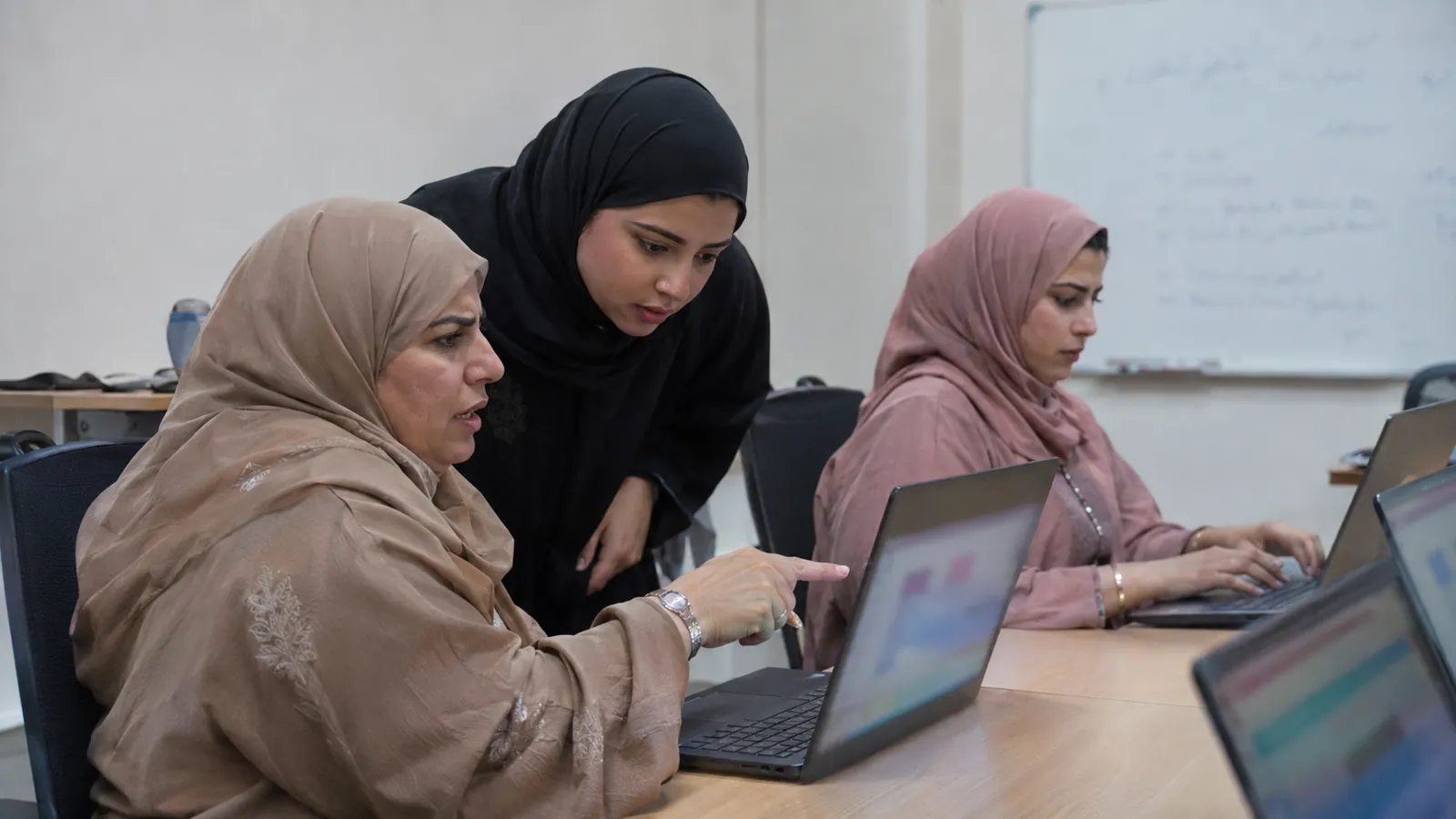 CirclesMeeting people through AI and tech in Kuwait: from a course to a circle that learns together
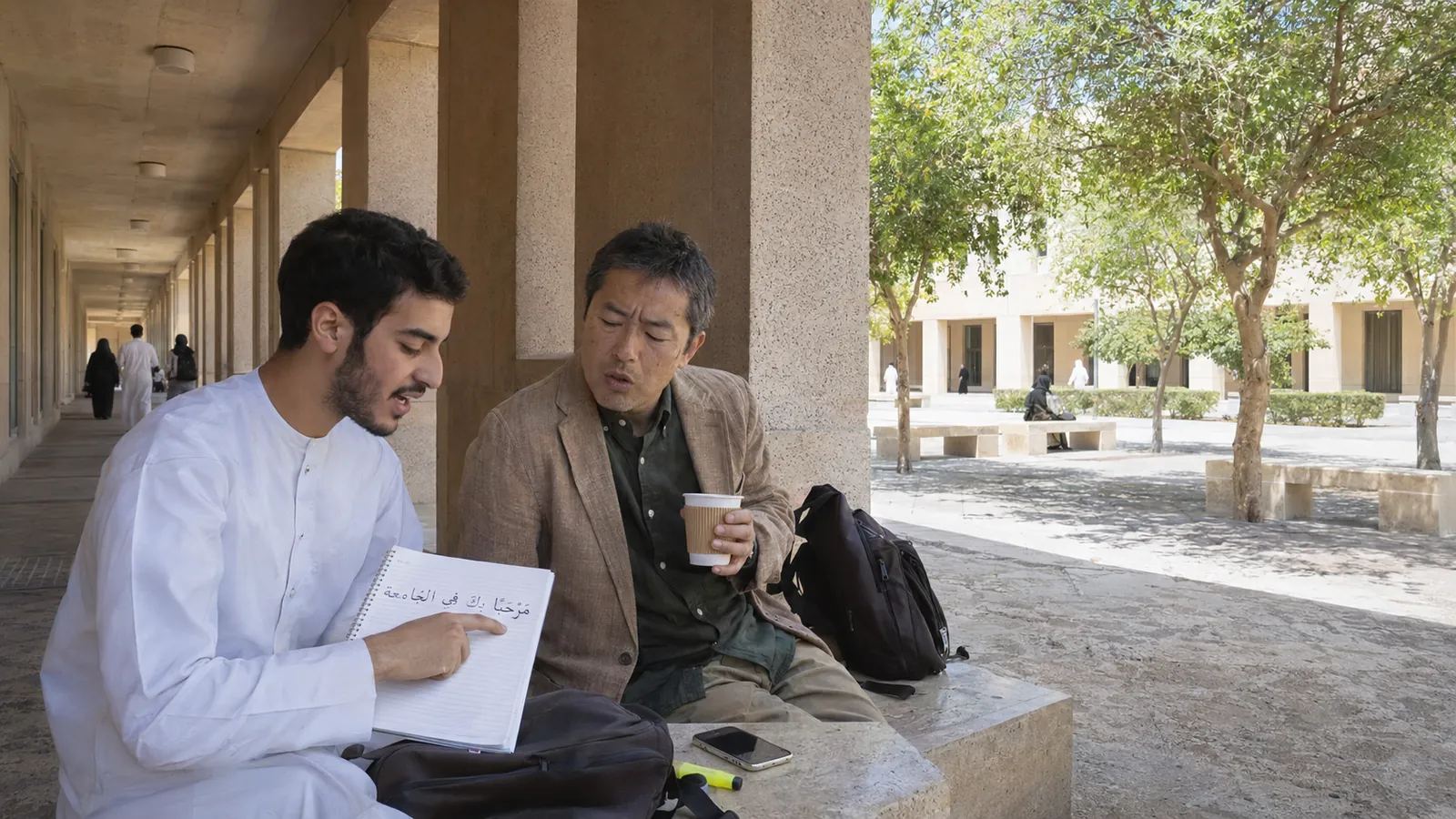 IdeasLanguage exchange in Kuwait: Arabic, English and the friendship that grows over coffee
 FriendshipMaking friends in Kuwait as a woman: where to start, and how to build a circle at your own pace
 CirclesBoard games and quiz nights in Kuwait: how a table of strangers becomes a weekly circle
 IdeasKashta season: how a weekend in Kuwait’s desert turns new friends into old ones
 IdeasWalking Arabian Gulf Street with a friend: why the same walk every week builds friendship
 IdeasBook lovers in Kuwait: reading circles, bookshops and the friends a shared book brings
 IdeasPadel in Kuwait: how a weekly game becomes a group of friends
 IdeasWhen the first rain comes: small autumn rituals with friends in Kuwait
 FriendshipBack from studying abroad: rebuilding your circle in Kuwait
 FriendshipFriends at work, friends outside it: why you need both in Kuwait
 IdeasMuseums and culture in Kuwait, better with a friend
 FriendshipFriends, when Fridays and weekends belong to family
 IdeasWhere people meet in Salmiya, Kuwait City and beyond: friendship within 15 minutes of home
 IdeasAn evening in Souq Al-Mubarakiya with new friends
 FriendshipWhat the diwaniya teaches about friendship, and how to build your own weekly table
 FriendshipHow to make friends in Kuwait as a grown-up
 IdeasWinter in Kuwait: outdoor plans for a new circle
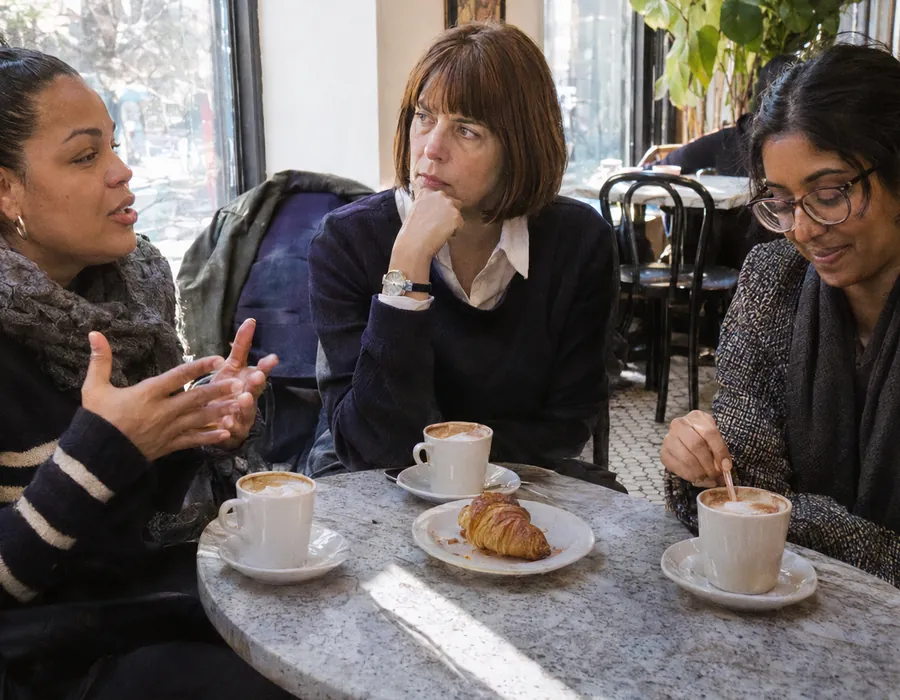
 IdeasKuwait’s café culture, and where a small group can really talk
 New in townNew in Kuwait: making friends after the move