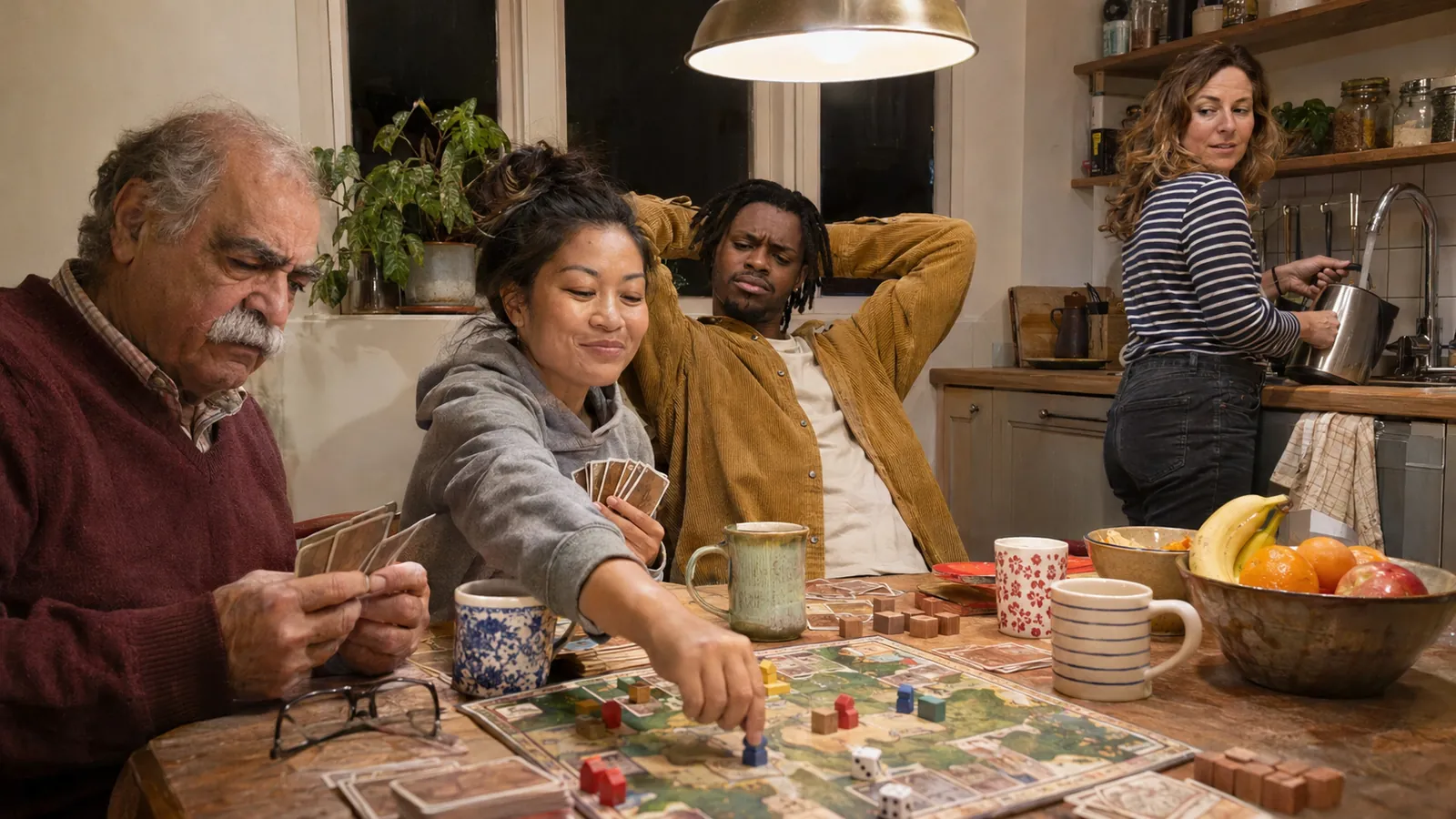
Tom had lived in London for nine months before he admitted to himself that he was lonely. He had a decent job at a design studio near Old Street, a room in a shared house in Walthamstow and a phone full of numbers he never called. Evenings went the same way every week: the Victoria line home, something from the freezer, an episode of a series he did not much care about. On Fridays his colleagues went to the pub, and he went once or twice, but he does not drink much, the room was loud, and he spent most of the night nodding at conversations he could not hear.
What changed things was a cardboard box. His flatmate Priya had been given a copy of a tile-laying game for her birthday and had nobody to play it with. One wet Sunday she put it on the kitchen table and asked if he would give it a try. Two hours later they were still there, arguing cheerfully about whether a road could cross a river, and Tom realised it was the first time in months he had talked to someone for that long without checking the clock.
That box became a habit, and the habit became a small group. Today, on most Thursday evenings, five or six of them gather around a table somewhere in London with a stack of games, a pot of tea and no idea who is going to win. Some of them met through work, one through a library noticeboard, two through TruFriend. None of them knew each other a year ago.
Why a game works when small talk does not
Meeting new people as a grown-up is mostly hard because of the gaps. You sit down with someone you barely know, you ask what they do and where they are from, and within ten minutes the obvious questions have run out. A board game fills those gaps for you. There is always something to do with your hands, something to look at, something to react to. Nobody has to perform. Quiet people can take their time; talkative people can narrate every move. The conversation happens around the game rather than being the whole point of the evening.
Games also show you who someone is in a way that a polite chat never does. Within an hour you know who plans ten moves ahead, who takes wild risks, who apologises when they win and who laughs loudest when their own plan collapses. These small moments are exactly the material friendships are built from. People who study friendship often point out that we grow close through repeated, relaxed time together, and a weekly game night offers just that: the same faces, the same table, a shared joke that carries over from last week.
There is a practical comfort too. A game has a beginning and an end. If you are nervous about meeting new people, it helps to know that the evening has a natural shape. You play one game, perhaps two, and you can go home whenever you like without anyone feeling abandoned.
London’s quiet tables
The good news is that London is full of places where a small group can sit down with a game, and many of them have nothing to do with pubs. Board game cafés have grown across the city in recent years, with shelves of hundreds of titles and staff who will happily explain the rules of something you have never seen before. Draughts, with branches in Waterloo and Hackney, is one of the best known, and an easy first choice if your group wants somewhere that does all the explaining for you.
Public spaces matter just as much. The Southbank Centre, with its open foyers and long tables beside the river, has long been a place where people bring a deck of cards or a small game and settle in for an afternoon. It is busy, warm in winter and free to sit in, which makes it an ideal meeting point for a group that does not want to spend money every week.
Libraries are another of London’s best-kept secrets. Idea Store Whitechapel, Peckham Library and Kensington Central Library are all well used by local people, and many London libraries run regular games afternoons, chess clubs or social sessions. Check the events page of your local library before you assume it is only a place for silent reading; you may find a group already meets there. Further south, the Horniman Museum and Gardens in Forest Hill makes a lovely weekend outing that pairs a stroll round the gardens with a game at a café table afterwards.
You will find more ideas, sorted by area, on our page of places for board games in London.
How Tom’s group stays together
Plenty of game nights start well and fade after a month. Tom’s group has lasted for a few simple reasons, and they are worth borrowing.
First, they meet at the same time. Thursday evening became their evening, and nobody has to negotiate a new date each week. People who cannot make it simply say so, and the game goes ahead with whoever turns up. Regularity does a lot of quiet work: you stop having to decide whether to go, and you just go.
Second, they keep it small. Four to six people is the sweet spot for most games and for conversation. When more people want to join, the group splits across two tables rather than turning into a crowd. Small groups mean everyone is noticed, and nobody spends the evening on the edge.
Third, they take turns choosing the game. Priya likes clever strategy; Daniel, a retired teacher from Lewisham, likes word games; Grace, who moved from Lagos last spring, likes anything fast and loud. Taking turns means everyone feels the evening belongs to them some of the time. It also means people learn games they would never have picked, which is half the fun.
Fourth, they always teach. When a newcomer arrives, someone volunteers to sit beside them and explain as they go, and the first round is played for practice. Nobody is made to feel slow. Grace says this was the thing that made her come back: on her first night she lost badly, and three people still asked whether she was coming the following week.
Finally, they talk about more than the game. Somewhere between rounds, conversations drift to jobs, families, the best place for a cheap curry, who needs help moving flat. Last month the whole group turned up to help Daniel clear his late sister’s garden. The games were what brought them together; the friendship is what keeps them coming.
A game needs no single language
London speaks hundreds of languages, and many newcomers feel in their first months that their accent or their English stands between them and everyone else. A table has an advantage over ordinary conversation here. The rules are shared, the moves are clear to everyone, and the laughter when a plan falls apart needs no translation. Grace remembers saying very little in her first weeks, but playing with confidence, and that alone let the others see her as she is: sharp, quick and funny. The words came later, on their own.
If you want to start your own table
You do not need a cupboard full of games. One or two well-chosen ones are enough. Short, simple games with clear rules are best for a first evening: something you can learn in five minutes and finish in half an hour. Card games, light strategy games and word games all work well. Save the three-hour epics for when the group knows each other.
Choose a public place for the first few meetings, such as a board game café, a library session or a busy foyer. It feels easier for everyone, and it means nobody has to invite strangers into their home. Tell people roughly how long the evening will last, and stick to it, so those who are shy know they will not be trapped.
Most of all, keep going. The first night may be a little awkward. The third will feel normal. By the tenth, you will be teasing each other about last week’s disastrous move as if you had known each other for years.
If you are new to the city, our guide to making friends in London without the pub has more ideas for evenings that do not revolve around a drink.
Where TruFriend fits
Not everyone has a flatmate with a new box of tiles. That is where TruFriend can help. It is a free platform for friendship only, for grown-ups aged 18 and over, and it is open in London. Tru, our assistant, gets to know what you enjoy and when you are free, then introduces you to a few compatible people nearby. A conversation only opens when both of you say yes, and every plan takes place in a public place.
The Board games circle brings together people who would happily spend a Thursday evening arguing over a map of railways. Members start plans that anyone in the circle can join, groups stay small, from 3 to 10 people, and the same faces come back week after week.
Tom still lives in Walthamstow, and Priya still wins most of the time. But Thursday evenings now belong to someone. If you would like a table of your own, join TruFriend: it takes a minute.
Don’t just read about it
Join a circle of people in London who enjoy the same things. Members already on TruFriend can join from the app or suggest a plan in any chat.
 Board games & quizzesA friendship circle for board games, card games and quiz nights in London. Meet people for friendly competition and easy conversation.
 Coffee & conversationA friendship circle for people who enjoy cafés and unhurried conversation in London. Low-pressure first meetings in small groups, close to home.
 New in LondonA friendship circle for grown-ups (18+) who have recently moved to London: settle in, explore the city and build a social life with others doing the same.
Where to meet in London
Public places picked for small groups of 3 to 10, sorted by interest and area.
Keep reading
 CirclesPet lovers in London: how a dog walk on the Heath became a circle of friends
 IdeasLanguage exchange in London: trading words, finding friends
 CirclesTennis and padel in London: the Saturday game that became a friendship
 IdeasWalking and running the Thames Path: how London’s river turns early mornings into friendships
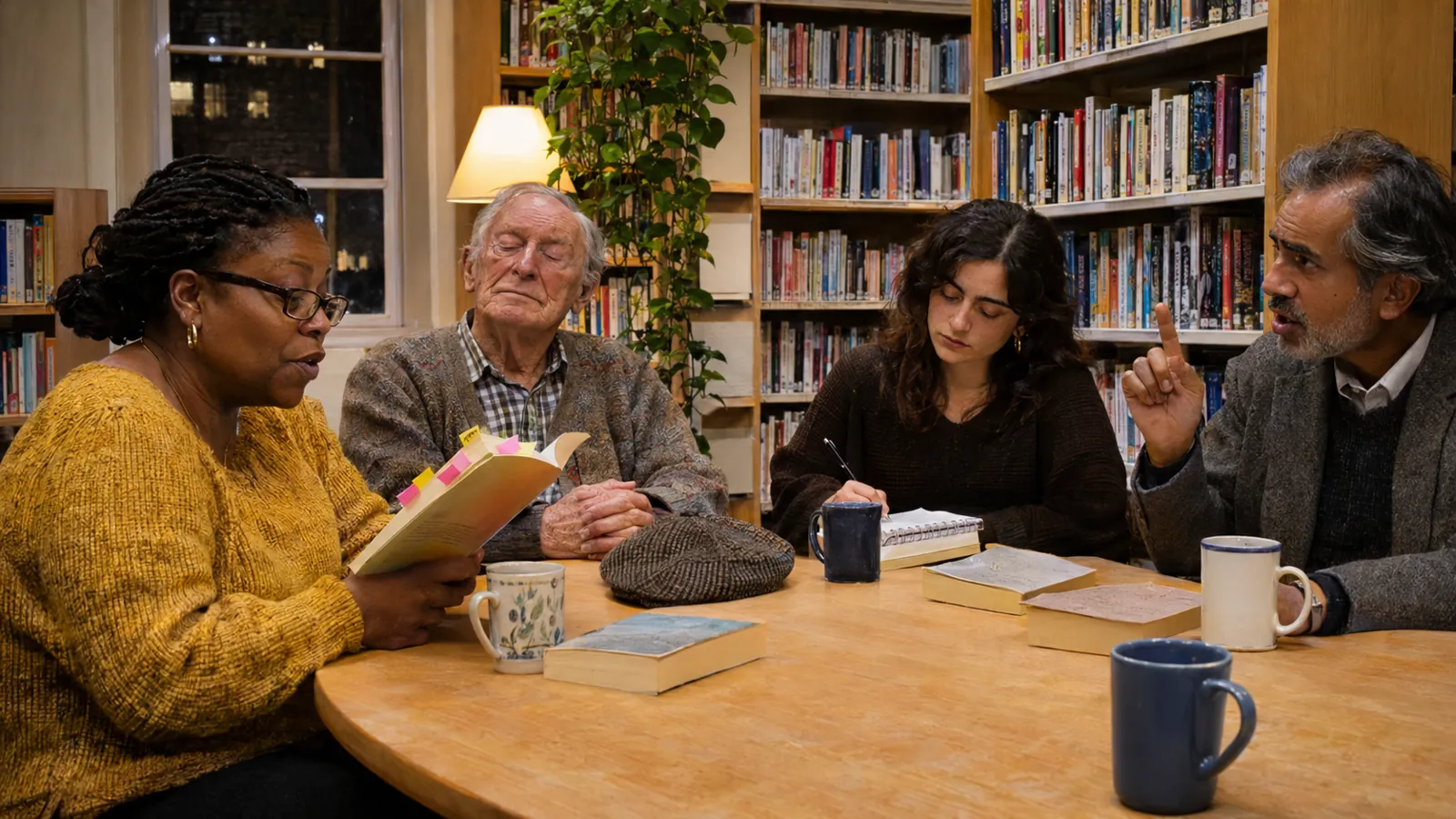 IdeasBook lovers in London: how libraries and reading rooms turn readers into friends
 FriendshipMaking friends in London as a woman: a practical, honest guide
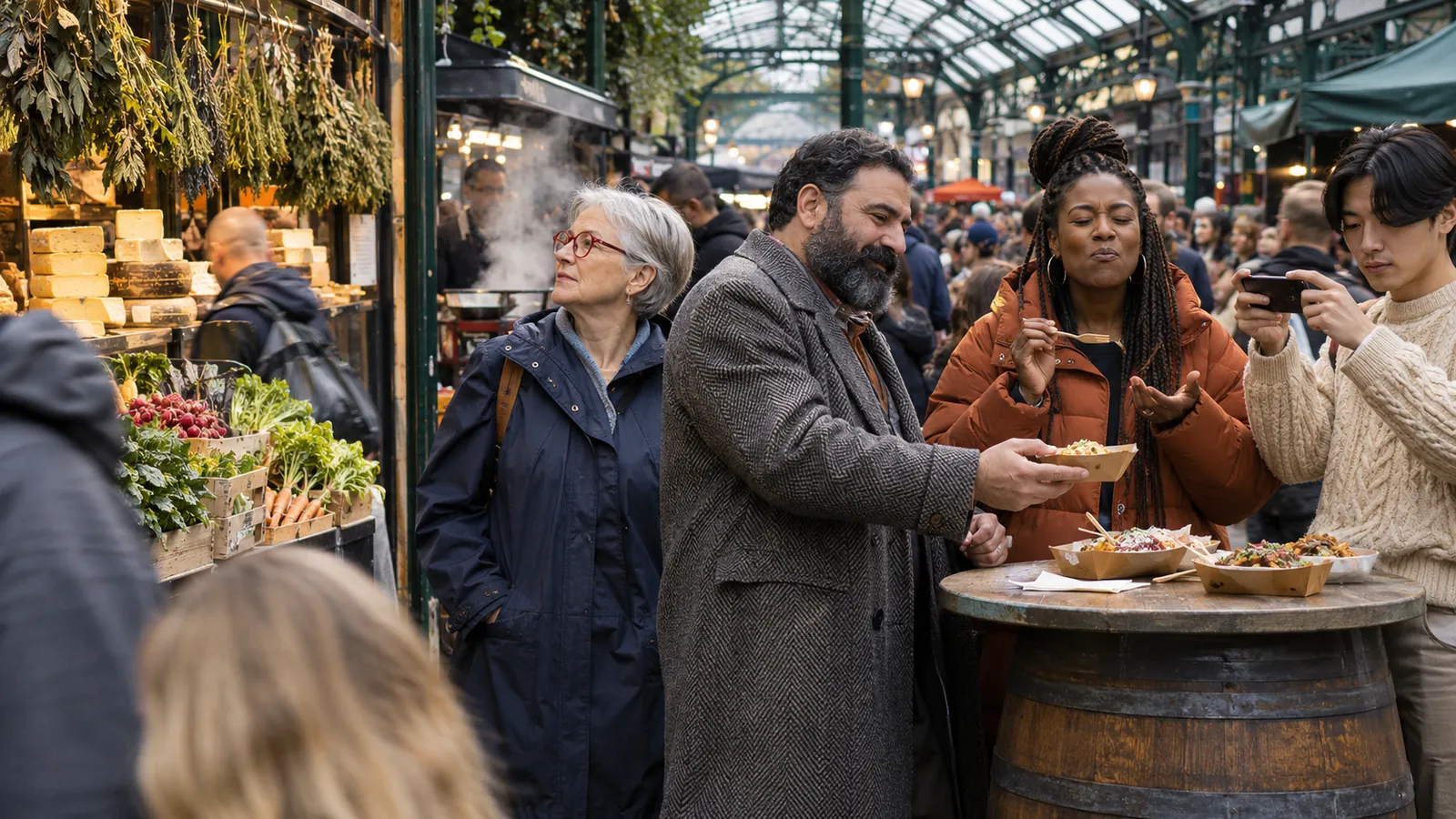 IdeasLondon’s food markets with friends: from Borough Market to your local Saturday stalls
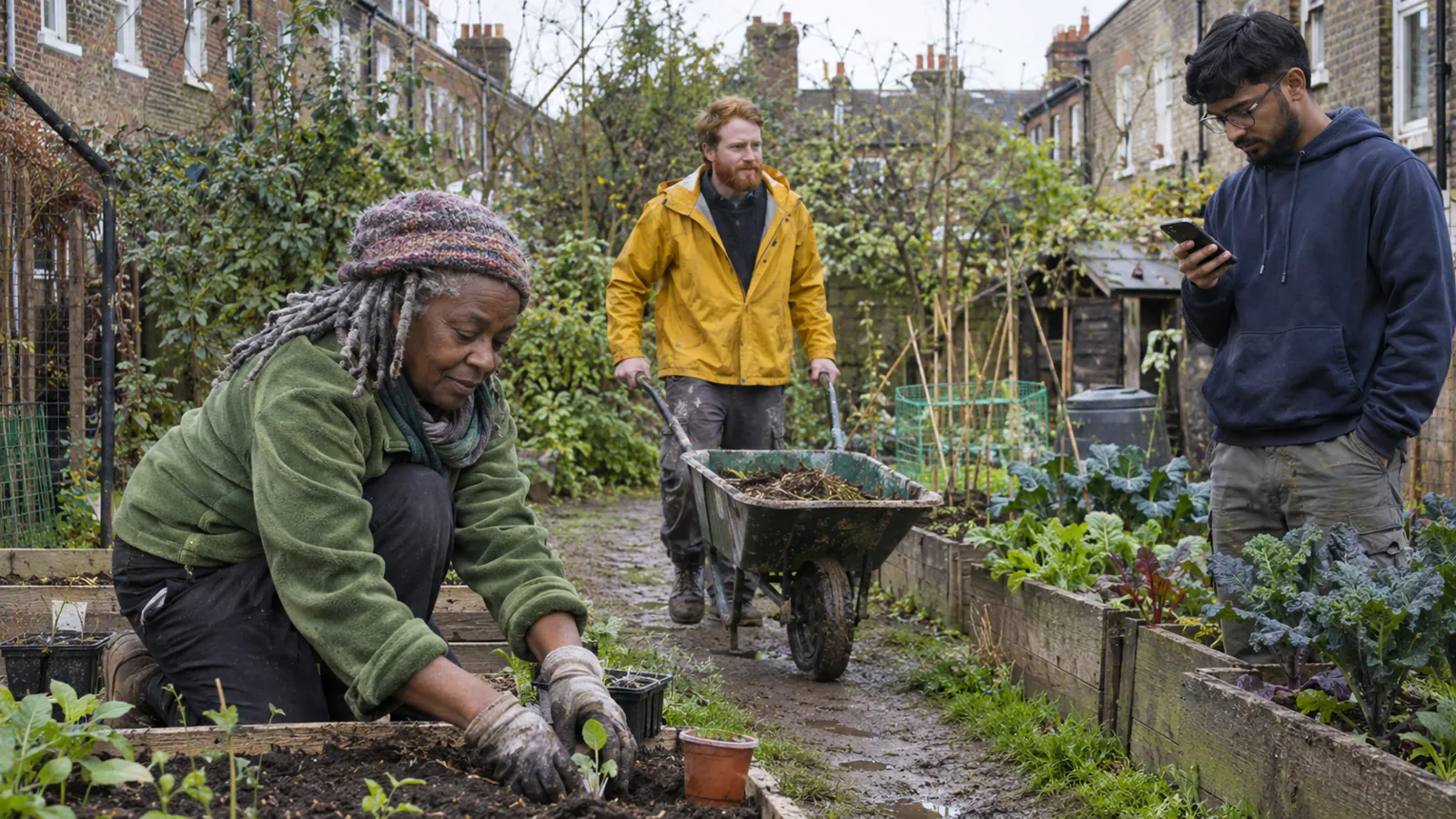 FriendshipMaking friends in London without the pub: daytime ways to meet people
 IdeasLondon’s free museums and galleries: the easiest place to make friends
 IdeasLondon parks and walks to share with friends
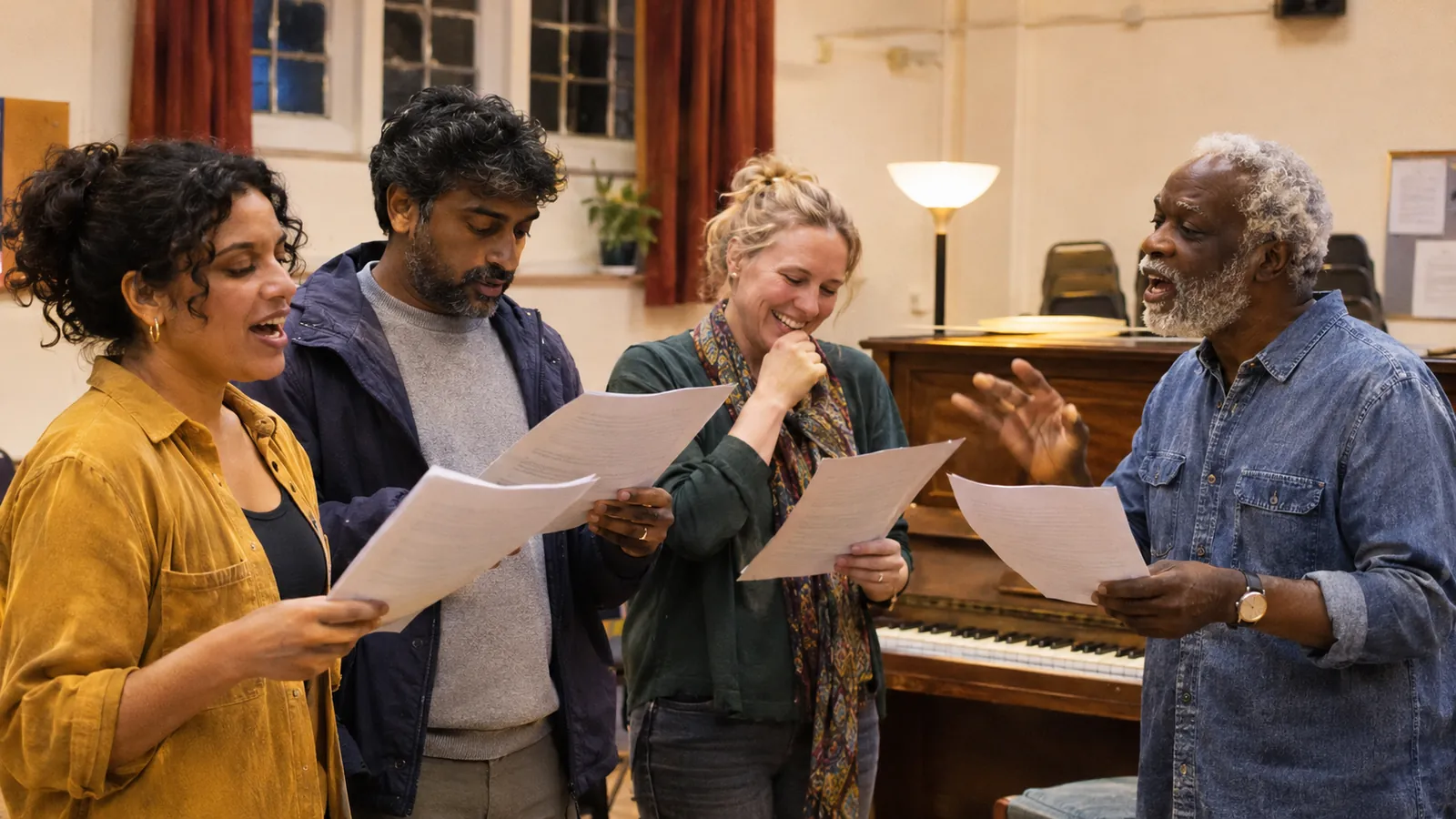 New in townNew in London: how to build a social life in your first months
 FriendshipHow to make friends in London as a grown-up
 NewsTruFriend is now open in London