You are scrolling through your phone on a Tuesday evening, looking for something else, and her name comes up. The last message is from June. It says "Yes!! Let's do it after the summer." It is now October, and the summer has been over for some weeks.
She lives in Al Barsha. You live in JLT. On a good day that is fifteen minutes in the car. You used to have breakfast together most Saturdays, at the same place, with the same argument about whether to share the pancakes. Then she had a busy month, and you went home for three weeks, and then it was August and nobody does anything in August. Four months have gone by. Nobody fell out. Nobody said anything wrong. And yet the thought of messaging her now feels oddly heavy, as if you would need a reason.
If that scene is familiar, you are in very large company. This is how most friendships end, when they end at all: not with a row, but with a gap that gets a little harder to cross every week.
Nobody decides to end it
We tend to imagine that friendships finish for a reason. Someone let the other down, or moved away, or changed. Those things happen, but they are the minority. Far more friendships simply drift. Two people who liked each other a great deal get busy at the same time, and the space between meetings stretches, and eventually the stretch becomes the new normal.
The strange part is that both people usually notice. She has probably thought about you too, possibly on the same Tuesday. But each of you assumes the other has moved on, or is too busy, or would find a message slightly odd after so long. So both of you wait, politely, and the waiting does the damage that no argument ever did.
What the research says about drift
Robin Dunbar, the Oxford anthropologist best known for the idea that we can keep up with roughly 150 meaningful relationships, has spent a long time looking at how friendships change over time. His picture is of layers: around 5 people closest to us, then about 15, then 50, then 150. The inner layers get most of our time and attention, and that time is what keeps them there.
One of his clearest findings is that friendships decay without contact. Family ties are more forgiving; you can not see a cousin for years and pick up where you left off. Friendships are less patient. If you stop seeing someone, the feeling of closeness quietly declines, and over months a person slides from one layer to the next one out. Nothing about them has changed. You have simply stopped spending the time.
That fits with the other half of the research. Jeffrey Hall at the University of Kansas estimated that it takes around 50 hours together to become casual friends, about 90 to become friends, and more than 200 to become close. Friendship, in other words, is built out of hours. It makes sense that it also slowly unbuilds when the hours stop.
None of this is a reason for gloom. It is a reason for relief. If friendships fade because time stops, not because affection runs out, then most of them can be brought back the same way they were built: by spending time again.
Why Dubai makes the gap wider
This city has a few habits that make drift easier than it is elsewhere. The summer is the obvious one. Between June and September a good share of your friends are away for weeks at a time, and the rest are indoors. It is very easy for a friendship that was weekly in April to go quiet until October, and for October to fill up before anyone notices.
Distance is the second. Two people in the same city can live forty minutes apart in traffic, and a friend who was round the corner becomes a friend on the other side of Sheikh Zayed Road after a move. Long working hours are the third. And underneath all of it is the fact that most people here built their social life from scratch, so there is no school friend or neighbour of twenty years to fall back on. The friendships you made here are the ones you have. They are worth a little effort.
The awkwardness is lopsided
Here is the part worth remembering next time you hover over that message. The awkwardness of reaching out after a gap is almost entirely on the sender's side.
From where you sit, a message after four months feels like it needs explaining. Why now? Will it look needy? Will she wonder why you disappeared? From where she sits, a message from you after four months usually lands as something much simpler: someone thought of me. Most people are pleased, and a good number are relieved, because they had been meaning to write the same thing and had talked themselves out of it.
You do not need to apologise for the gap at length, or explain it. A short line that owns it lightly is plenty. "I realised it's been since June, which is ridiculous" does the job. Then move straight on to the thing that actually matters, which is a plan.
Make it specific, not "we should catch up"
The fastest way to let a revived friendship fade again is to end the message with "we should catch up soon". It feels warm and commits nobody. She replies "yes definitely!!", and you are back where you were, with one extra message in the thread.
A specific invitation works far better. "Are you around Saturday morning? I'll be at the usual place at nine, pancakes on me" gets a real answer. So does "I'm walking the Creek on Friday evening, fancy coming?" A day, a time and a place turn goodwill into a meeting. If Saturday does not suit, she can offer another day, and that is still progress. We have written more about why the specific next step matters; it applies just as much to a friend you are trying to keep as to one you are trying to make.
Turn the rescue into a ritual
One good breakfast is a rescue. It is not yet a friendship back on its feet. What protected your friendship in the first place was the Saturday habit, and the most reliable way to stop it drifting again is to bring a habit back.
It can be small. The first Saturday of the month at the same café. A walk at Safa Park every other Thursday before work. A shared book you both read and argue about over coffee when you finish. The point of a ritual is that nobody has to organise it each time, and nobody has to be the one who reaches out. When the date comes round, you just go. Rebecca Adams, a sociologist who studies friendship, describes repeated, unplanned contact as one of the conditions friendships depend on. A ritual is the grown-up way of rebuilding it on purpose.
Keep a thread going between meetings
Not all contact has to be a meeting. In between, low-effort contact keeps the line warm. A photo of the pancakes you both argue about. A link to something she would find funny. A voice note on the drive home. None of these replace time together, but they stop the silence from building up again, and they make the next plan much easier to suggest.
A useful rule of thumb: if you think of someone, tell them. It takes ten seconds, and it is the difference between a friend who drifts and a friend who knows they were on your mind.
And let some of them go
It would be dishonest to pretend every faded friendship should be rescued. Some drift because the thing that held them together has gone: a shared office, a flat, a phase of life. Some were friendships of a season, and they were good for that season. Dunbar's layers only hold so many people, and new friends need room too.
A fair test is to ask whether you miss the person or only the idea of them. If you would genuinely enjoy an hour with them next week, send the message. If the thought mostly brings guilt, it is fine to let the friendship settle into something lighter: a birthday message, a coffee when you happen to be nearby, warmth without obligation. Letting go gently is not a failure. It is how you keep space for the friendships you most want to keep close.
Where TruFriend fits
Most of what keeps a friendship alive is repetition, and repetition is exactly what busy lives lose first. TruFriend's circles are small groups around one interest, such as coffee and conversation, walks and runs, or books, and any member can start a plan with a day, a time, a public place and a number of spaces that others join until it is full. That gives you a ready-made ritual, and an easy way to bring a friend along to one.
If your social life thinned out over the summer, Tru, our assistant, learns what you enjoy, when you are free and how far you will travel, and introduces a few people nearby who fit, with the reasons you might get on. A conversation opens only when both of you say yes. And on a day when you suddenly have a free evening, "Free today" tells your circle, which is often all it takes to turn a quiet week into a good one.
Friendship only, for grown-ups aged 18 and over, and free for founding members. Request an invite and we will email you a personal invitation.
Don’t just read about it
Join a circle of people in Dubai who enjoy the same things. Members already on TruFriend can join from the app or suggest a plan in any chat.
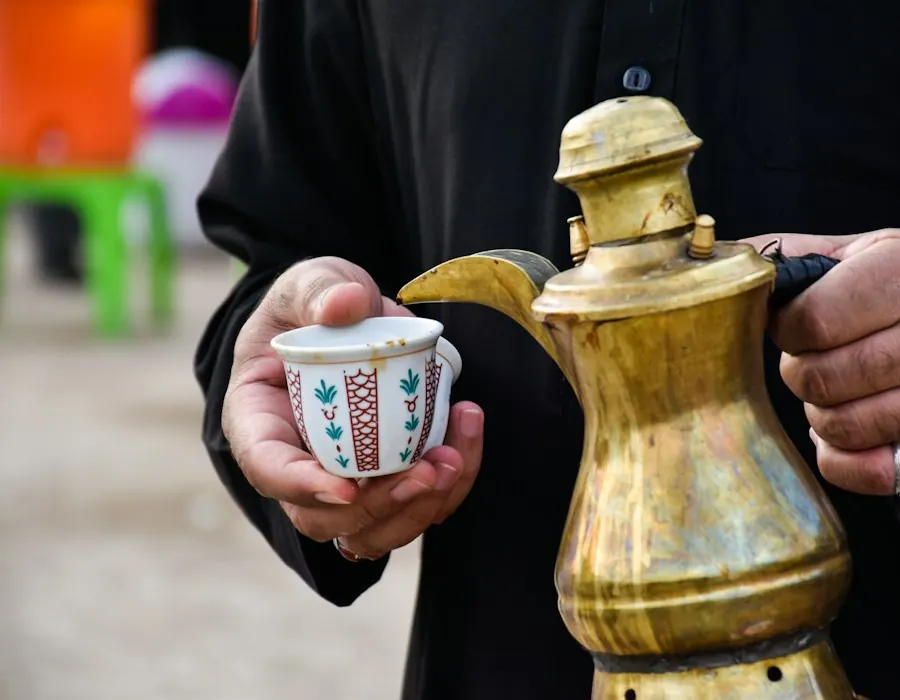 Coffee & conversationA friendship circle for people who enjoy cafés and unhurried conversation in Dubai. Low-pressure first meetings, close to home.
 Walkers & runnersA friendship circle for people who like morning walks, evening runs and beach paths in Dubai. Find a regular partner at your own pace.
 Book loversA friendship circle for readers in Dubai: talk about books, swap recommendations and visit libraries and bookshops together.
Keep reading
 FriendshipMaking friends as a couple in Dubai (and keeping friends of your own)
 CirclesWhy a board-game night turns strangers into friends
 FriendshipMaking friends in your 30s and 40s in Dubai, when everyone seems busy
 FriendshipMaking friends in Dubai when you work long hours
 FriendshipMaking friends as an introvert in Dubai
 New in townHow to stay friends when people leave Dubai (and how to keep building your circle)
 IdeasHobbies that help you meet people in Dubai
 ResearchFrom acquaintance to friend: the follow-up habits that matter
- IdeasWalking and running spots in Dubai to explore with a friend
- IdeasThings to do with new friends in Dubai this autumn
- CirclesHow to host a small meetup that people actually come to
- FriendshipHow to start a conversation with someone new (without dreading small talk)
- IdeasWhere to meet people in Dubai when brunch and bars are not your thing
- CirclesWhy joining a circle makes friendship so much more likely
- FriendshipIs it normal to feel lonely in Dubai? What to do about it
- IdeasThings to do in Dubai, and the reason your list never happens
- NewsTruFriend is now open in Dubai: real friendships, one good introduction at a time
- FriendshipHow to make friends in Dubai as a grown-up
- New in townNew to Dubai? How to build a social life in your first months
- ResearchHow long does it take to make a friend? What the research says
- SafetyHow to meet new friends safely in Dubai