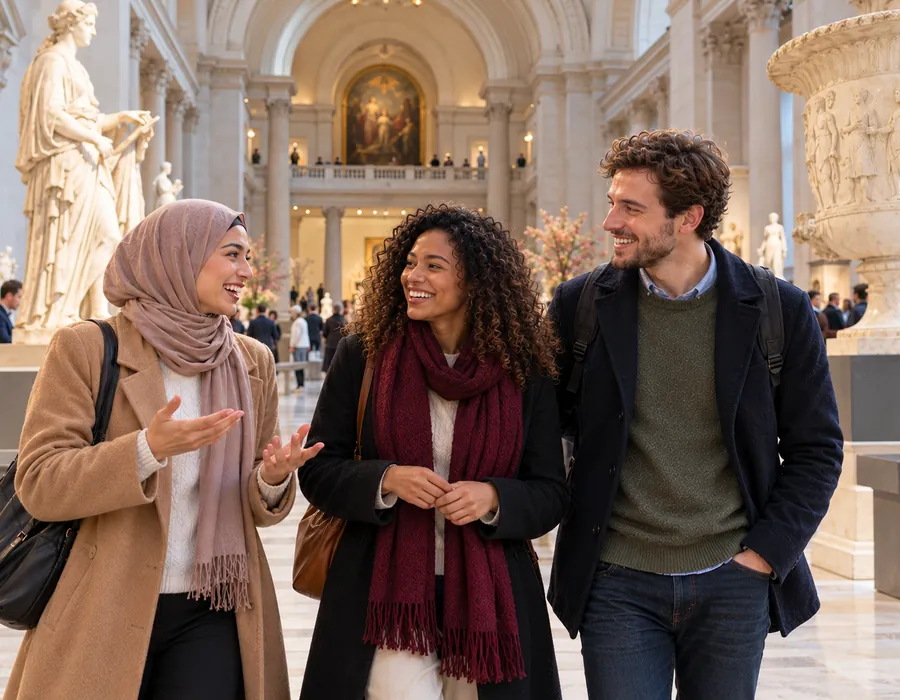
Daniel had lived in New York for almost two years before he went inside the Metropolitan Museum of Art. He passed it often enough, the grand steps on Fifth Avenue, the banners hanging over the entrance, the crowds of visitors eating lunch on the stone ledges. He always meant to go. But a museum on your own on a Saturday can feel like homework, and the Met is so large that he never knew where to begin. So he kept walking past.
What finally got him through the doors was a message from a small group he had joined a few weeks earlier. Five people, most of them fairly new to the city, had agreed to meet on the steps at eleven, spend two hours inside and then find somewhere for a late lunch. One of them, a retired schoolteacher called Ruth, had been going to the Met for forty years and offered to lead the way to her favourite rooms. Daniel went. He saw the Temple of Dendur in its glass hall with the afternoon light on the water, stood far too long in front of a painting of wheat fields, and listened to Ruth tell a story about every second gallery. At lunch the group argued happily about which room had been the best. He has not missed a museum Saturday since.
Why museums are such good places to meet people
A museum solves the hardest part of meeting new people, which is knowing what to say. In a café, a group of near-strangers has to make conversation from nothing. In a gallery, the conversation is already on the walls. Someone stops in front of a sculpture and says it reminds them of something from home. Someone else admits they have no idea what a painting is about, and a third person has a theory. Within half an hour, the group has shared a dozen small opinions and a few laughs, and nobody had to think of a single icebreaker.
Museums also give a meeting a natural shape. You arrive, you wander, you stop for a break, you leave. There is no pressure to fill every minute with talk, because looking quietly together is part of the point. For people who are a little shy, or who find a long face-to-face conversation tiring, that rhythm is a relief. You can drift ahead to a room that interests you and drift back again, and nobody minds.
And in New York, the choice is extraordinary. Few cities in the world have so many great museums within a short subway ride of each other, and many of them offer pay-what-you-wish or free hours for some visitors. It is always worth checking each museum’s own website before you go, because admission rules change and some depend on where you live.
The Met: a whole world under one roof
The Metropolitan Museum of Art is the obvious place to start, and also the easiest place to get lost. It holds five thousand years of art, from Egyptian tombs and Greek sculpture to European paintings, arms and armour, musical instruments and modern American art. Trying to see everything in a single visit is a mistake. The best museum groups pick one or two areas and leave the rest for another week.
That is what Daniel’s group learned to do. One Saturday was only the Egyptian galleries. Another was the American Wing, with its period rooms and the quiet courtyard where people sit on benches under the skylight. A group that meets regularly at the Met never runs out of new rooms.
MoMA: the conversation starter
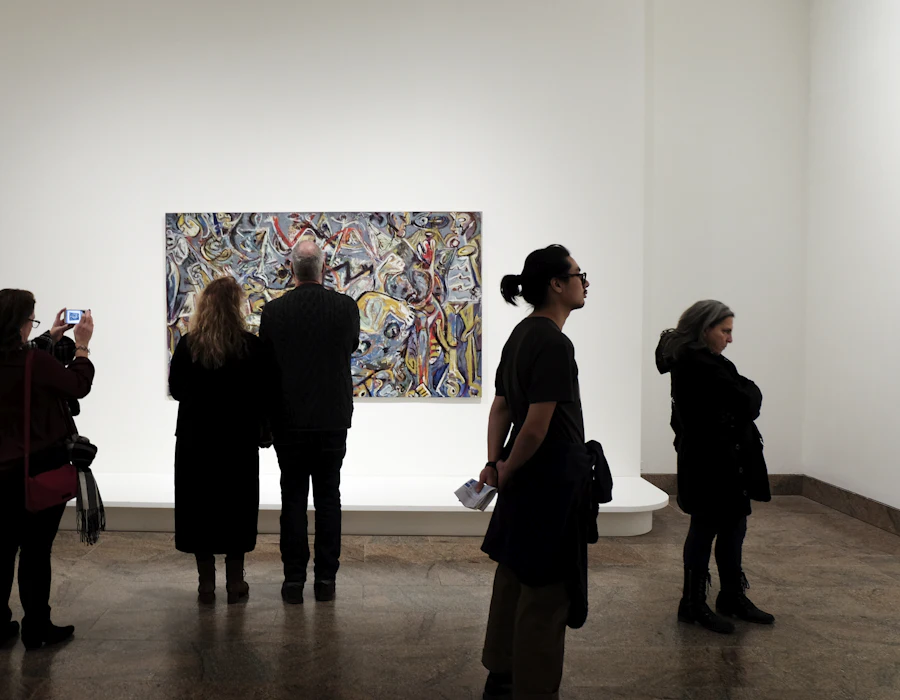
The Museum of Modern Art in Midtown is a different experience altogether. It is smaller and more concentrated, and its collection is full of works that people recognise from postcards and posters: Van Gogh’s The Starry Night, Monet’s water lilies, Warhol’s soup cans. Modern art also has a useful effect on a group, because almost everyone has an opinion about it. Some people love a canvas painted a single colour. Others think they could have done it themselves. Both views make for a lively walk through the galleries.
Priya, a software engineer who joined a museum group soon after arriving from London, says MoMA was where her group really came together. They spent twenty minutes in front of one abstract painting, each giving it a different meaning, and laughed so much that a guard smiled at them. Afterwards they walked through the sculpture garden and made a plan for the following month. A small disagreement, she says, is often more bonding than polite agreement.
The American Museum of Natural History: everyone becomes curious again
On the Upper West Side, facing Central Park, the American Museum of Natural History has a way of making grown-ups feel about ten years old. The great blue whale hangs from the ceiling of the ocean hall. The dinosaur halls are full of skeletons that seem impossibly large. The dioramas of animals in their landscapes, painted decades ago, are still quietly astonishing. It is impossible to walk through these rooms without saying “look at that” out loud, which makes it a wonderful place for a group that is just getting to know each other.
It is also a good choice for a mixed group, where not everyone is an art lover. Someone who would be bored by a gallery of portraits may light up at the meteorites or the gems.
The Brooklyn Museum: room to breathe
Across the river, beside Prospect Park and the Brooklyn Botanic Garden, the Brooklyn Museum is one of the largest museums in the country, and often much calmer than the famous names in Manhattan. Its collections range from ancient Egypt to contemporary art, and it has a long record of exhibitions that reflect the many communities of Brooklyn itself. For a group based in Brooklyn, it is the natural home museum, and the location is ideal: a morning in the galleries, then a walk in the park or the gardens, depending on the season.
Why small groups work best
There is a reason TruFriend groups are kept between three and ten people. A museum visit with twenty people turns into a tour, with everyone shuffling behind a leader. A visit with two people can feel like a lot of pressure, especially with someone you hardly know. Somewhere in the middle is the sweet spot. Four to six people can move through a gallery together, split naturally into twos and threes in front of different works, and come back together for coffee without anyone feeling left out.
Small groups also help friendships grow over time. When the same faces meet every few weeks, people begin to know each other’s tastes. Someone always heads straight for the photography. Someone else always wants to see the armour. Those little habits become running jokes, and running jokes are one of the surest signs that a group of acquaintances is turning into a group of friends.
A few ideas for a good museum meet-up
The groups that keep going tend to share a few simple habits. They meet at a clear, public spot, such as the front steps of the Met or the main entrance of the museum, so nobody wanders the halls looking for the others. They keep the visit to around two hours, because museum fatigue is real and nobody enjoys the last forty minutes when their feet hurt. They choose one part of the collection rather than trying to see it all. And they leave time afterwards for a coffee or an early lunch in a busy café nearby, because that is when the real conversation happens, as people compare what they liked and why.
Daytime and early evening suit museum groups best. A Saturday or Sunday morning is popular, but a weekday evening when a museum stays open a little later can be just as good, especially for people who work long hours during the week. Either way, everyone makes their own way there and home again, and the whole meeting takes place in a busy, public setting.
How TruFriend helps
TruFriend is a friendship-only platform for grown-ups aged 18 and over. It is not for dating, and it is not for networking or selling. Members tell TruFriend what they enjoy, where in the city they live and when they are usually free, and it introduces them to a small number of compatible people nearby. A chat opens only when both sides agree, and every plan takes place in a public place, like a museum entrance on a busy Saturday morning.
The Art and culture circle is made for people like Daniel and Ruth, who would rather share a gallery than walk it alone. Coffee and conversation is there for the part of the day that comes after the museum, when the group sits down and talks it all over. And New in New York welcomes anyone who has just arrived and is still working out which museum to visit first. Groups are small, from three to ten people, so the same faces return and friendships have time to grow.
Daniel still has not seen the whole of the Met. He hopes he never will, because there is always another Saturday and another room. If you would like a museum group of your own, request an invite and we will send you a personal invitation.
Don’t just read about it
Join a circle of people in New York who enjoy the same things. Members already on TruFriend can join from the app or suggest a plan in any chat.
 Art & cultureA friendship circle for galleries, museums, cinema, theatre and live music in New York. Find people to see shows and exhibitions with.
 Coffee & conversationA friendship circle for people who enjoy cafés and unhurried conversation in New York. Low-pressure first meetings in small groups, close to home.
 New in New YorkA friendship circle for grown-ups (18+) who have recently moved to New York: settle in, explore the city and build a social life with others doing the same.