
Daniel grew up in Astoria, played basketball in Astoria Park every summer of his teenage years and went to college an hour’s train ride from home. For most of his twenties, friendship took no effort at all. There was always someone on the courts, always a plan for Friday, always a group chat that never went quiet. Then, slowly and without anyone deciding it, the circle thinned. One friend took a job in Boston. Another married and moved to Long Island, which from Astoria might as well be another planet once the traffic is counted. A third had twins. At thirty-two, Daniel realised one Saturday morning that he could not think of a single person to invite for a walk.
He did something that felt slightly embarrassing at the time. When a colleague mentioned that a small group from different offices met every Sunday morning to walk the loop in Flushing Meadows Corona Park, Daniel asked if he could come. He went expecting to be polite and leave early. Instead, he walked for an hour, stayed for coffee afterwards and came home with two new numbers in his phone. A year later, those Sunday mornings are the fixed point of his week, and one of the people he met there is now the friend he calls first.
A city of millions can still feel lonely
It sounds strange to say that anyone could be lonely in New York. This is a city that never really goes quiet, where you share a subway carriage with two hundred people before breakfast and where conversations with strangers start at crossings and in queues. New Yorkers are famous for their directness and, beneath the hurry, their generosity. And yet many grown-ups here quietly feel what Daniel felt: surrounded by people, but short of friends.
Part of the reason is that the friendships of our school and university years were built by circumstance. We saw the same people every day without trying. After graduation, that structure disappears. Work fills the week, errands fill the weekend, and the distances in a city of five boroughs make spontaneous meetings rare. A friend who lives in the Bronx and works in Lower Manhattan is not someone you bump into by chance. Friendship stops happening on its own and starts needing a little intention.
Newcomers feel this even more sharply. Whether they have moved from Texas, Toronto or Mumbai, they arrive in a city where many people already have long-established circles. Breaking into those circles is entirely possible, but it takes time and some patience.
Think small and local
The single most useful piece of advice for making friends in New York is to think about geography first. A friendship that needs two subway changes and an hour each way will struggle, however much you like each other. A friendship with someone ten minutes away has a real chance, because meeting costs almost nothing. Daniel’s Sunday group works partly because everyone lives in Queens, and the park is a short ride for all of them.
So look first at your own part of the city. In Brooklyn, Prospect Park and the streets around Grand Army Plaza are natural meeting grounds. In Upper Manhattan, the paths of Fort Tryon Park and the riverside offer quiet walks with wide views. Lower Manhattan has Battery Park and Washington Square Park. The Bronx has the New York Botanical Garden and the long green ribbon of Pelham Bay Park. Staten Island has its own parks, the waterfront and Snug Harbor. The best friendships in a big city are often the ones close to home.
Repetition matters more than chemistry
People often imagine that friendship begins with an instant spark: you meet someone, you click, and that is that. Sometimes it happens. More often, friendship grows from repetition. You see the same face at the same place week after week, and gradually polite conversation becomes real conversation. Researchers who study friendship keep returning to the same idea: regular contact over time is what turns acquaintances into friends.
That is why a single event, however enjoyable, rarely produces a lasting friendship, while a weekly walk, a monthly book discussion or a standing coffee on Tuesday evenings often does. If you want to make friends, look for something that repeats. Then keep showing up, even on the weeks you do not feel like it. The person who is there every time becomes, almost without noticing, part of the group.
Places where friendships grow
New York’s public spaces were made for gathering. The great reading room of the New York Public Library on Fifth Avenue, with Bryant Park just behind it, is a fine place to begin an afternoon with someone new. Branch libraries across all five boroughs run talks, classes and book discussions that are free and open to everyone, and they are some of the friendliest rooms in the city.
Walking is another way in. A loop of the Central Park reservoir, a stroll along the High Line, or the path beside the Hudson as the sun goes down: each one gives you something to look at and something to talk about. Walking side by side makes conversation easier. There is no pressure to fill every silence, and the city keeps supplying new subjects.
Then there are the museums. A slow hour among the galleries of the Metropolitan Museum of Art or the Brooklyn Museum, followed by a coffee to compare favourites, is a wonderful thing to share with people you have only just met. So is a Saturday morning at the Union Square Greenmarket, tasting apples from upstate farms and arguing cheerfully about which is best. Shared curiosity is a good foundation for friendship, and New York offers more of it than almost any city in the world.
Say yes, then follow up
Two small habits make an enormous difference. The first is saying yes. When a colleague mentions a walk, a talk, a pick-up game or a free concert in the park, say yes more often than feels natural. Most invitations are made casually and forgotten quickly. The people who make new friends are often simply the ones who took those casual invitations seriously.
The second habit is following up. After a good conversation, send a short message the next day. Suggest a second meeting with a specific time and place rather than a vague “we should hang out sometime”. Vague plans almost never happen in a city this busy. A message that says “I am walking in Prospect Park on Saturday morning, would you like to come?” usually gets a real answer.
Small groups are easier than big ones
Large gatherings can be exhausting, especially for quieter people. In a crowd of forty, conversations stay shallow, and it is easy to leave without having really spoken to anyone. Small groups of three to eight people are different. Everyone gets a chance to talk, quieter members are noticed and drawn in, and it is easier to remember who said what.
Respect, comfort and safety
Making new friends should always feel comfortable. Meet in busy public places such as parks, libraries, museums and markets, especially the first few times, and keep plans to daytime and early evening. Let someone know where you are going. Make your own way there and back so that you can leave whenever you wish. Good friendships respect boundaries. Someone who pushes too quickly for personal details, private meetings or money is not behaving like a friend. Trust grows over time, and it is fine to let it grow slowly.
Where TruFriend fits
The hardest part of making friends in New York is often the very first step: finding a few people nearby who share your interests and are free at the same time. That is where TruFriend can help. It is an invite-only platform for friendship only, for grown-ups aged 18 and over, and it is now open in New York. Tru, our assistant, learns what you enjoy, which part of the city you live in and when you are usually free, then introduces you to a few compatible people nearby, with the reasons you might get along. A conversation only opens when both of you say yes, and every plan happens in a public place.
The Coffee and conversation circle is made for regular café meetings, the Walkers and runners circle for mornings in Central Park or Prospect Park, and the Book lovers circle for people who would rather talk about the last good novel they read. Groups are small, from three to ten people, so you see the same faces again and a first meeting has a real chance to become a friendship.
Daniel still walks in Flushing Meadows every Sunday morning. These days he is the one who welcomes the newcomers. If you would like a few good friends of your own in New York, request an invite and we will send you a personal invitation.
Don’t just read about it
Join a circle of people in New York who enjoy the same things. Members already on TruFriend can join from the app or suggest a plan in any chat.
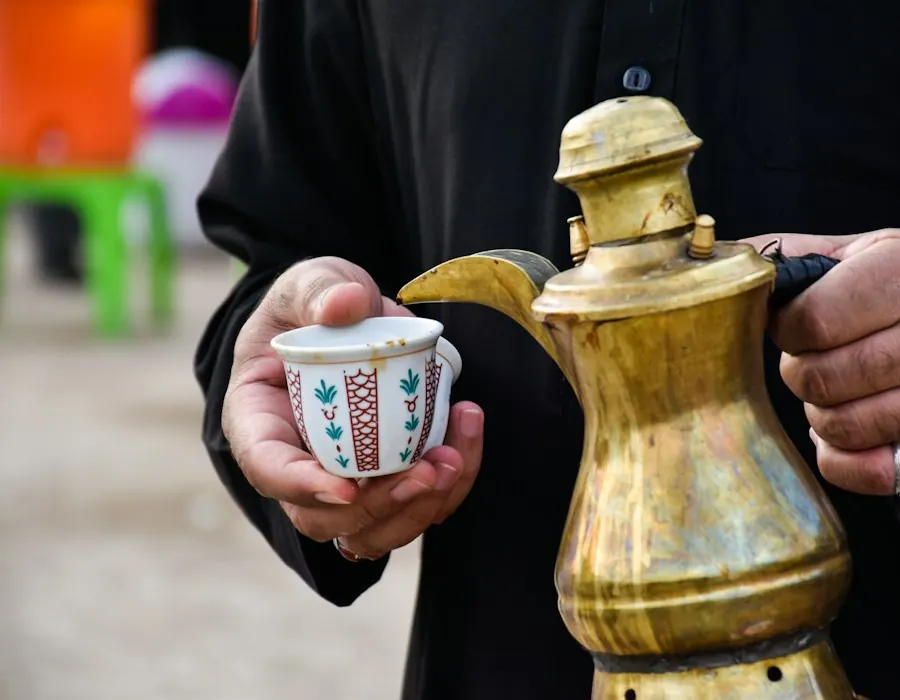 Coffee & conversationA friendship circle for people who enjoy cafés and unhurried conversation in New York. Low-pressure first meetings in small groups, close to home.
 Walkers & runnersA friendship circle for people who like long walks, early runs and park and waterfront paths in New York. Find regular company at your own pace.
 Book loversA friendship circle for readers in New York: talk about books, swap recommendations and visit libraries, bookshops and book festivals together.