Take someone we will call Priya. Three years in Dubai, two children, a job she mostly does from home. Ask her who her friends are and she will name six people without hesitating. Then she will pause, because she has noticed something slightly odd about the list. Every one of them is the parent of a child in her son's class.
She met them at the gate at 7.20 in the morning, in the WhatsApp group about the Sports Day timings, at birthday parties in soft-play centres where the grown-ups stand along the wall holding coffees. They are lovely. She sees them constantly. And when she tries to remember the last conversation she had with any of them that was not, in the end, about the children, she genuinely cannot.
If you are a parent here, you may recognise the shape of this. Your social life did not disappear when the children arrived. It was quietly rebuilt around them, and somewhere along the way you stopped being in it as yourself.
Why the school gate is so good at starting friendships
It is worth giving the school gate its due, because it does something most of Dubai does not. The sociologist Rebecca Adams describes three conditions that friendships tend to grow from: being physically near each other, repeated interaction that nobody has to plan, and a setting relaxed enough to share a little. The school run hands you the first two for free. The same faces, the same ten minutes, five mornings a week, all term.
That is why parents who arrive in the city knowing nobody often find their first friends there. You do not have to be brave. You just have to keep turning up, which you were going to do anyway. For a lot of families, especially in the first year, those friendships are a lifeline, and nothing here is an argument against them.
And why those friendships are so fragile
The trouble is what they are built on. A school-gate friendship rests on the children being in the same class, and in Dubai that arrangement lasts about as long as a school year. Classes get reshuffled. Someone moves to a school nearer their new villa. A family relocates to Singapore in June and the group chat goes quiet. The children fall out over a football, and suddenly the playdate is awkward, and so is the coffee.
There is a subtler problem too. The relationship has a script, and the script is logistics: who is collecting, which uniform, whether the trip form has gone in. The children are the reason you meet, and they are also, very often, the only topic. You can see someone every weekday for two years and still not know what they did before they were a parent, or what they would do with a free Saturday.
Robin Dunbar's work on friendship suggests that relationships fade without regular contact, and school-gate ones are especially exposed, because the contact is doing all the work. When the gate goes, so does the reason to see each other, and neither of you ever practised the other kind of meeting.
Wanting friends of your own
Saying you want friends who are not connected to your children can feel faintly disloyal, as if you are asking for time off from being a parent. It is nothing of the sort. It is asking to be a whole person, with a name that is not somebody's mum or somebody's dad, and conversations that go wherever they go.
Friends of your own also last differently. A friend you met because you both like running at dawn, or because you argued happily about a book, does not depend on which class anyone is in. When the children change schools, or grow up and need you less, that friendship is still standing. For parents whose closest friends are thousands of kilometres away, having even one or two of those here changes how the city feels. If it has been a while, feeling lonely despite being busy is far more common than people admit.
The windows you actually have
The honest obstacle is time. Most advice about meeting people assumes free evenings, and parents of young children do not have those in any reliable way. So it helps to look at the windows you do have, however small, and build around them.
Early mornings are the obvious one from October to April. If a partner can cover breakfast once a week, the hour before the school run is yours: Kite Beach, the track at Al Barsha Pond Park, a loop of Zabeel Park or Creek Park, all of them busy with walkers and runners before seven. It is short, it has a hard edge, and it ends before anyone needs a packed lunch.
School hours are a real window for some parents: those at home, those working flexibly, those on shifts. A coffee at 10 on a Tuesday is not a lesser plan than a Saturday dinner. It is often a better one, because the café is quiet and nobody is watching the clock for a babysitter. Parents who work long office hours have a harder time here, and we have written separately about making friends when you work long hours.
Then there are weekends, where the children usually come too. That is fine, and often lovely. But it is worth being clear-eyed about what it does to a conversation.
Plans with children, and plans without
A park morning with another family is a good thing. The children run off, you stand by the climbing frame, and every four minutes someone needs a snack, a plaster or a referee. You can be friendly in those conditions. It is very hard to be known. The conversation never gets past its second sentence before it is interrupted, and it drifts back to the children because they are right there.
So think of it as two kinds of plan, both worth having. Family plans keep the week social and the children happy. Plans without the children are where friendships of your own actually grow, because for an hour you get to finish a thought. You do not need many of the second kind. One a week, or even one a fortnight, is enough to change things, as long as it repeats.
Permission to take an hour
Many parents quietly believe an hour for themselves has to be earned, or justified, or spent on something productive like the gym. It does not. An hour walking and talking with someone you like is not selfish. It is maintenance, the same as sleep, and the people at home get a better version of you afterwards.
If you share parenting with someone, the simplest fix is to make it explicit: a standing slot each, every week, that the other covers without negotiation. Saturday at 7 is yours, Sunday at 7 is theirs. It stops the hour feeling like a favour, and it means you can say yes to a plan without first holding a household meeting.
Turning familiar faces into friends
You may find that one or two school-gate parents are people you would like whatever your children thought of each other. That is worth acting on. Jeffrey Hall's research at the University of Kansas suggests it takes around 50 hours together to become casual friends and around 90 to become friends, and ten-minute chats at the gate add up far more slowly than they feel like they should.
The move is small: suggest something without the children. "I walk at Kite Beach on Saturdays at 7, come along if you fancy it." If they say yes, you are having a different kind of conversation within ten minutes, and you will learn more in that hour than in a term of drop-offs. We have more on that step in from acquaintance to friend.
Where TruFriend fits
TruFriend is for the grown-ups themselves. Tru, our assistant, learns what you enjoy, when you are actually free and how far you will travel, so if your only window is Tuesday mornings in Al Barsha, that is what it works with. It introduces you to a few people nearby who fit, with the reasons you might get along, and a conversation opens only when you both say yes.
Circles are small groups around one interest, and a few suit parents' hours particularly well: coffee and conversation for school-hours plans, walkers and runners for early mornings, and fitness buddies for anyone who wants company at the gym. Any member can start a plan with a day, a time, a public place and a number of spaces, and "Free today" lets your circle know when an unexpected hour turns up. Plans are for members, so this is your hour, not a playdate. Every member's photo is checked, so everyone is a real person.
Friendship only, for grown-ups aged 18 and over, and free for founding members. Request an invite and we will email you a personal invitation.
Don’t just read about it
Join a circle of people in Dubai who enjoy the same things. Members already on TruFriend can join from the app or suggest a plan in any chat.
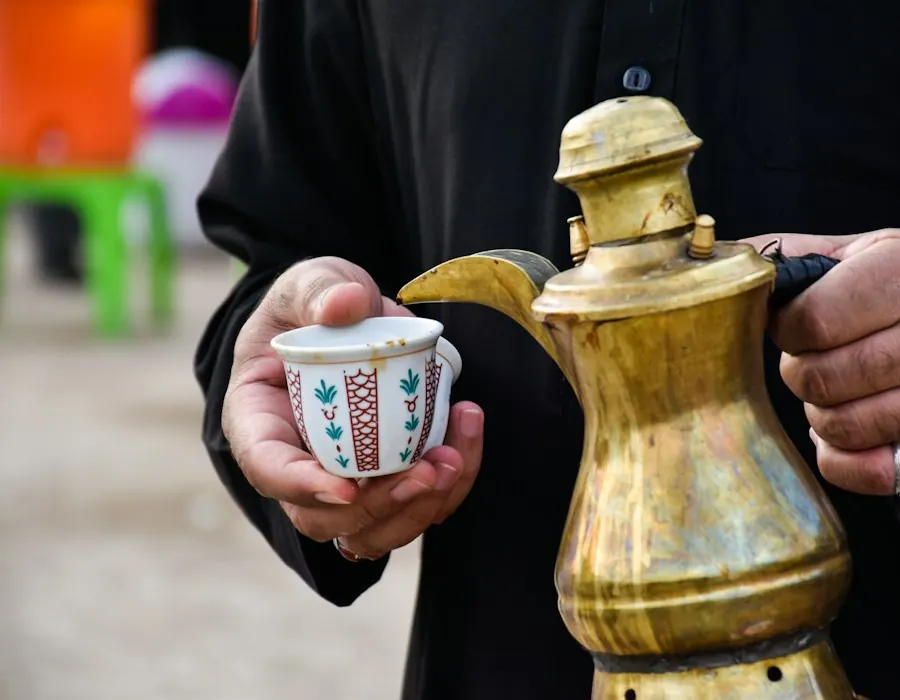 Coffee & conversationA friendship circle for people who enjoy cafés and unhurried conversation in Dubai. Low-pressure first meetings, close to home.
 Walkers & runnersA friendship circle for people who like morning walks, evening runs and beach paths in Dubai. Find a regular partner at your own pace.
 Fitness buddiesA friendship circle for people in Dubai who want company at the gym, in yoga or in group classes, so it’s easier to keep going.
Keep reading
 IdeasDubai's outdoor season: plans with friends from the desert to the mountains
 ResearchWhy friendships fade, and how to rescue one before it goes
 FriendshipMaking friends as a couple in Dubai (and keeping friends of your own)
 CirclesWhy a board-game night turns strangers into friends
 FriendshipMaking friends in your 30s and 40s in Dubai, when everyone seems busy
 FriendshipMaking friends in Dubai when you work long hours
 FriendshipMaking friends as an introvert in Dubai
 New in townHow to stay friends when people leave Dubai (and how to keep building your circle)
- IdeasHobbies that help you meet people in Dubai
- ResearchFrom acquaintance to friend: the follow-up habits that matter
- IdeasWalking and running spots in Dubai to explore with a friend
- IdeasThings to do with new friends in Dubai this autumn
- CirclesHow to host a small meetup that people actually come to
- FriendshipHow to start a conversation with someone new (without dreading small talk)
- IdeasWhere to meet people in Dubai when brunch and bars are not your thing
- CirclesWhy joining a circle makes friendship so much more likely
- FriendshipIs it normal to feel lonely in Dubai? What to do about it
- IdeasThings to do in Dubai, and the reason your list never happens
- NewsTruFriend is now open in Dubai: real friendships, one good introduction at a time
- FriendshipHow to make friends in Dubai as a grown-up
- New in townNew to Dubai? How to build a social life in your first months
- ResearchHow long does it take to make a friend? What the research says
- SafetyHow to meet new friends safely in Dubai