Haya signed up for the calligraphy course because of her grandfather. He had written beautifully, letters that seemed to lean into one another, and after he died she found a notebook of his practice sheets in a drawer at her mother’s house. She was thirty-four, worked at a bank on King Fahd Road, and had never held a reed pen in her life. On the first evening the teacher asked everyone to write a single letter, the alif, over and over for an hour. Haya’s looked like a bent nail. So did the alif of the woman beside her, a pharmacist called Lama, who leaned over and whispered, “Mine looks like it is falling asleep.” They laughed far louder than the joke deserved, and the teacher gave them a look. That was the start.
Ten weeks later they were still sitting side by side. By the end of the course they had a standing coffee every Tuesday before class, a shared folder of photos of their worst letters, and a plan to sign up for the next level together. Haya says she went to learn to write and came away with a friend she now talks to most days. Her calligraphy, she admits, is still only average.
Why learning together is so good for friendship
People who study friendship keep coming back to the same simple conditions: seeing the same people repeatedly, in a setting where talking is easy, over a long enough stretch of time for familiarity to turn into trust. A course delivers all three almost by design. The same faces, the same room, the same evening each week, for weeks on end.
Learning a craft adds something more. Everyone in the room is a beginner, which flattens the usual hierarchies. The senior manager and the university student are equally hopeless at centring clay on a wheel. Being bad at something together is wonderfully disarming. People laugh at themselves, help each other and admit things they would never say at work. Nobody is performing, because nobody can.
Busy hands also make conversation easy. Sitting across a table from a stranger with nothing to do but talk can feel like an interview. Sitting beside someone while you both shape clay, mix ink or work a loom, the talk comes and goes naturally. Silence is not awkward, because you are both concentrating. And when the conversation does start, it tends to be real.
Riyadh is a good city to learn in
Over the last few years Riyadh has become a much easier place to pick up a craft. Arabic calligraphy in particular has had national attention, with the Ministry of Culture dedicating a year to it, and beginners’ courses are now offered by cultural centres, private studios and community programmes across the city. Pottery and ceramics studios have opened in several districts, many offering short courses or single evening sessions. Diriyah and other heritage settings host workshops in traditional crafts from time to time, and some cultural organisations run sessions in Sadu, the geometric Bedouin weaving that is part of the Kingdom’s heritage.
Autumn is a natural time to begin. Many studios and centres start new courses as the city settles back into its rhythm after the summer, and the pleasant evenings make the drive to class feel like a treat rather than a chore.
There are other options too: cooking classes, perfume and oud blending, painting, photography, even woodwork for the ambitious. The specific craft matters less than three questions. Does it meet weekly, at the same time? Does it run for several weeks rather than a single session? And is the group small enough that you will sit near the same people? A one-off workshop is a pleasant evening. A ten-week course is a real chance at a friendship.
How to turn a classmate into a friend
Most people sit beside someone pleasant for ten weeks, say goodbye on the last night and never see them again. The course ends and so does the contact. The difference between that and what happened to Haya and Lama is usually one small step, taken early.
Arrive a little early, leave a little late. The ten minutes before class and the ten minutes after are where conversations start. People who rush in at the last second and leave on the dot miss the best part.
Sit in the same place. It sounds trivial, but sitting next to the same person each week turns a neighbour into a familiar face, and a familiar face into someone you look forward to seeing.
Make a small suggestion around week three. Not a big plan. Just: “Shall we get coffee before class next week?” or “There is a calligraphy exhibition on this weekend, would you like to go?” Something linked to what you already share is easy to say yes to.
Share the work. Send a photo of your homework, good or terrible. Ask how theirs went. A small shared project between classes keeps the thread going.
Plan beyond the last class. Before the course ends, suggest the next thing: the intermediate level, a monthly practice evening in a café, a visit to an exhibition together. Courses end. Groups that decide to keep going do not.
A story from the pottery wheel
Abdullah came to pottery for a very practical reason: his doctor told him to find something that would take his mind off work. He is an accountant in his late forties, and he describes his first attempt at a bowl as “a crime scene”. The studio ran a course for men on Monday evenings, eight people around four wheels, and there was simply no way to stay dignified. Clay went everywhere. Pots collapsed. One man’s vase flew off the wheel entirely and landed in another man’s lap.
It became the best evening of Abdullah’s week. By the fourth session the group had a chat on their phones, mostly photos of their failures. By the sixth, two of them were having dinner together after class. When the course finished, five of the eight booked studio time together once a month, and they still do. “At my age you do not expect new friends,” Abdullah says. “I thought that part of life was finished. It turns out I just needed a reason to sit next to someone every week.”
Small things to keep in mind
Choose a class you would enjoy even if you made no friends there at all. People can tell when someone is only there to network, and a friendship that grows out of a shared interest is sturdier for being real.
Be patient. The first two sessions are usually quiet, with everyone concentrating and a little shy. Week three or four is when people relax. Do not judge a group by its first evening.
Respect the room. Some classes are mixed, many are separate for men and women, and everybody is there to learn. Keep the chat friendly and light during the class, let the teacher teach, and save longer conversations for the coffee before or after.
And be generous with praise. Telling the person next to you that their letter or their bowl is better than last week costs nothing, and it is often the first warm thing anyone has said to them all day.
Where TruFriend fits
Finding the right class is the easy part. Finding people to go with, or to keep in touch with afterwards, is harder, especially when you are new to Riyadh or your old friends have drifted. TruFriend is built for friendship only. Tru, our assistant, gets to know what you enjoy, when you are free and which part of the city you live in, then introduces you to a few compatible people nearby, with the reasons you might get along. A conversation only opens when both of you say yes, and plans happen in public places. The Art & culture circle brings together people who would rather spend an evening learning something than scrolling, and Coffee & conversation is there for the cup before class.
Haya, for the record, has finally written a decent alif. Lama says it still leans slightly to the left. They are signing up for the next level together.
TruFriend is for friendship only, for grown-ups aged 18 and over, and free for founding members. Join TruFriend: it takes a minute.
Don’t just read about it
Join a circle of people in Riyadh who enjoy the same things. Members already on TruFriend can join from the app or suggest a plan in any chat.
 Art & cultureA friendship circle for galleries, museums, cinema, theatre and live music in Riyadh. Find people to see shows and exhibitions with.
 Coffee & conversationA friendship circle for people who enjoy cafés and unhurried conversation in Riyadh. Low-pressure first meetings, close to home.
 New in RiyadhA friendship circle for people who have recently moved to Riyadh: settle in, explore the city and build a social life with others doing the same.
Keep reading
 IdeasTwo wheels, one group: how a weekend ride in Riyadh turns into friendship
 IdeasInto the desert: day trips near Riyadh that turn new friends into real ones
 CirclesGame nights in Riyadh: how a table of strangers becomes a circle of friends
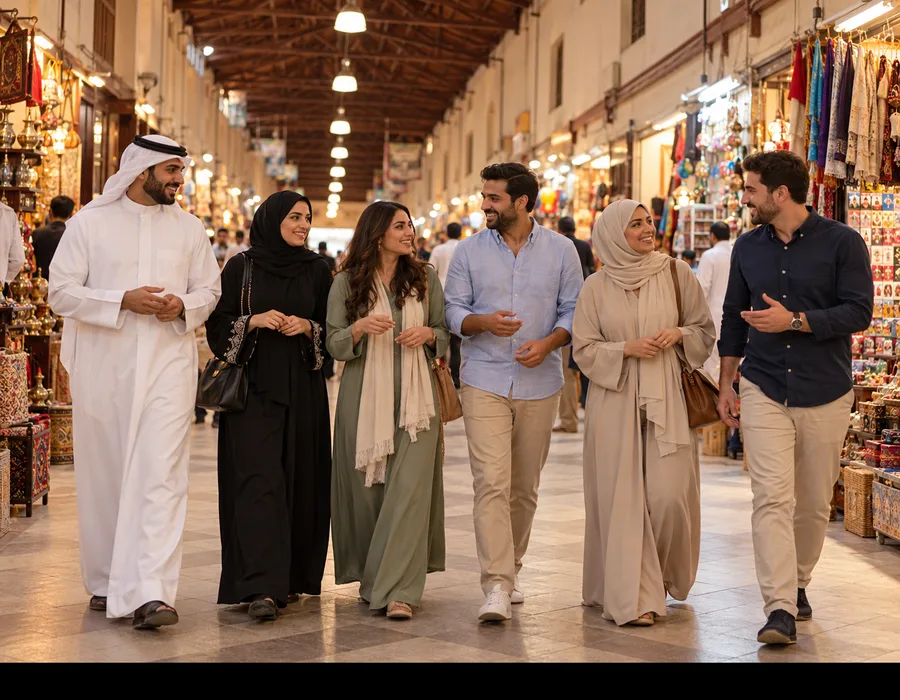 IdeasWadi Hanifa and the walk that turns into a friendship
 IdeasRiyadh Season with friends: how to make a night of it
 SafetyMeeting new friends safely in Riyadh
 FriendshipWhy coffee is the best first meeting in Riyadh, and how to make it count
 FriendshipMaking friends in Riyadh when you work long hours
- IdeasDiriyah with friends: an evening out that feels like an occasion
- FriendshipMaking friends in Riyadh as a woman: where to start
- IdeasWhy padel is Riyadh’s friendship machine
- IdeasYour first Riyadh weekend with new friends: a Thursday-to-Saturday plan
- FriendshipHow to make friends in Riyadh as a grown-up
- New in townNew in Riyadh? How to build a social life in your first three months
- IdeasThings to do with new friends in Riyadh this season