Most people have more acquaintances than they realise. The colleague you always end up talking to. The person from the padel group. The neighbour. The someone you met through a friend and got on with immediately and have seen twice since. None of them are friends, exactly, and you could not say why not.
The gap between those two words is where most grown-up social lives get stuck. It is not a shortage of people; it is a shortage of relationships that ever crossed a particular line. And the crossing is not mysterious — it comes down to a handful of things, most of which somebody has to do deliberately, because after school and university they no longer happen by themselves.
Hours, and the fact that nobody has them by accident
The blunt reason is time spent together. Research on friendship — Jeffrey Hall's study, summarised by the University of Kansas summary — puts casual friendship somewhere around 40 to 60 hours of shared time and a proper friendship at 80 to 100 — we went through the study here. An acquaintance you see for coffee every couple of months is accumulating about eighteen hours a year. At that rate it takes five years, and in Dubai one of you will have moved long before that.
This is why the single most effective thing you can do is not deepen the conversation but raise the frequency. Twice a month instead of twice a quarter changes the arithmetic completely, and the depth tends to arrive on its own once the hours are there.
It also explains something that confuses people: why you can have a lovely long dinner with someone, twice, and still feel like strangers, while the person you see for forty minutes every Tuesday somehow knows what is going on in your life. Frequency beats duration, reliably.
Move it out of the setting where you met
An acquaintance usually lives inside a context. The gym person exists at the gym. The work friend exists at work. The circle person exists at the circle. Inside that context you have a role, and the relationship stays the size of the role.
The move that changes things is embarrassingly simple: do something with them outside the place you met. Coffee after the class rather than during it. Breakfast on a Saturday rather than the Tuesday game. It sounds trivial and it is the most reliable single step in this entire piece, because it converts a contextual relationship into a personal one. You are no longer two people who both do a thing; you are two people who chose to see each other.
Almost nobody makes this move, which is why so many perfectly good acquaintanceships stall for years.
Say one true thing
The other half is disclosure, and it has a bad reputation because people imagine it means confessing something heavy. It does not. It means answering "how's work?" with something other than "yeah, busy".
Friendship is built on a slow exchange of small real things. You mention that the job has been draining lately, or that you are finding this year harder than you expected, or that you miss the food from home more than the people — and the other person, given permission, offers something of their own. That reciprocity is what makes a relationship feel like a friendship rather than a pleasant routine.
The rule is to go slightly first, and slightly smaller than feels dramatic. Going first matters because both of you are waiting for the other; slightly smaller matters because a big disclosure early puts the other person in an awkward position. One real sentence, and then see if it is returned. If it is, you have a friendship forming. If it never is, after a few tries, that is useful information too — some people are content to keep things where they are, and that is allowed.
Follow up without a reason
Acquaintances contact each other when there is a reason: a question, an event, an invitation. Friends contact each other for nothing.
So send the message with no reason. A photo of something they would find funny. "How did the thing on Thursday go?" A link to the exhibition they mentioned. It takes ten seconds and it is the single clearest signal that you think of them when they are not in front of you, which is close to a definition of friendship.
The other habit worth building is remembering specifics. Someone tells you their mother is having an operation, or that they are waiting on a visa decision, or that the presentation is on the 14th. Ask about it afterwards. Almost nobody does, and being asked is quietly one of the nicest experiences there is.
The awkward middle, and why people quit in it
There is a stage, somewhere around the fourth or fifth meeting, that almost everyone misreads. You like the person. The conversation is fine. And yet it still feels slightly effortful, still a bit polite, and you catch yourself wondering whether this is ever going to become the easy thing you had at university.
That stage is not a warning sign. It is what hour ten of a hundred feels like. The mistake is to interpret effort as incompatibility and quietly stop suggesting things — which both people then do, at roughly the same time, for the same reason, each assuming the other lost interest.
The way through it is not a deeper conversation. It is two more months of ordinary ones. Friendships do not have a moment where they click; they have a point, usually months in, where you notice in retrospect that the effort disappeared some weeks ago and you cannot say when.
Be reliable, which is more attractive than being interesting
In a city where a lot of plans evaporate, the person who shows up is remembered. Turning up when you said you would, on time, twice in a row, does more for a new friendship than any amount of charm.
This cuts the other way too. Two cancellations in a row, however good the reasons, will usually end an early friendship — not through resentment, but because the other person quietly stops proposing things. If you have to cancel, reschedule in the same message rather than leaving it open. "Can't do Saturday — Tuesday instead?" keeps the thread alive; "sorry, crazy week" ends it politely and permanently.
Accept the ones that do not cross over
Not every acquaintance is supposed to become a friend, and trying to convert all of them is exhausting and a bit strange. Some people are at capacity. Some are about to leave. Some you genuinely only overlap with in one narrow way, and that is a perfectly good relationship to have.
The useful discipline is to choose two or three where you will actually make the effort — the ones who are near you, whose company you look forward to, and who have shown some sign of reciprocating — and put your energy there rather than spreading it evenly over twenty people. Friendship does not scale, and trying to make it scale is how people end up with a full calendar and nobody to call.
Where TruFriend fits
TruFriend is designed around this transition rather than the first meeting. Introductions are matched on when you are both free and how far you will travel, not only on what you like, because two people who can never actually meet will never reach the hours. After a plan, both people are asked privately how it went and whether they would like to see each other again — and if you both say yes, that becomes a prompt on your home page to suggest the next one, which is precisely the follow-up step that most friendships die at.
Circles then supply the repetition: the same handful of people, around one shared interest, week after week, which is how the hours accumulate without anyone having to organise from scratch.
Friendship only, for grown-ups aged 18 and over, and free for founding members. Request an invite and we will email you a personal invitation.
Don’t just read about it
Join a circle of people in Dubai who enjoy the same things. Members already on TruFriend can join from the app or suggest a plan in any chat.
 Book loversA friendship circle for readers in Dubai: talk about books, swap recommendations and visit libraries and bookshops together.
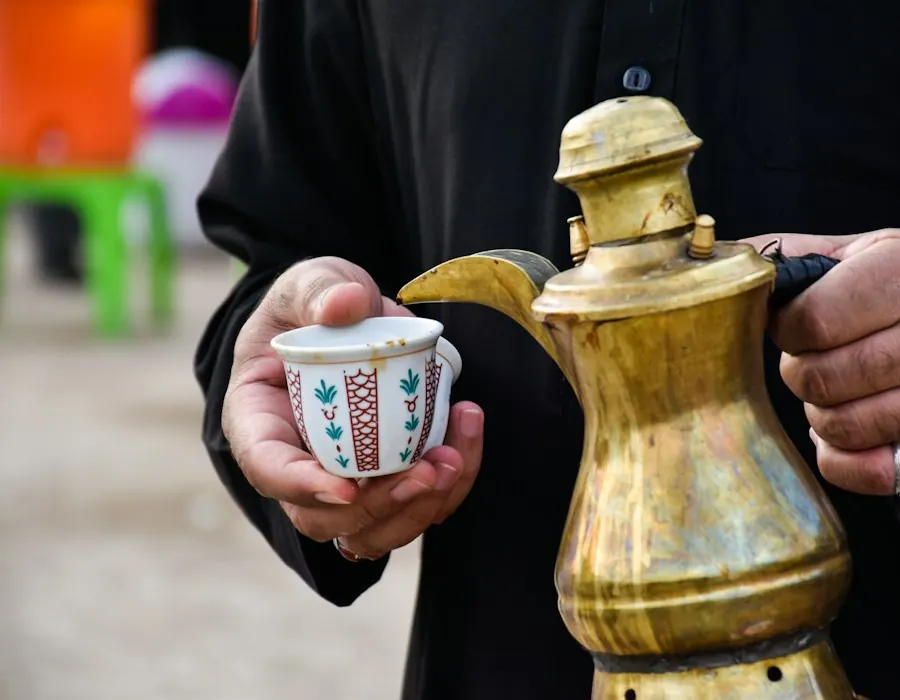 Coffee & conversationA friendship circle for people who enjoy cafés and unhurried conversation in Dubai. Low-pressure first meetings, close to home.
 Board games & quizzesA friendship circle for board games, card games and quiz nights in Dubai. Meet people for friendly competition and easy conversation.
Keep reading
 FriendshipMaking friends as a couple in Dubai (and keeping friends of your own)
 CirclesWhy a board-game night turns strangers into friends
 FriendshipMaking friends in your 30s and 40s in Dubai, when everyone seems busy
 FriendshipMaking friends in Dubai when you work long hours
 FriendshipMaking friends as an introvert in Dubai
 New in townHow to stay friends when people leave Dubai (and how to keep building your circle)
 IdeasHobbies that help you meet people in Dubai
- IdeasWalking and running spots in Dubai to explore with a friend
- IdeasThings to do with new friends in Dubai this autumn
- CirclesHow to host a small meetup that people actually come to
- FriendshipHow to start a conversation with someone new (without dreading small talk)
- IdeasWhere to meet people in Dubai when brunch and bars are not your thing
- CirclesWhy joining a circle makes friendship so much more likely
- FriendshipIs it normal to feel lonely in Dubai? What to do about it
 IdeasThings to do in Dubai, and the reason your list never happens
- NewsTruFriend is now open in Dubai: real friendships, one good introduction at a time
- FriendshipHow to make friends in Dubai as a grown-up
- New in townNew to Dubai? How to build a social life in your first months
- ResearchHow long does it take to make a friend? What the research says
- SafetyHow to meet new friends safely in Dubai