Stand on a streetcar in Toronto for ten minutes and you will hear half a dozen languages without trying. Portuguese near Dundas West, Cantonese and Mandarin along Spadina, Greek on the Danforth, Tagalog, Farsi, Punjabi, Arabic, Somali, Spanish, Korean. Close to half the people who live here were born somewhere else, and many of them still dream in another language. For a city like this, language is not a barrier. It is one of the easiest ways in.
This post is about language exchange: the simple practice of trading conversation in one language for conversation in another. It is one of the warmest ways to make friends in Toronto, because it starts with both people admitting they need help, and that honesty tends to build trust very quickly.
Why trading languages builds friendship
Most first meetings involve a certain amount of polish. People present their best selves, choose their words carefully and try not to look foolish. Language exchange removes that from the start. When you are trying to explain your weekend in halting Spanish, or your partner is searching for the English word for a kitchen tool, there is no way to look impressive. You laugh at your mistakes, you help each other, and within half an hour the formality is gone.
The format also has fairness built in. Each person is the teacher for half the time and the student for the other half. Nobody is doing the other a favour. That balance makes it easy to meet again, because both people gain something every time.
And the conversations go deep faster than you might expect. When you are practising a language, you naturally talk about where you grew up, what your family eats on holidays, which words from your childhood have no translation. Those are exactly the conversations that turn a language partner into a friend.
Sofia and Karim
Sofia came to Toronto from Bogotá to work as an architect. Her English was good on paper and stiff in practice: she could write a technical report but froze in a noisy bar. Karim had grown up in Toronto with parents from Alexandria, spoke Arabic at home as a child, and had let it fade during university. He wanted it back before his grandmother's next visit, and he had always wanted to learn Spanish.
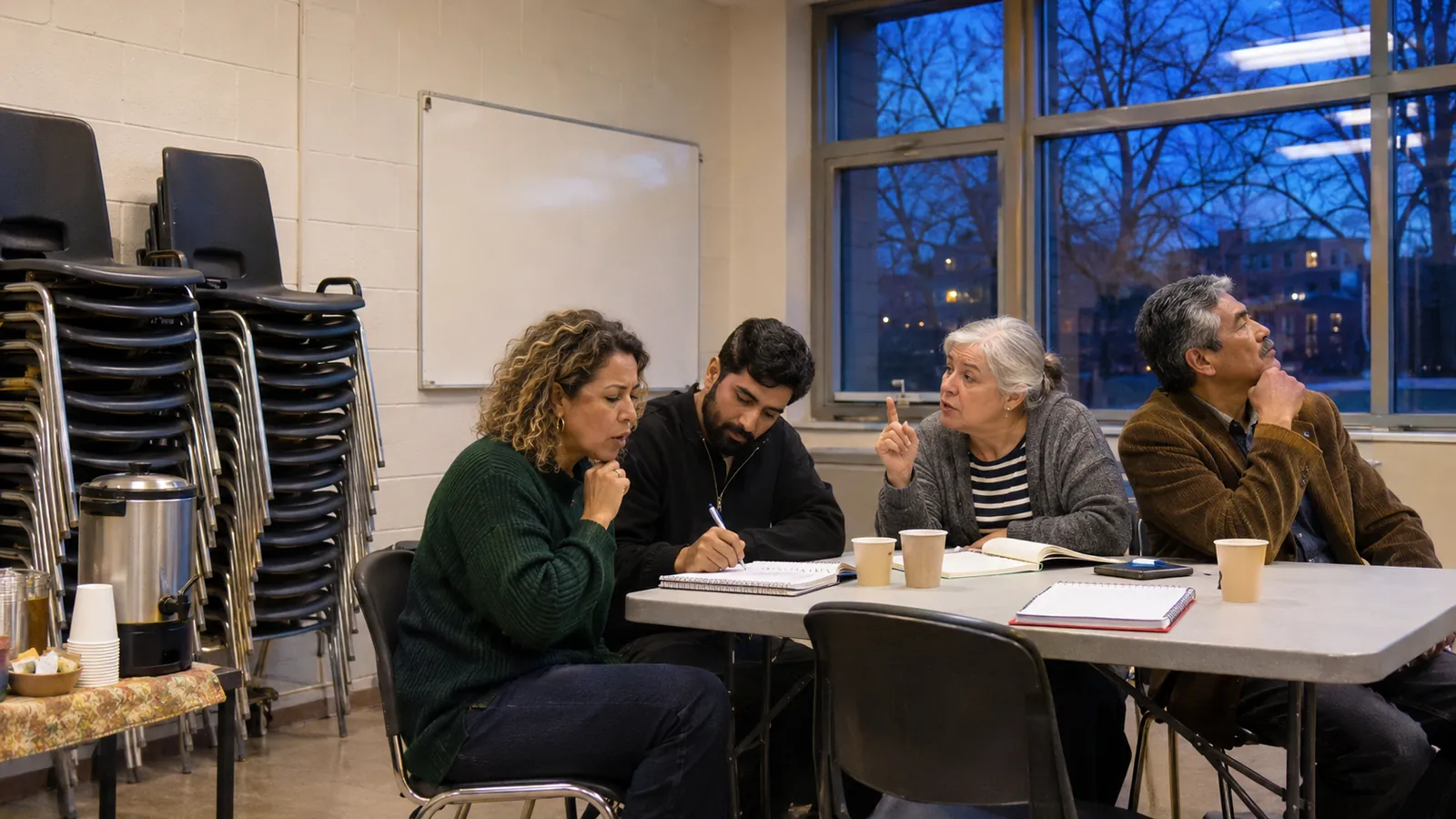
They met at a language exchange plan posted by a member in the Language exchange circle: six people at a café near Kensington Market, every second Thursday. The format was simple. The group split into pairs, spent half an hour in one language and half an hour in the other, then came back together for the last part of the evening in whatever mixture of languages worked.
Sofia and Karim were paired the first night because she wanted English and Spanish and he wanted Spanish. By the third meeting, they had started meeting separately on Sunday mornings as well, walking through the market and naming everything they saw in three languages. Karim's Spanish is now good enough to argue about football. Sofia no longer freezes in bars. And when Karim's grandmother visited from Egypt, Sofia came to dinner and was taught three Arabic words, one of which, she was told later, was a mild insult that the whole family found hilarious.
Where language exchange happens in Toronto
Toronto's neighbourhoods make natural backdrops for practising a language. Kensington Market and the surrounding streets are full of small cafés and international food, and a walk through them gives endless things to name and describe. Chinatown along Spadina Avenue, Greektown on the Danforth, Little Portugal and Little Italy each offer a chance to practise over food from the place the language comes from, which tends to make the conversation more lively and the vocabulary more useful.
The Toronto Public Library has long been a meeting point for people learning English, and many branches run conversation groups and other free programmes; the library's own listings show what is on near you. Libraries also make excellent quiet venues for a first exchange, especially for people who find busy cafés overwhelming in a second language.
For meeting spots that suit language practice, see our Toronto places for language exchange and places for coffee and conversation.
How to run a good exchange
Split the time fairly. Half in one language, half in the other. Use a timer if you need to. Exchanges that drift into one language only tend to fade, because one person stops getting anything out of them.
Correct gently, and only when asked. Agree at the start how much correction each person wants. Some people want every mistake fixed; others want to build confidence first. Constant interruption kills a conversation.
Bring a topic. "Tell me about your weekend" runs out quickly. Better prompts: a dish from your childhood and how it is made, the best and worst things about Toronto winters, a word in your language you wish existed in English.
Keep groups small. One-to-one is ideal for practice. Groups of four to six work well if they split into pairs and come together at the end.
Make it regular. Every week or every two weeks, same place, same time. Progress in a language comes from repetition, and so does friendship.
What you learn beyond the words
People join language exchanges for vocabulary and stay for something else. Over months of conversation, you learn how your partner's family celebrates, what their city smells like after rain, which jokes do not survive translation and why. You learn the polite way to refuse a second helping in their culture and the impolite way their grandmother does it anyway. That kind of knowledge cannot be found in a textbook, and it changes how you see your own city too. The bakery you walked past every day turns out to sell the exact bread your partner grew up with, and suddenly the street has a story.
There is also a quiet confidence that comes from being understood in a language you are still learning. For newcomers especially, the first real joke made and laughed at in English, or the first time a stranger asks for directions and you answer without thinking, can feel like the moment the city finally lets you in. Language partners are often there for those moments, and they remember them with you.
All levels, all languages
You do not need to be advanced to take part. Some of the best exchanges happen between beginners, who are equally lost and equally willing to laugh. Nor does it need to be English. Toronto has speakers of almost any language you might want to learn, and plenty of people born here want to recover a family language they lost as children, just as Karim did. A grandmother's language, half-remembered from childhood, is one of the most common reasons people join an exchange, and one of the most moving.
If you are new to the city, our guides on your first month in Toronto and eating together in Toronto pair well with this one, because few things open conversation like sharing food from someone's home country.
Starting your own exchange
Post a plan in the Language exchange circle with the languages you offer and the ones you want, a café or library branch, and a time that repeats every week or two. You will be surprised how quickly someone replies wanting exactly the swap you are offering.
Sofia says she came to Toronto to build buildings and ended up building a vocabulary, and a few friendships along with it. Karim says his grandmother now asks about Sofia before she asks about him. If you would like to find a language partner, or a few, join TruFriend; it takes a minute.
Don’t just read about it
Join a circle of people in Toronto who enjoy the same things. Members already on TruFriend can join from the app or suggest a plan in any chat.
 Language exchangeA friendship circle for people learning a language in Toronto: practise with people who are learning yours, over coffee rather than in a classroom.
 Food explorersA friendship circle for people who love trying new restaurants, street food and dishes from around the world in Toronto.
 Coffee & conversationA friendship circle for people who enjoy cafés and unhurried conversation in Toronto. Low-pressure first meetings in small groups, close to home.
Where to meet in Toronto
Public places picked for small groups of 3 to 10, sorted by interest and area.
Keep reading
 FriendshipPet lovers in Toronto: how dogs (and cats) bring people together
 IdeasToronto's galleries and museums are better with friends
 CirclesBook lovers in Toronto: how the library became a place to make friends
 IdeasToronto's ravines: the walk that turns strangers into friends
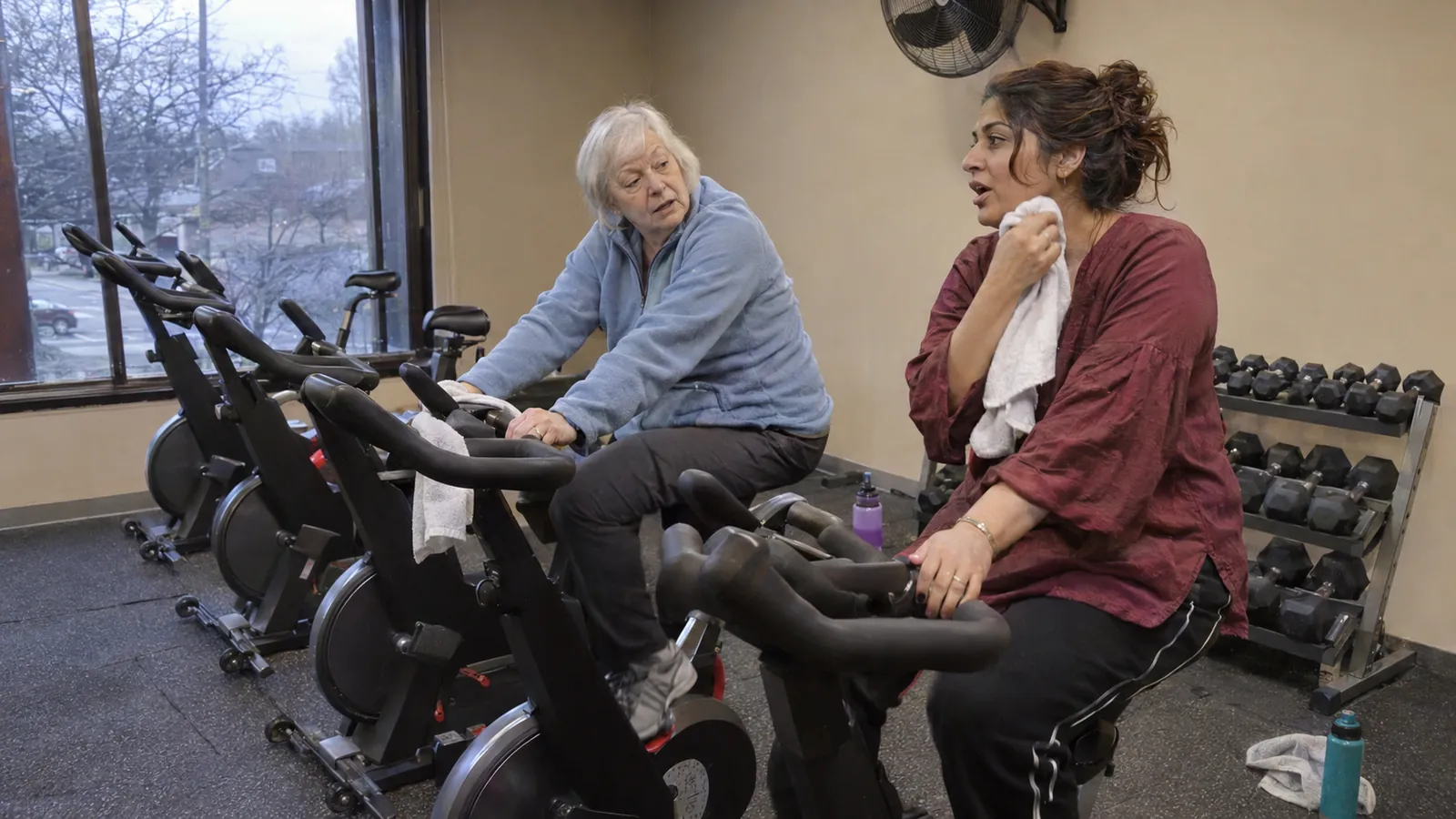 FriendshipNew in Toronto: what to do in your first month so the city stops feeling like a hotel
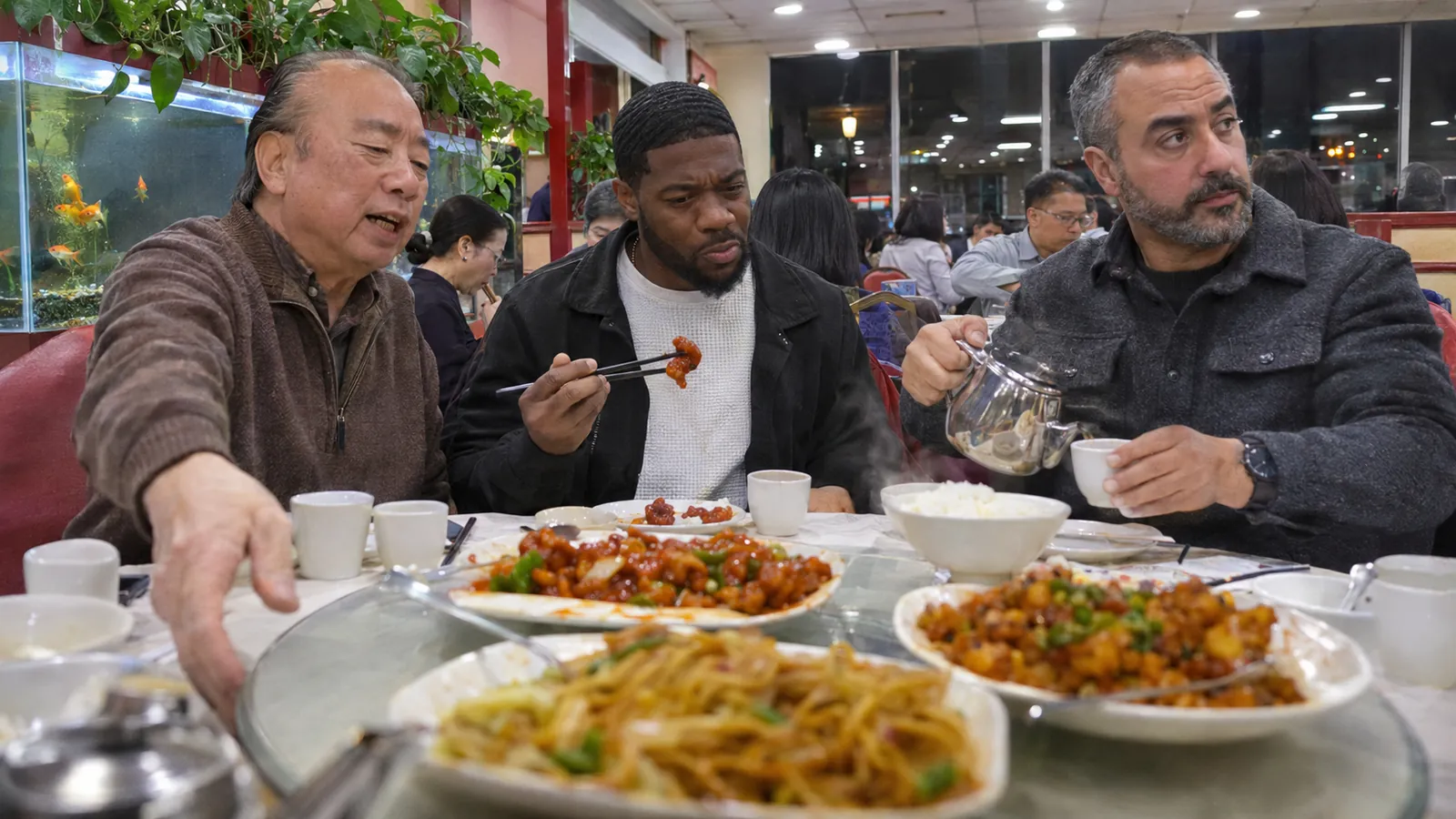 IdeasEating together in Toronto: how a shared table builds friendships faster than anything else
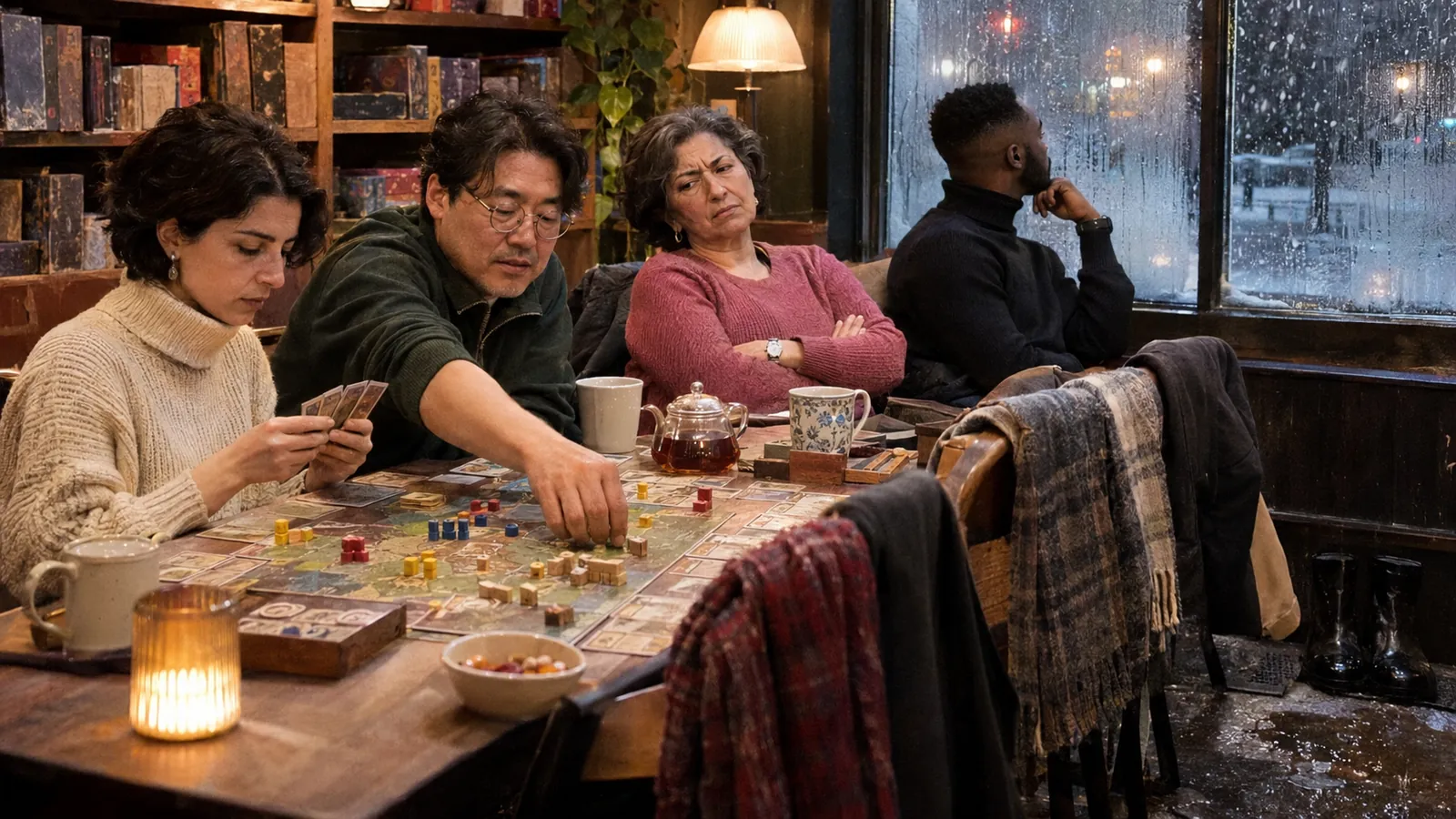 IdeasWhere to meet people in Toronto in winter, when nobody wants to stand outside
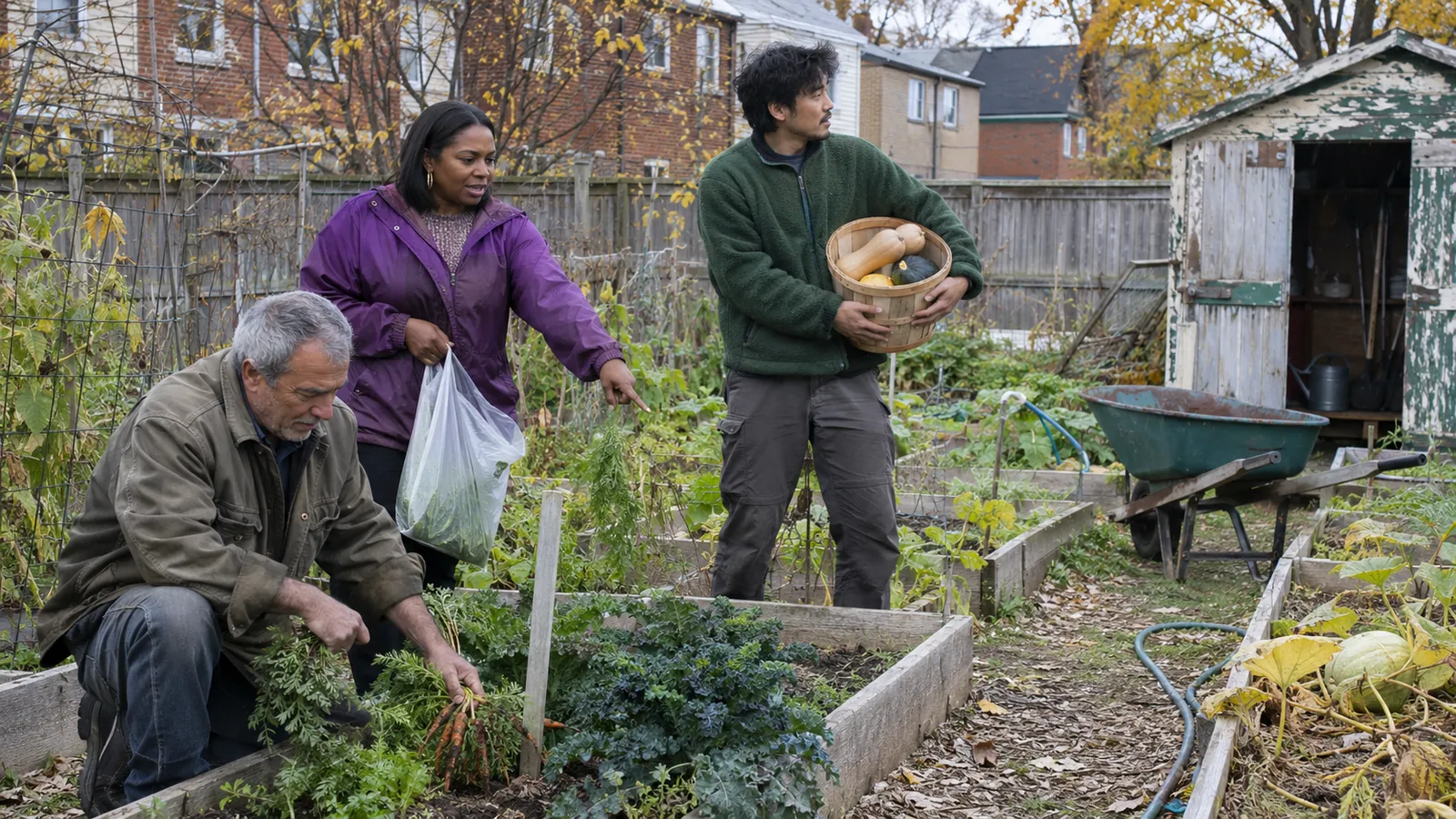 FriendshipHow to make friends in Toronto as a grown-up
 NewsTruFriend is now open in Toronto