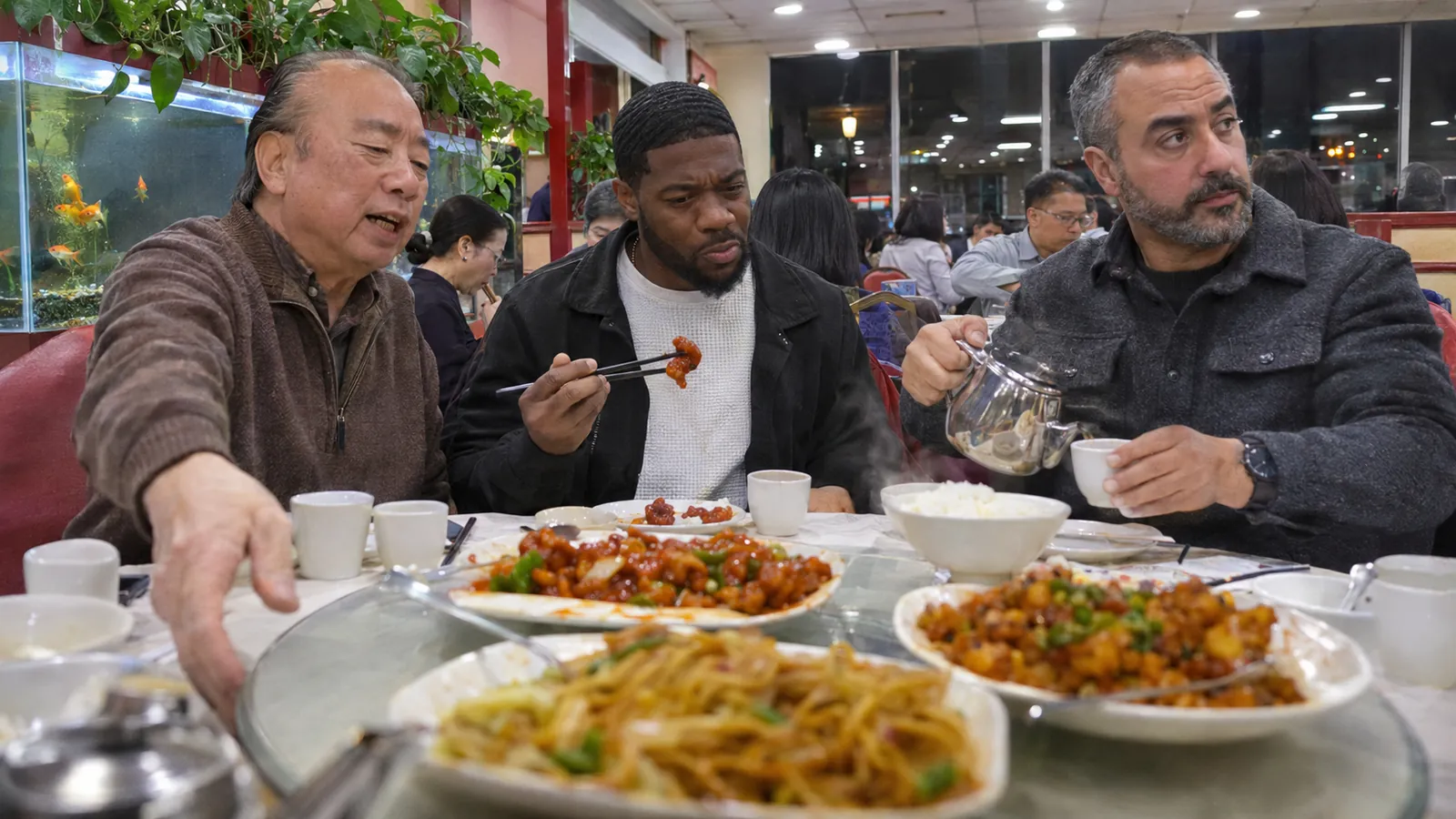
Nadia moved to Toronto with a long list of places to eat and nobody to eat them with. For the first month she tried anyway. She queued alone at a famous counter in Kensington Market, took her lunch to a bench and ate it while scrolling through her phone. The food was wonderful. The hour was a little sad. Good food, she decided, is only half the pleasure. The other half is turning to someone and saying, you have to try this.
Toronto is, by most reasonable measures, one of the great eating cities on earth, and the reason is not a famous restaurant scene. It is that half the city was born somewhere else and brought the cooking with them. Within an hour of transit you can eat Sri Lankan, Ethiopian, Portuguese, Hakka, Jamaican, Filipino, Persian, Korean, Caribbean, Italian and Vietnamese food, most of it in a small room run by a family, most of it for the price of a sandwich downtown. A city like that is wasted on one person with a phone.
Why eating together works so well
A shared meal removes the hardest part of meeting new people, which is knowing what to say. Nobody has to make conversation from nothing, because the food is doing half the work. You order, you pass plates, you argue about which dish was the best. The first twenty minutes, which are the awkward ones in any new group, disappear into the menu.
Food also gives people a safe way to tell you who they are. Somebody mentions that this is close to what their grandmother made, or that they have been looking for this one dish since they left home, and suddenly a group of near-strangers is talking about childhood and home and missing people, which is the conversation that actually makes friends. You cannot get there by asking what someone does for a living.
And it repeats. A group that eats together has an obvious reason to meet again, because there is always another neighbourhood and another dish. Running out of things to do is one of the common ways a new group quietly ends. Food groups never run out.
Kensington Market: the easiest first outing
Kensington is the natural place to start, because it is built for wandering. Narrow streets, produce stalls, cheese and spice shops, bakeries, tiny counters where you eat standing up. A group of four can walk the whole market in an hour, buy five small things and share them all, and nobody has to commit to a restaurant or a bill.
It also solves a problem that catches new groups out: differing budgets. In a market everyone spends what they want, and nobody has to explain. Kensington next to Chinatown makes an easy afternoon, and both are a short walk from Spadina, so nobody has a difficult trip home.
St. Lawrence Market: the morning plan
The St. Lawrence Market is the best indoor meeting room in the city. On a Saturday morning it is warm, busy and loud in a friendly way, and it has the rare quality of suiting a group that has only met once or twice. You walk the aisles, you taste things, you queue for breakfast, you sit. If it is the group’s second meeting and nobody is ready for a long dinner, this is the plan.
It works in winter, which matters here more than almost anywhere. From November a group needs indoor plans or it stops meeting, and the market is a door, a fixed time and somewhere warm to wait, which is everything a cold-weather plan needs.
The neighbourhoods are the real answer
Downtown has the famous names. The food that makes Toronto extraordinary is mostly further out, along a handful of long streets where one community after another has set up its kitchens. Scarborough for Hakka, Sri Lankan and Caribbean cooking. North York for Persian along Yonge and Korean around Bloor. Etobicoke and the west end for Eastern European and Caribbean food. Little India on Gerrard, Greektown on the Danforth, Little Portugal and Little Italy on the west side, Chinatown East at Broadview.
For a small group this is a perfect long-term project. One neighbourhood a month, chosen by a different member each time, with that person explaining why they picked it. It gives shy members an easy way to contribute, it spreads the travel fairly, and it means that after a year the group has eaten its way across the city and has a dozen running jokes about the attempt. Our food places in Toronto list is a starting point and includes only public venues with a fixed address.
Practical things that keep a food group together
The groups that last tend to have learned a few rules the hard way. Pick somewhere that takes a group of four to eight without a booking, or book it properly; a group of six standing outside a full room for twenty minutes is how a group gets smaller. Settle the money before the food arrives — separate bills, or split evenly, decided out loud and cheerfully at the start. Ask about food restrictions in the group chat rather than at the table, because somebody who does not eat pork, or does not drink, or is allergic to shellfish, should never have to announce it in front of strangers.
Choose places where talking is possible. A room so loud that four people cannot hear each other is a bad friendship venue however good the cooking. Early evening beats late night for almost everyone, especially people who travel in from Mississauga or Markham. And keep the group small, between three and ten. At a table of twelve you have a dinner. At a table of five you have a conversation.
Everyone brings one
The best habit we have seen in a Toronto food group is the simplest. Everyone brings one place. Not a famous recommendation from a list, but the place they actually go: the bakery near their apartment, the counter their family has used for fifteen years, the restaurant that serves the one dish they missed when they moved here. The group works through the list, one a month.
That is how Nadia’s group ended up in a small Sri Lankan restaurant in Scarborough on a January evening, with six people, far too much food and an argument about which of them had ordered badly. She had been in Toronto for eleven months and it was the first time she had felt like she lived here rather than visited.
Where TruFriend fits
TruFriend is a free friendship platform for grown-ups aged 18 and over, open now in Toronto. It is for friendship only: not dating, not networking, not selling. Members tell us what they enjoy, where in the city they live and when they are usually free, and Tru, our assistant, introduces them to a small number of compatible people nearby. A chat opens only when both sides say yes, our team checks profile photos, members can verify their identity, and every plan takes place in a public place.
The food explorers circle is built for groups like Nadia’s, and language exchange often ends up at the same tables, because a meal is the easiest place in the world to practise a language. Groups run from three to ten people, so the same faces come back and the jokes have time to accumulate.
If you have a list of places and nobody to eat them with, join TruFriend: it takes a minute.
Don’t just read about it
Join a circle of people in Toronto who enjoy the same things. Members already on TruFriend can join from the app or suggest a plan in any chat.
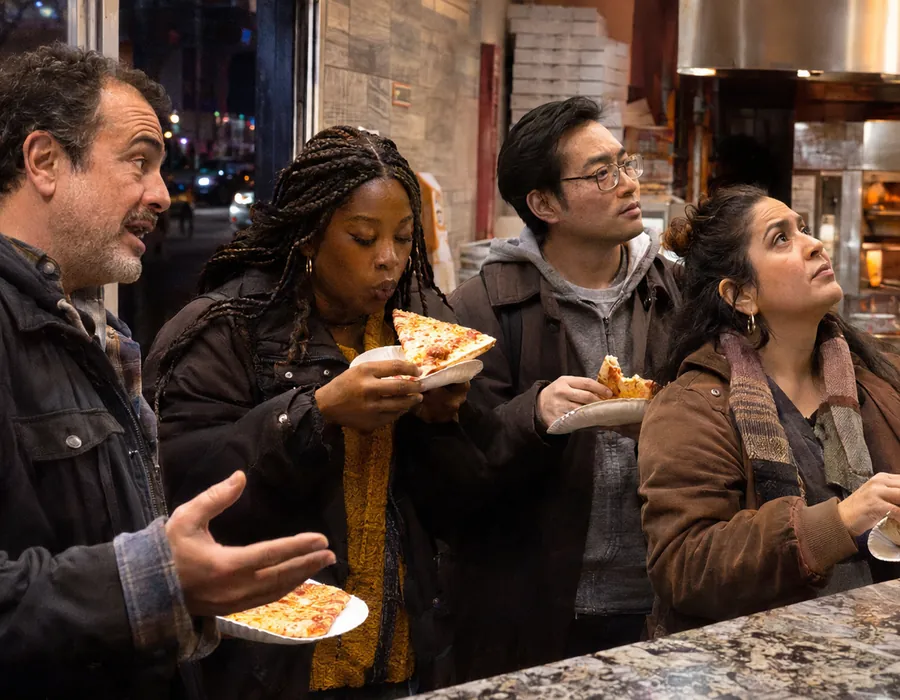 Food explorersA friendship circle for people who love trying new restaurants, street food and dishes from around the world in Toronto.
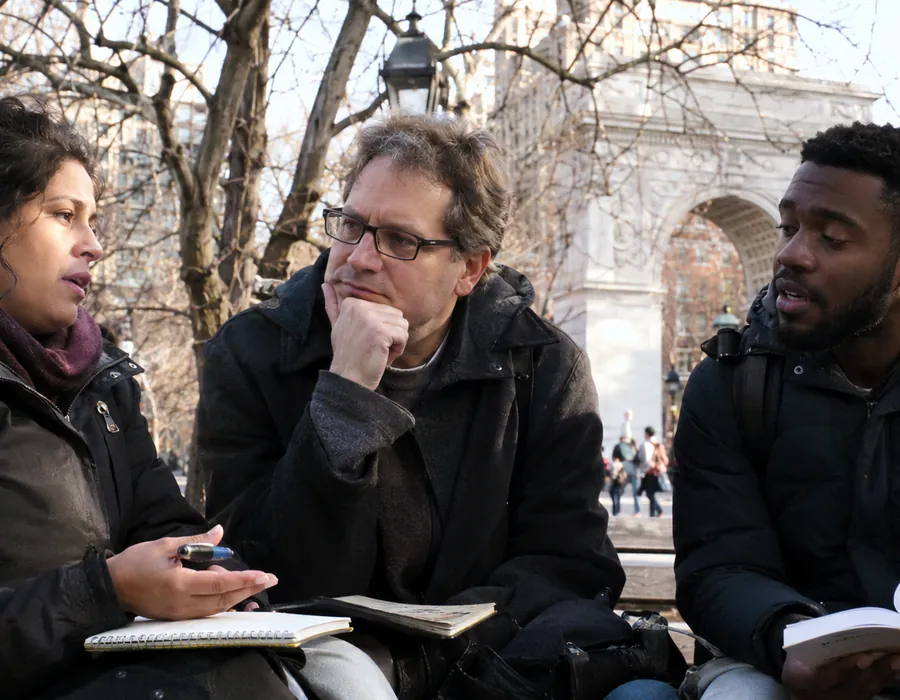 Language exchangeA friendship circle for people learning a language in Toronto: practise with people who are learning yours, over coffee rather than in a classroom.
 Coffee & conversationA friendship circle for people who enjoy cafés and unhurried conversation in Toronto. Low-pressure first meetings in small groups, close to home.
Where to meet in Toronto
Public places picked for small groups of 3 to 10, sorted by interest and area.
Keep reading
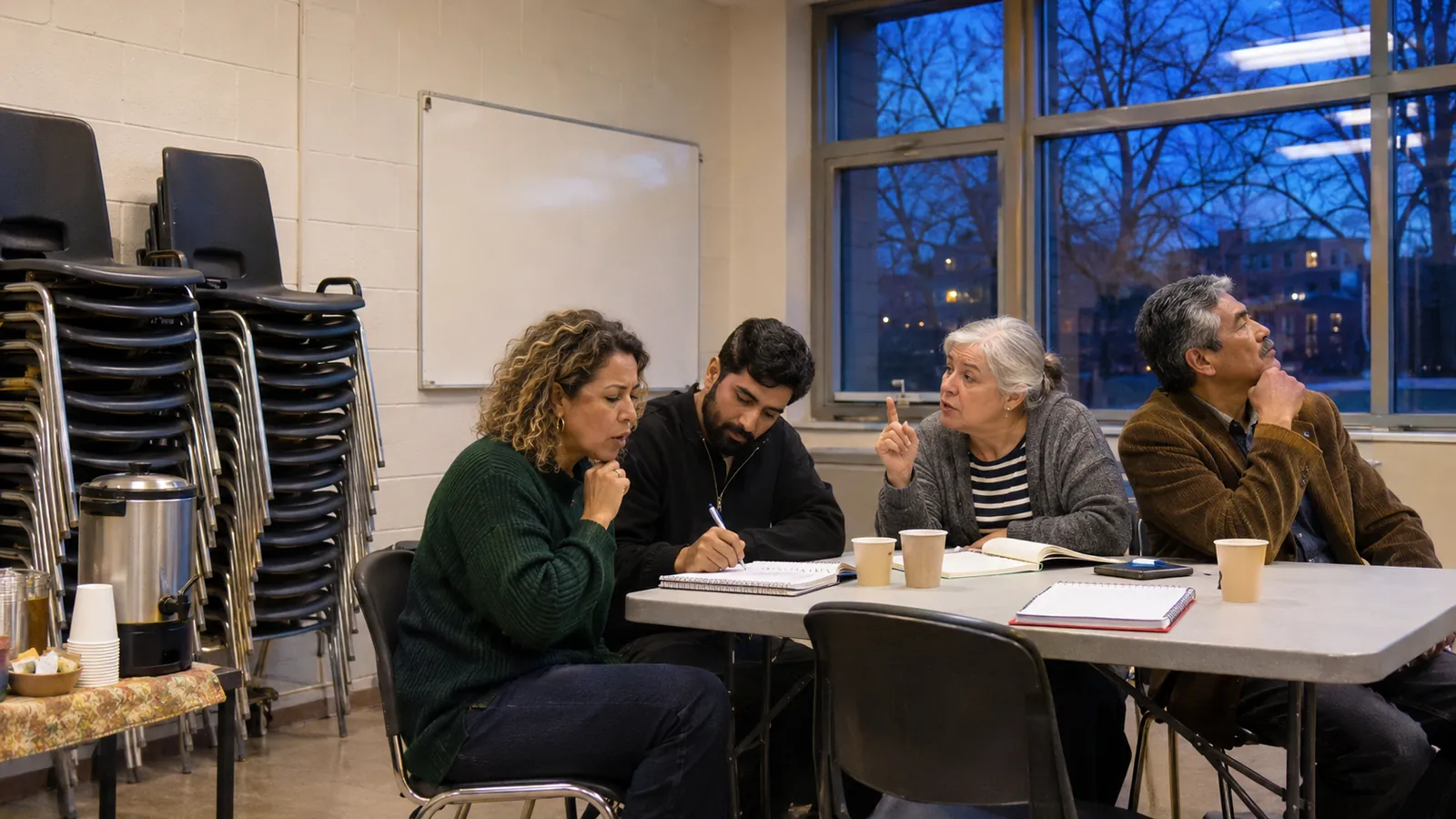 CirclesLanguage exchange in Toronto: learn a language, find friends
 FriendshipPet lovers in Toronto: how dogs (and cats) bring people together
 IdeasToronto's galleries and museums are better with friends
 CirclesBook lovers in Toronto: how the library became a place to make friends
 IdeasToronto's ravines: the walk that turns strangers into friends
 FriendshipNew in Toronto: what to do in your first month so the city stops feeling like a hotel
 IdeasWhere to meet people in Toronto in winter, when nobody wants to stand outside
 FriendshipHow to make friends in Toronto as a grown-up
 NewsTruFriend is now open in Toronto