
Priya had read forty books in her first year in New York and talked about none of them. She worked long hours at a hospital in Washington Heights, read on the A train every morning and evening, and finished novels that she desperately wanted to discuss with someone. Her friends back home in New Jersey were busy with small children. Her colleagues read the news, not fiction. So the books piled up on her windowsill, each one a conversation that never happened.
The change came when she joined a small reading group that met once a month in the café of a bookshop in Brooklyn. There were five of them: a retired librarian from Bay Ridge, a young designer who only read science fiction, a lawyer who read only history, a student and Priya. They read one book a month, chosen in turn, and nobody was allowed to pick the same kind of book twice in a row. The first evening they argued for two hours about an ending. By the spring they were swapping books outside the group, meeting for lunch in between, and the librarian had become the friend Priya called when she needed advice about anything at all.
Why books make such good friends
A shared book gives near-strangers something better than small talk. You can tell a lot about a person from what they thought of a character, and people who would never open up in a first conversation will happily explain why a novel made them cry. Disagreement is part of the fun, and a good argument about a book brings people closer rather than pushing them apart. After a few meetings, a reading group knows each other’s tastes, histories and opinions better than most colleagues ever will.
Books also give friendships a natural rhythm. A book a month means a meeting a month, with a reason to message each other in between: a line that struck you, a chapter that dragged, a recommendation for the next choice. For busy grown-ups, that steady rhythm is exactly what keeps a new friendship alive.
The New York Public Library on Fifth Avenue
For many readers, the grand library on Fifth Avenue is the heart of literary New York. The marble lions outside, known as Patience and Fortitude, have watched over the steps for more than a century, and the Rose Main Reading Room upstairs, with its painted ceiling and long wooden tables, is one of the most beautiful rooms in the city. The building is free to enter, and its exhibitions and quiet halls make a wonderful first outing for a small group of readers. Bryant Park is right behind it, perfect for sitting outside afterwards and talking about what you saw.
The library is also a reminder that New York’s public library system is huge. There are branches in almost every neighbourhood of Manhattan, the Bronx and Staten Island, while Brooklyn and Queens have their own library systems with branches everywhere. Many host author talks, reading events and book groups. It is always worth checking the library’s own website for what is on near you.
The Strand and the city’s bookshops
A few blocks from Union Square, the Strand has been selling new and used books since the 1920s, and its famous claim of miles of books feels true the moment you walk in. The carts of cheap books outside, the narrow aisles and the shelves that reach the ceiling make it a place where a group of readers can easily lose an afternoon. A good plan is to set a small budget, split up for an hour, each choose a book for someone else in the group, and then meet for coffee to hand over the presents.
New York is full of independent bookshops, each with its own character, and many of them have cafés or host readings and book clubs. Brooklyn in particular is a city of bookshops, from Park Slope to Williamsburg and Greenpoint. Exploring a new one every month is a reading group’s excuse to discover a different neighbourhood.
The Central Library in Brooklyn
At Grand Army Plaza, the Brooklyn Public Library’s Central Library is one of the borough’s great public buildings, with a striking entrance carved with figures from literature. Inside, it is a busy, friendly place where readers of every age come to borrow, study and attend events. Prospect Park is next door, so a group can browse the shelves, take a walk around the park and finish with a long conversation over coffee in Prospect Heights.
How to run a first meeting that people come back to
The first meeting of a reading group decides whether there will be a second. Keep the first book short, ideally something that can be finished in a week of commutes, so nobody arrives embarrassed at having read only half. Choose a busy café or a library space where you can talk without shouting, and agree on a finishing time in advance so that people with early starts can relax. Begin by asking everyone how they found the book, even in one word, so the quietest person speaks early. And before anyone leaves, choose the next book and the next date together. A group that leaves with a plan almost always meets again.
Different ways to be book friends
Not every reader wants a formal book club, and that is fine. Some of the best reading friendships look quite different:
- The two-person book club. Two people pick a short book, read it in the same fortnight and meet for coffee to talk about it.
- Silent reading together. A small group meets in a library or quiet café, reads their own books for an hour, then talks.
- The swap. Everyone brings a book they loved, explains why in two minutes, and leaves with someone else’s favourite.
- The author trail. Read a novel set in one neighbourhood, then walk its streets together.
- The talk and dinner. Attend a free author event at a library or bookshop, then continue the conversation over a meal.
Reading through the seasons
New York gives readers a different setting every season. Autumn is for long evenings in bookshop cafés and the first author talks of the season. Winter is for the warmth of library reading rooms and short books finished in a weekend. Spring brings readers back to the benches of Bryant Park and the lawns of Prospect Park, and summer means outdoor reading rooms and a novel on a blanket by the water. A reading group that meets through a whole year sees the city change around its books.
If you enjoy museums as much as books, our guide to New York’s museums with friends is full of ideas for an afternoon after the library, and if conversation is your favourite part of reading, the board games and language exchange guide shows other easy ways to talk with new people.
How TruFriend helps
TruFriend is a friendship-only platform for grown-ups aged 18 and over, with no dating and no selling. Members share what they enjoy, where in the city they live and when they are usually free, and TruFriend introduces them to a small number of compatible people nearby. A chat opens only when both sides agree, and every plan takes place in a public place, like the steps of the library on Fifth Avenue on a Saturday afternoon.
The Book lovers circle brings readers together to talk about books, swap recommendations and visit libraries and bookshops. Coffee & conversation is for people who love a long, unhurried talk, and Art & culture gathers those who enjoy galleries, talks and exhibitions. You can also browse places for book lovers in New York chosen for small groups. Groups are small, from three to ten people, so the same readers return month after month.
Priya’s windowsill is still full of books, but now every one of them has been talked about. If you would like readers to share yours with, join TruFriend: it takes a minute.
Don’t just read about it
Join a circle of people in New York who enjoy the same things. Members already on TruFriend can join from the app or suggest a plan in any chat.
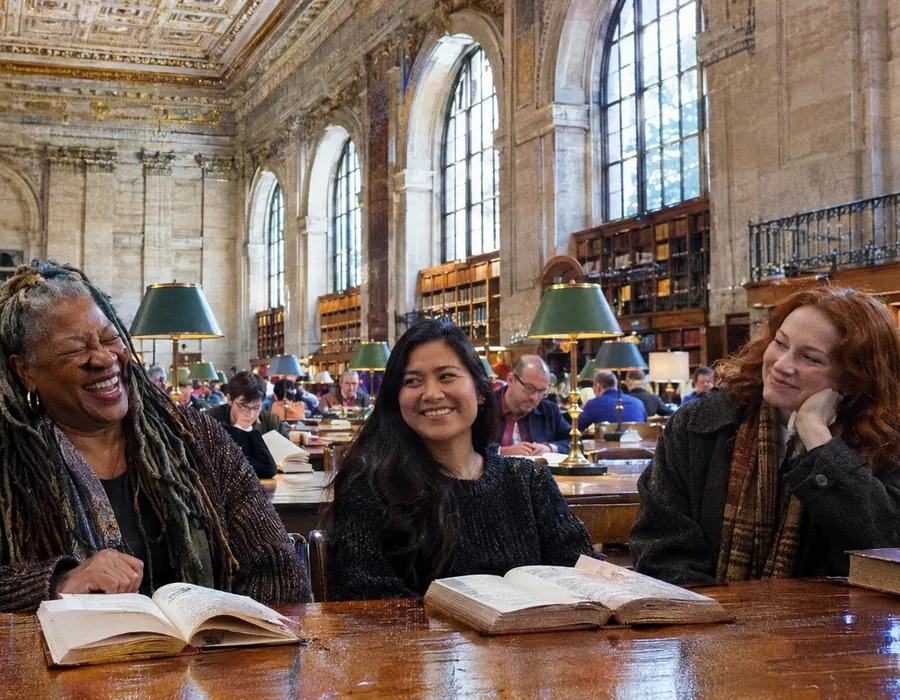 Book loversA friendship circle for readers in New York: talk about books, swap recommendations and visit libraries, bookshops and book festivals together.
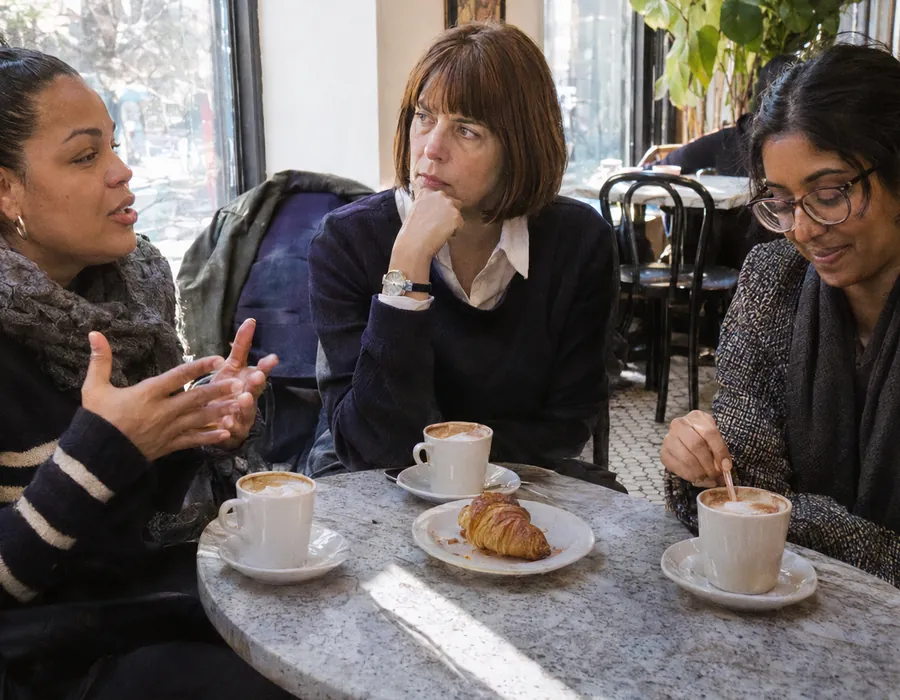 Coffee & conversationA friendship circle for people who enjoy cafés and unhurried conversation in New York. Low-pressure first meetings in small groups, close to home.
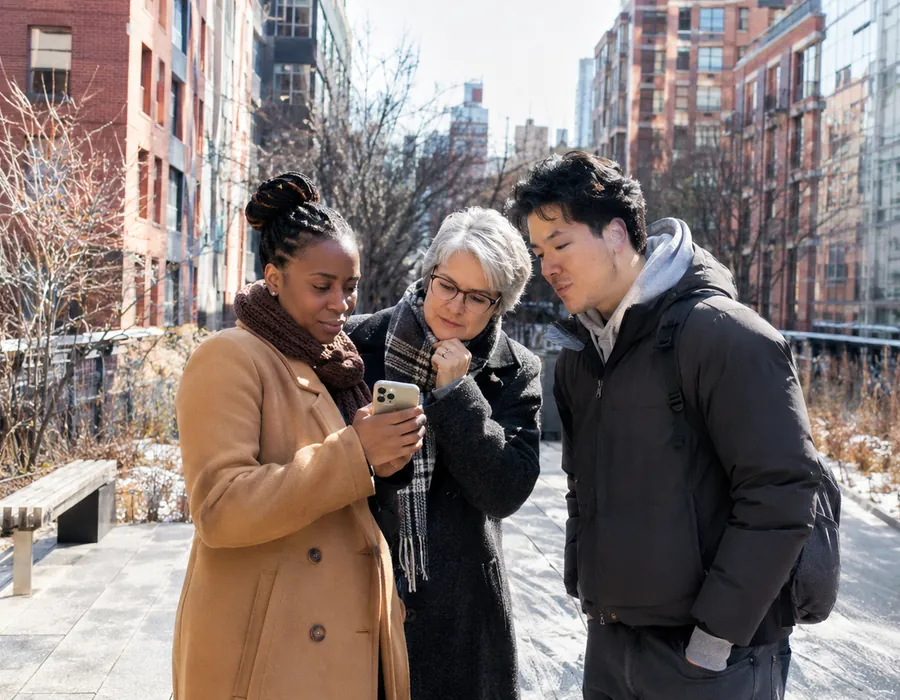 Art & cultureA friendship circle for galleries, museums, theatre and live music in New York. Find people to see shows and exhibitions with.
Where to meet in New York
Public places picked for small groups of 3 to 10, sorted by interest and area.
Keep reading
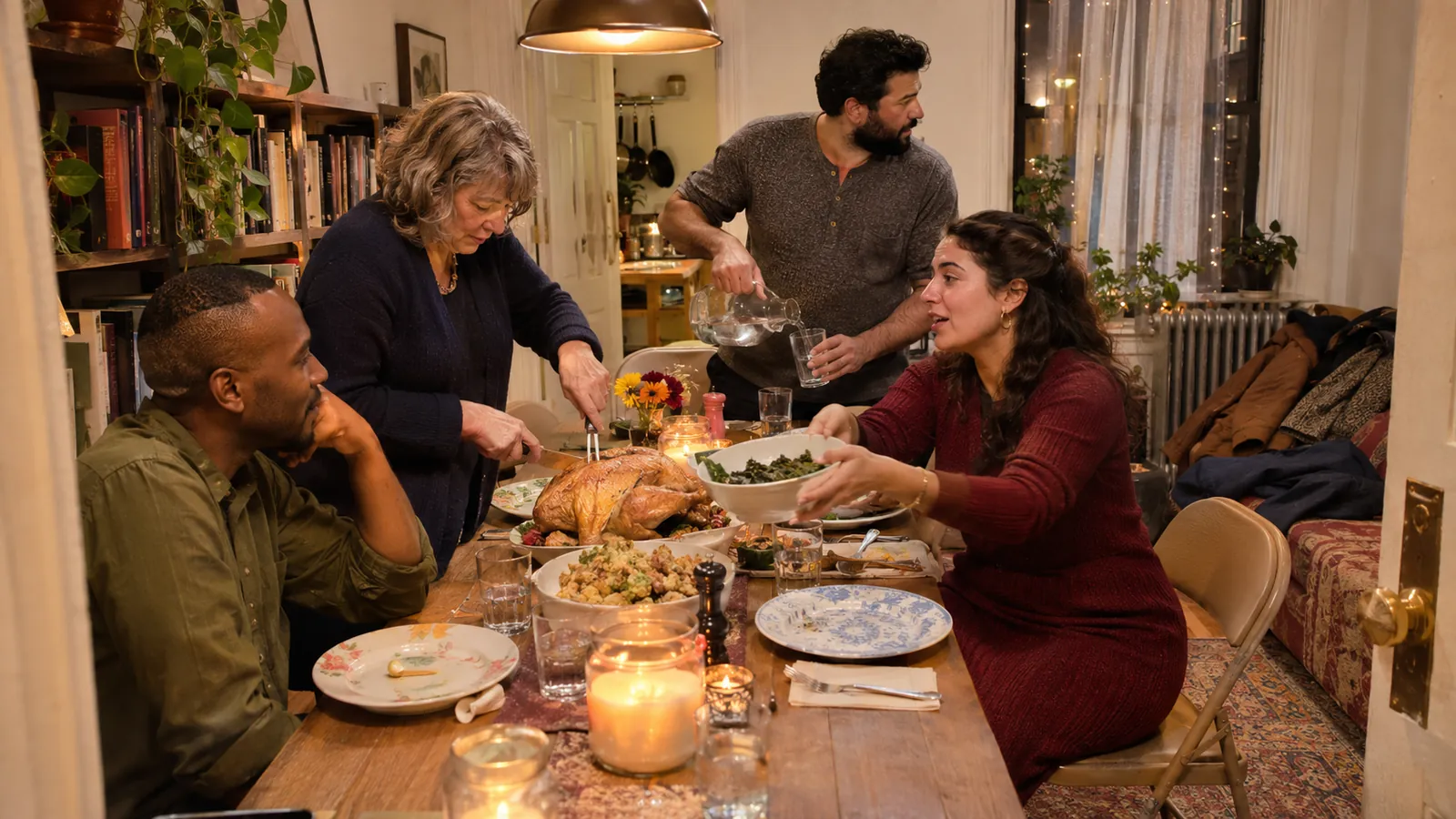 FriendshipFriendsgiving in New York: how to spend Thanksgiving with friends when your family is far away
 IdeasWinter in New York with friends: ice skating, holiday markets and the plans that make the cold months the friendliest of the year
 IdeasPet lovers in New York: how dog runs, park mornings and shelters bring animal people together
 IdeasRunning with friends in New York: how Prospect Park and the Hudson River Greenway turn early miles into friendships
 FriendshipMaking friends in New York in your 30s and 40s: when the old crowd drifts away
 IdeasBoard games and language exchange in New York: the easiest way to talk to strangers
 IdeasBrooklyn Bridge, DUMBO and the waterfront: New York photo walks with friends
 FriendshipMaking friends in New York as a woman: finding your people in a city of millions
 IdeasFood halls and neighbourhood food in New York: how sharing a table builds friendships
 IdeasNew York museums with friends: why the city’s great galleries are better in a small group
 IdeasCentral Park and the best walks in New York to share with friends
 New in townNew in New York: how to build a social life in your first months
 FriendshipHow to make friends in New York as a grown-up
 NewsTruFriend is now open in New York