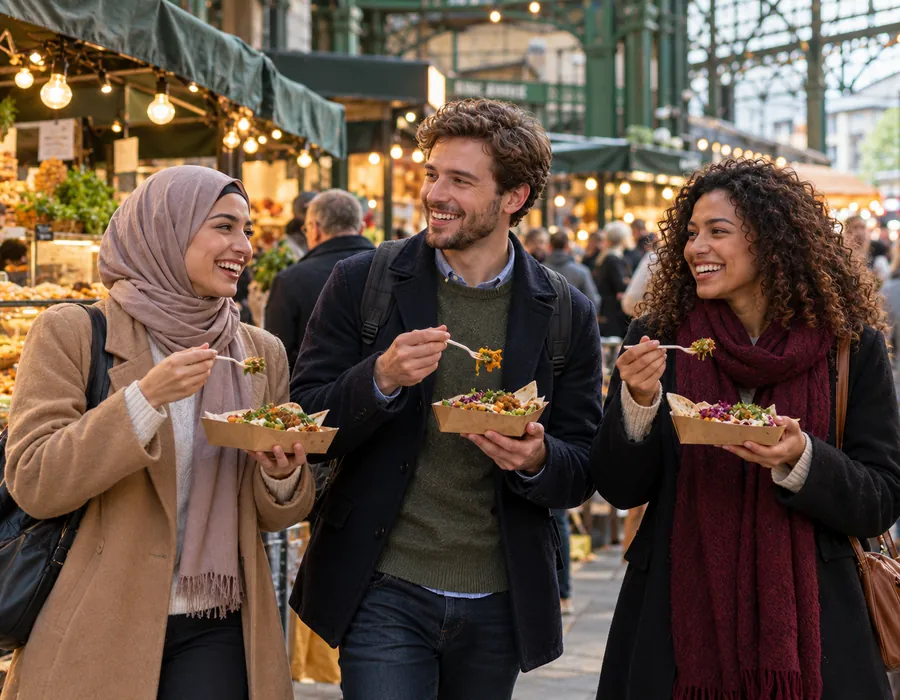
Amelia moved to London from Leeds for a job in publishing, and for the first winter she did what many newcomers do. She went to work, came home, cooked something small and watched the rain on the window of a flat in Walthamstow. The city was full of people, but none of them were hers. Her colleagues were kind, yet everyone had a life to rush back to at half past five.
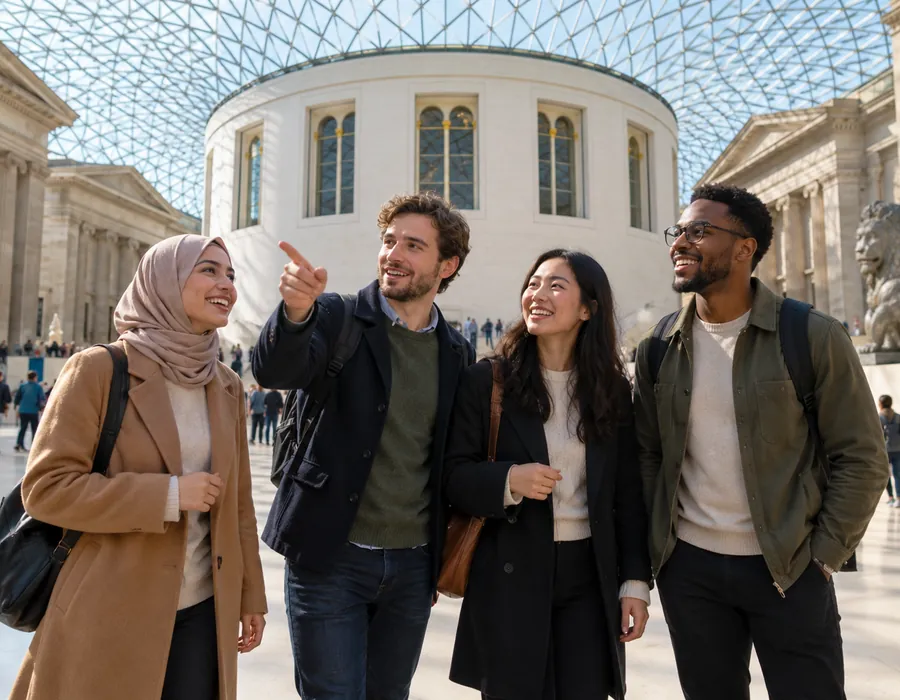
One grey Sunday she took the Victoria line into town with no plan at all and walked up the steps of the British Museum, mostly because it was warm and free. She drifted into the room with the Rosetta Stone and found a small group standing in front of it, talking quietly about how anyone had ever worked out what the hieroglyphs said. One of them, a retired engineer called Oliver, caught her listening and asked what she thought. She did not know, and said so. They laughed, and an hour later the four of them were in the Great Court with cups of tea, arguing about which room was the best in the building. That was the start of what the group now calls its first-Sunday museum day. It has not missed a month since.
A city that leaves its doors open
London has a remarkable habit that visitors sometimes find hard to believe: most of its great national museums and galleries are free to enter. The British Museum, the National Gallery, Tate Modern and Tate Britain, the Victoria and Albert Museum, the Natural History Museum, the Science Museum, the National Portrait Gallery and the Museum of London Docklands all welcome you without a ticket for their main collections. Special exhibitions usually charge, but you could spend every weekend for a year in the permanent galleries and never pay a penny to get in.
That matters more for friendship than it first appears. When a meet-up costs nothing, nobody has to work out whether they can afford it, and nobody feels trapped. If the group is lovely, you stay for the afternoon. If someone needs to leave after forty minutes, they leave, and the plan still counts. Free entry quietly removes two of the biggest worries people bring to meeting someone new: the money and the commitment.
There is also the simple fact of the buildings. These are large, public, well-staffed places, busy at weekends and lit in the evenings on late openings. They are exactly the kind of setting where a first meeting feels safe and relaxed. You are never alone with strangers, and you are never stuck on a bench with nothing to say.
Something to talk about in every room
The hardest part of meeting new people is often the conversation itself. Questions about work and where you grew up run out quickly. A museum solves this almost without trying. Stand in front of Turner’s storm-tossed seas at Tate Britain, or the vast turbine hall at Tate Modern, or the dinosaur skeletons in the Natural History Museum, and the talk begins on its own. Do you like it? Would you hang it in your flat? How on earth did they get that into the building?
Oliver says the best conversations in his group have started with disagreements about paintings. One member, Priya, cannot stand the large abstract canvases on the upper floors at Tate Modern. Another, Tom, could look at them all day. Their friendly argument has run for over a year now and has spread to films, books and the right way to make a cup of tea. It is the kind of easy, teasing back-and-forth that only happens between people who have started to feel comfortable with each other.
Museums also give quieter people a way in. Not everyone shines in a crowded café. In a gallery, you can walk side by side without needing to fill every silence, and say something only when you have something to say. Many members say they found it much easier to open up in front of a painting than across a table.
Small groups, not big tours
The groups that work best tend to be small, somewhere between three and eight people. Large groups end up shuffling through rooms like a school trip, with half of them always waiting for the other half. A small group can split and come back together naturally. Two people linger by the Egyptian mummies, three wander ahead to the Greek sculptures, and everyone meets again by the main staircase at an agreed time.
Amelia’s group has a few simple habits. They choose one museum and, inside it, one or two rooms to focus on rather than trying to see everything. They agree on a meeting point and a time for a tea break. And they always finish with a short walk outside, along the South Bank after Tate Modern, through Kensington Gardens after the V&A, or around Bloomsbury’s squares after the British Museum. Those walks, she says, are where the real catching up happens.
Beyond the famous names
Once a group has done the big museums, London has a long list of smaller places that are just as rewarding. The Wellcome Collection near Euston explores medicine and the human body in ways that spark lively discussion. The Horniman Museum in Forest Hill, South London, has an aquarium, a famous walrus and beautiful gardens with views across the city. The Sir John Soane’s Museum in Lincoln’s Inn Fields is a strange and wonderful house crammed with treasures. The Geffrye, now the Museum of the Home, in East London tells the story of how ordinary people have lived over four hundred years.
West London has the Design Museum in Holland Park, and North London has the Estorick Collection and the free galleries of the British Library, where you can see some of the most important handwritten documents in the world. Some smaller places charge a modest fee, and a few, like the Dulwich Picture Gallery, are worth paying for. Wherever you go, check the opening times in advance, as smaller museums often close one or two days a week.
Late openings and early evenings
Many of London’s big museums stay open later on one evening a week, usually a Friday, and some host special late events with talks, music and activities. For people who work long hours, these early evenings are a wonderful alternative to the usual after-work options. You can leave the office, meet your group at the entrance, spend two hours among the collections and still be home at a reasonable time.
Oliver’s group started a monthly Friday late after one member, a nurse who works weekend shifts, kept missing the Sunday visits. It turned out several others preferred evenings too. Now there are two rhythms, Sunday afternoons and an occasional Friday evening, and people choose whichever suits their week.
Turning a visit into a habit
Research on friendship keeps returning to one simple idea: friends are made through repeated, relaxed time together. One brilliant afternoon at the National Gallery is pleasant. Twelve ordinary afternoons, spread over a year, are how acquaintances become friends. The trick is to make the meeting regular enough that nobody has to organise it from scratch each time.
A fixed rhythm helps enormously. First Sunday of the month, the same meeting time, a different museum each time. Someone suggests the next place before everyone leaves, and the plan for next month is set before the current one has ended. It sounds almost too simple, but it is exactly what makes a group last.
Above all, be generous to the newcomer. Every group started with someone who walked in alone. When a person at the edge of the room is clearly listening, as Amelia once was, ask them what they think. It costs nothing and may change their year.
Where TruFriend fits
Not everyone happens to meet a friendly group in front of the Rosetta Stone, and not everyone feels comfortable starting a conversation with strangers. That is where TruFriend can help. It is a free platform for friendship only, for grown-ups aged 18 and over, and it is now open in London. Tru, our assistant, learns what you enjoy, where you live and when you are usually free, then introduces you to a few compatible people nearby. A conversation only opens when both of you say yes, and every plan takes place in a public place, like a busy gallery.
The Art & culture circle is made for people who would happily argue about a painting for a year. Photo walks brings together those who love to capture the city’s light and buildings on the way between museums, and New in London is there for anyone who has just arrived and does not yet know where to begin. Groups are small, from 3 to 10 people, so the same faces come back and the conversation has time to deepen.
Amelia still lives in Walthamstow, and it still rains. But the first Sunday of every month is now spoken for. If you would like a museum day of your own, join TruFriend: it takes a minute.
Don’t just read about it
Join a circle of people in London who enjoy the same things. Members already on TruFriend can join from the app or suggest a plan in any chat.
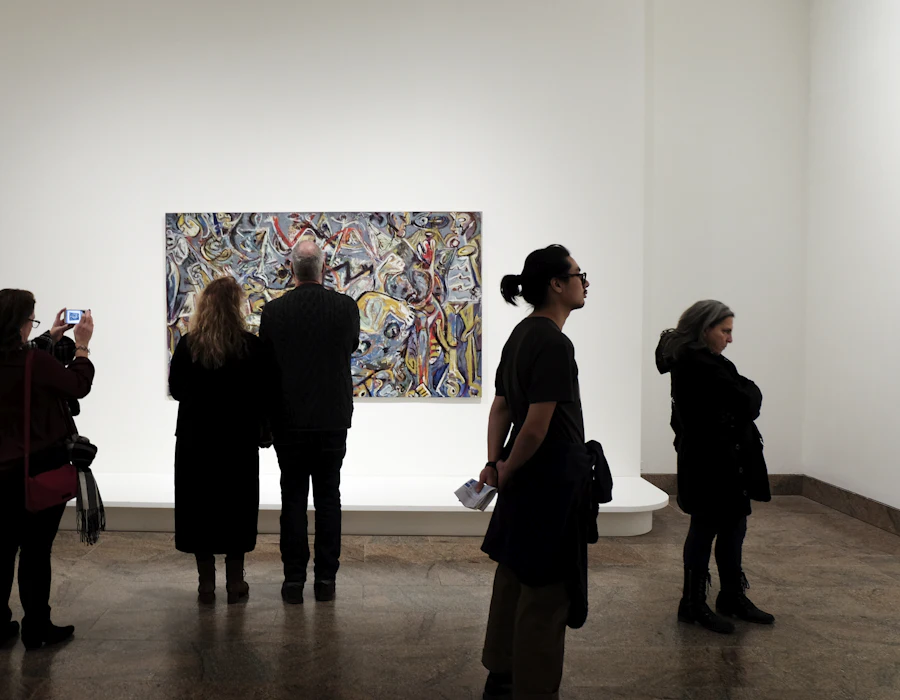 Art & cultureA friendship circle for galleries, museums, cinema, theatre and live music in London. Find people to see shows and exhibitions with.
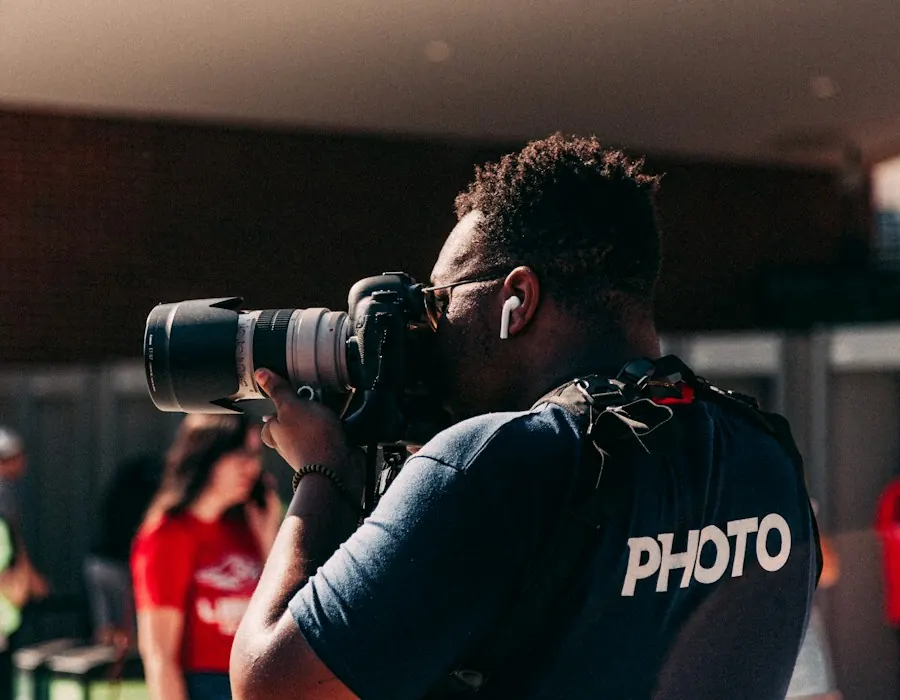 Photo walksA friendship circle for photographers of every level: explore London’s historic streets, the Thames and the city skyline together.
 New in LondonA friendship circle for grown-ups (18+) who have recently moved to London: settle in, explore the city and build a social life with others doing the same.