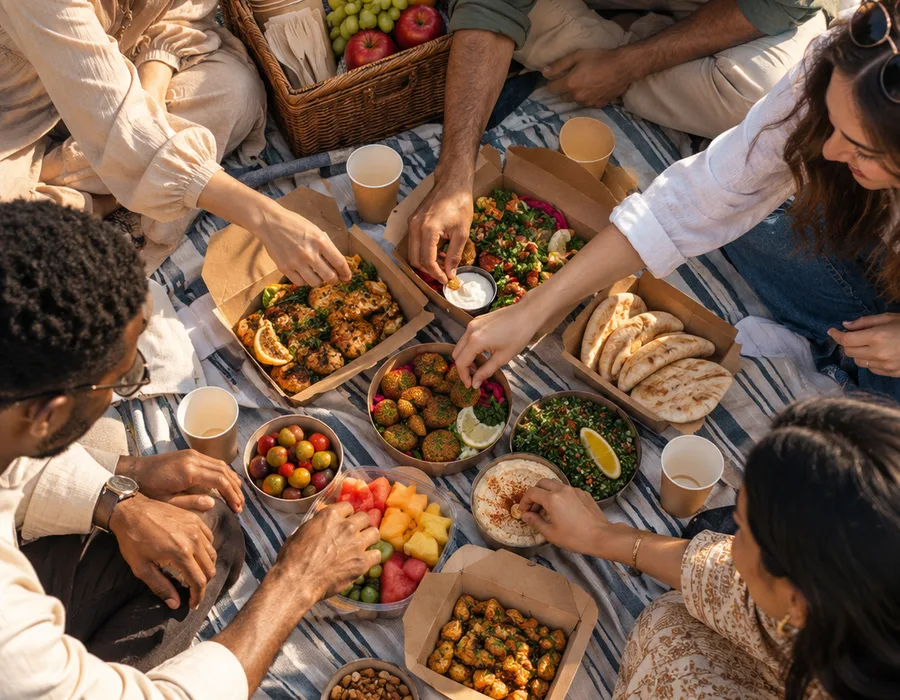
Yousef is thirty-four, grew up in Kuwait and has never lived anywhere else. If you had asked him at twenty whether he would ever struggle for friends, he would have laughed. He had a whole crowd from school, the same faces at football on Thursday nights, and a cousin’s diwaniya where there was always someone to talk to. Then, slowly and without anyone deciding it, the crowd thinned. One friend married and moved to the other end of the country. Another took a job with long shifts. Two went abroad to study and came back with different lives. The football game stopped when the last person who booked the pitch gave up booking it.
Nobody fell out. There was no single moment Yousef could point to. He simply noticed, one Saturday afternoon, that the group chat had been quiet for three weeks and that his plans for the weekend were his family’s plans. He loved his family. He also missed having friends of his own, people he chose and who chose him. And he had no idea how a grown man in his own city was supposed to start again.
Why it gets harder here, even if you are from here
Making friends as a grown-up is hard everywhere, but Kuwait has its own particular shape. Much of social life here runs through family and through circles that formed early, at school, at university or in the neighbourhood. Those circles are a real strength. They are also quite closed, not out of unkindness but because they are full. When your old group drifts, there is no obvious door into a new one.
Then there is the weather. For a large part of the year, the heat pushes life indoors, into homes, malls and cars. The easy, unplanned encounters that build friendship in other places, bumping into the same neighbour on the street or chatting at a bus stop, happen far less when everybody moves from one air-conditioned room to another.
The cars matter too. Almost everybody drives, so nobody walks past anybody. Seeing a friend means a deliberate trip, a parking space and a gap in the traffic. And work hours vary widely. Someone in a government office may be free by early afternoon, while someone in the private sector works into the evening, and a nurse or an engineer on shifts may be free when everyone else is asleep. Put all of that together and it is no surprise that grown-ups here often say the same thing: “I know lots of people, but I do not see anyone.”
What actually works
The good news is that the way friendship forms is well understood, and none of it requires being especially outgoing. A study by Jeffrey Hall at the University of Kansas, published in 2018, estimated that it takes roughly 50 hours together to move from acquaintance to casual friend, around 90 hours to become a real friend, and more than 200 hours to become a close friend. The exact numbers matter less than the message: friendship is built from time spent together, and most of that time is ordinary.
That leads to the first rule, which is repetition. One great evening rarely makes a friend. The same few people, seen again and again, very often do. When Yousef had his school crowd, nobody planned the friendship. It came from being in the same place every day for years. As a grown-up, you have to recreate that on purpose, with something that happens every week rather than once.
The second rule is shared activity. Sitting across a table from a stranger and trying to be interesting is hard work. Walking beside someone, playing on the same team or working on the same task is much easier, because the activity carries the first part of the conversation. You do not need to find something to say. You only need to show up and take part, and the talking follows.
The third rule is small groups. A big gathering can feel lonely if you know nobody, and conversation rarely goes deeper than names and jobs. A group of three to ten is different. There is space for everyone to talk, nobody is lost, and when one conversation runs out there is always someone else to turn to. It also takes the pressure off. You are not auditioning for one person’s friendship. You are spending an hour in decent company.
Say yes to the second meeting
If there is one habit that separates people who make friends from people who do not, it is this: they say yes to the second meeting, and often they suggest it. The first meeting is polite and a little awkward for everyone. The second is where people relax, remember each other’s stories and start to enjoy themselves. Most potential friendships do not fail because the first meeting went badly. They fail because nobody arranged the second one.
So make it specific. “We should do this again” is kind, but it rarely becomes a plan. “Same time next Tuesday, same place?” almost always does. A day, a time and a place give the other person something easy to accept, or to decline gracefully. And if somebody cancels once, do not read too much into it. In a city of long working days and heavy traffic, a missed plan is usually just a missed plan.
Kuwait settings that make it easier
Once you know what you are looking for, Kuwait offers more than it first seems. The cooler months are the best season to start. From late autumn to spring, evenings come alive outdoors, and the Gulf Road fills with people walking, running and sitting by the sea after sunset. A weekly evening walk along the waterfront, at the same time with the same few people, is about the simplest repeatable plan there is, and it costs nothing.
Sport is the other great engine. Padel courts have spread across the country in recent years, and a game for four is almost designed for making friends: small enough to talk, structured enough that nobody has to fill the silence, and easy to repeat every week. Running groups, football on a booked pitch and gym classes work the same way. In summer, the same habits can move indoors to air-conditioned courts and halls.
Cafés are the obvious meeting place, and Kuwait has no shortage of them. They work best as the second step rather than the first: a coffee after the walk or the game, when the group already has something in common to talk about.
Volunteering is often overlooked, and it is one of the best routes of all. Kuwait has a strong tradition of giving, and there are regular chances to help, from beach clean-ups along the coast to charity drives that grow especially busy in Ramadan. Working side by side for a cause puts you next to people who share your values, and it repeats naturally, because there is always another campaign.
And then there is the diwaniya. For many Kuwaiti men, it remains the original model of grown-up friendship: a regular place, a regular evening and an open door. Not everyone has one, and many people, women especially, need other settings. But the principle is worth borrowing. Whatever you choose, make it regular, make it familiar, and keep going back.
What Yousef did
Yousef did not try to rebuild his old crowd. He accepted that it had become something different, a group he would see at weddings and on special occasions, and he started something new alongside it. A colleague mentioned a weekly padel game that was short of a fourth player. Yousef said yes, then said yes again the following week, which turned out to be the important part.
Within a couple of months, the four of them had a standing booking, a running joke about who always arrived late and a habit of getting coffee afterwards. When the weather cooled, one of them suggested a Saturday evening walk on the Gulf Road, and two more people joined. None of it was dramatic. It was simply the same faces, the same week after week, until one day Yousef realised the group chat was loud again, and that this time it was one he had helped to build.
Where TruFriend fits
TruFriend is an invite-only friendship platform, for friendship only, for grown-ups aged 18 and over, and it is now open in Kuwait City. Tru, our assistant, learns what you enjoy, when you are usually free and how far you are happy to drive, then introduces you to a few compatible people nearby. A chat only opens when both of you say yes, and plans happen in small groups in public places. Circles such as walkers and runners, padel and tennis, and coffee and conversation give you the same faces week after week, around something you already enjoy. If your old crowd has drifted and you are ready to start again, request an invite and we will send you a personal invitation.
Don’t just read about it
Join a circle of people in Kuwait City who enjoy the same things. Members already on TruFriend can join from the app or suggest a plan in any chat.
 Walkers & runnersA friendship circle for people who like evening walks, early runs and park and seafront paths in Kuwait. Find a regular partner at your own pace.
 Padel & tennisA friendship circle for padel and tennis players in Kuwait, from beginners to regulars, looking for friendly games and people to play with.
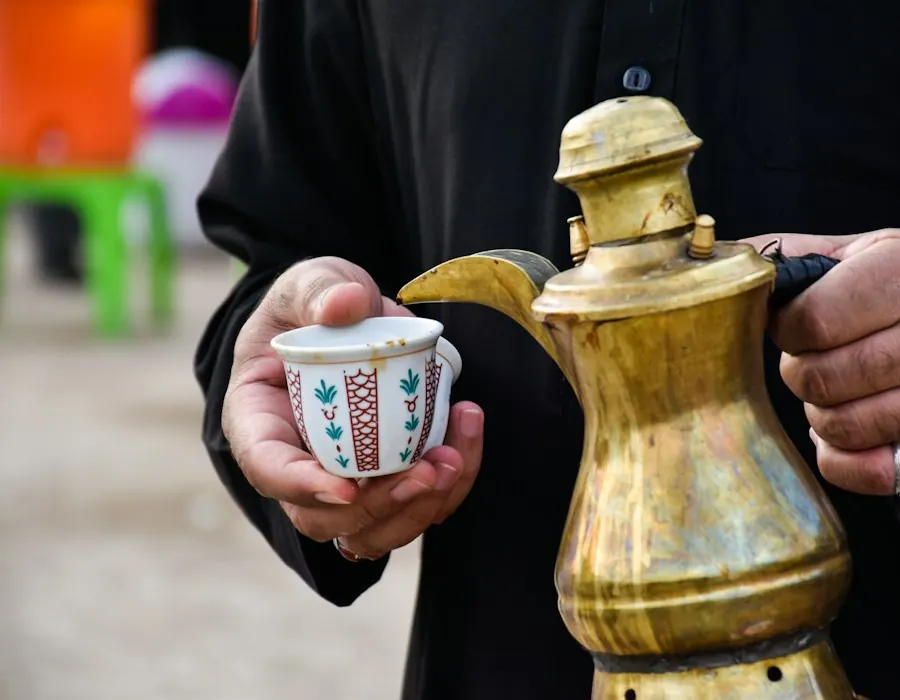 Coffee & conversationA friendship circle for people who enjoy cafés and unhurried conversation in Kuwait. Low-pressure first meetings, close to home.
Keep reading
 IdeasWhere people meet in Salmiya, Kuwait City and beyond: friendship within 15 minutes of home
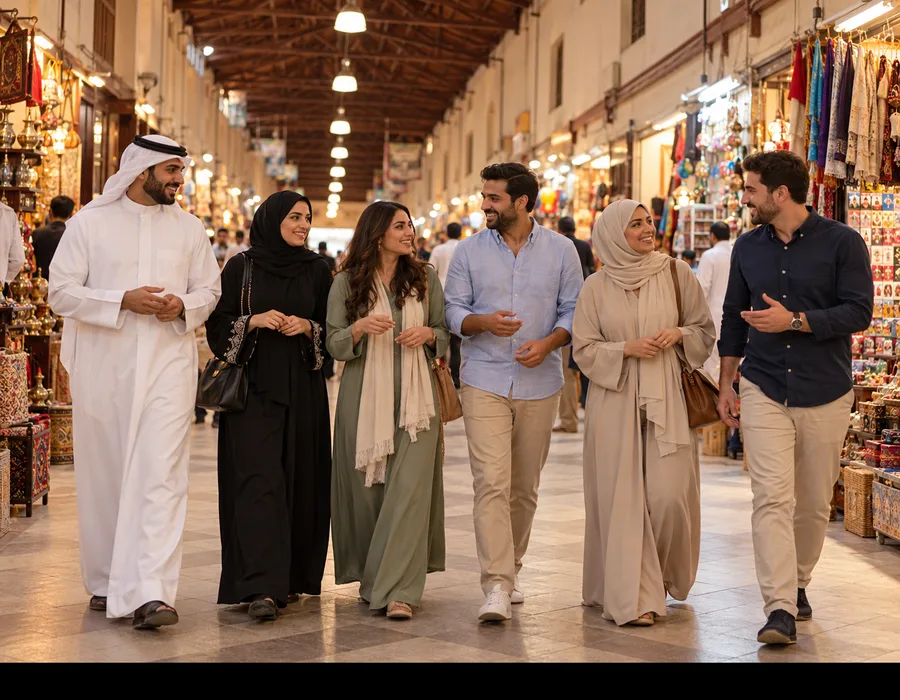 IdeasAn evening in Souq Al-Mubarakiya with new friends
 FriendshipWhat the diwaniya teaches about friendship, and how to build your own weekly table
 IdeasWinter in Kuwait: outdoor plans for a new circle
 IdeasKuwait’s café culture, and where a small group can really talk
 New in townNew in Kuwait: making friends after the move