
Yousef is thirty-six, works for a company in Kuwait City, and has a week that runs like a well-kept clock. Sunday to Thursday belong to work, traffic and homework at the kitchen table. Friday belongs to his parents’ house, where his mother still cooks for everyone and the cousins arrive one car at a time until the majlis is full. Saturday belongs to his wife’s family, the children’s activities and the errands that did not fit anywhere else. He would not change any of it. He loves those Fridays.
And yet, one evening in October, he scrolled through his phone looking for someone to share a piece of news with, and realised that the friends he used to see every week at university had become names in a group chat that mostly shared greetings on Eid. Nobody had fallen out. Nobody had done anything wrong. The weeks had simply filled up with good things, and friendship had quietly slipped out of the calendar. “When did I last sit with Fahad?” he asked himself, and could not remember.
If that sounds familiar, you are in very good company. In Kuwait, family is not a side activity that fits around a social life. For many people, Kuwaitis and residents alike, family is the social life, and the weekend is where it lives. This post is not about pulling away from that. It is about keeping a small, steady place for friends alongside it, without guilt and without stealing time that belongs to the people you love.
Why friendship slips without anyone noticing
Friendship rarely ends with a quarrel. Much more often it fades because the conditions that used to hold it together disappear. At school and university, you saw the same people almost every day without having to arrange anything. Then came work, marriage, children and caring for parents, each one worthy and each one taking a slice of the week. The friends are still there. The repeated contact is not.
That repeated contact is what friendship runs on. Researchers who study friendship keep coming back to the same simple finding: closeness grows from time spent together, regularly, over months, not from one memorable evening.
The second reason is quieter. When your weekends are full of family, it can feel slightly selfish to want something just for yourself. Many people, mothers especially, put their own friendships at the bottom of the list and assume they will come back to them “when things calm down”. In practice, things rarely calm down on their own. The children grow, but new responsibilities arrive. Waiting for the perfect time usually means waiting for a long time.
Family time is not the obstacle
It is tempting to frame this as family against friends, but that is the wrong way to see it. The Friday gathering at the family home is one of the most beautiful things about life in Kuwait. It gives children their grandparents, keeps cousins close, and teaches everyone that people matter more than plans. Anyone who has sat through a long Friday lunch, with tea afterwards and the elders telling stories, knows that something important is being kept alive.
The aim, then, is not to take time back from the family. It is to notice that the week has other hours, ones that are often wasted on scrolling or sitting in traffic, and to give a few of them to friendship on purpose. Friends do not need your whole weekend. They need a small, regular slot that both of you can rely on. Thirty minutes every Tuesday will do more for a friendship than a grand plan that keeps being postponed.
It also helps to talk about it at home. Yousef’s wife, Maryam, laughed when he finally said it out loud, because she had been feeling the same thing. Her own school friends had drifted the same way. Agreeing together that each of them would protect one small window in the week, and cover for the other when needed, turned something that might have caused tension into a shared project.
Finding the weekday windows
Every household is different, but most weeks in Kuwait have a few natural gaps if you look for them. Here are the three that tend to work best.
The early morning. Before the school run and the office, the city is calm and, from autumn onwards, the air is pleasant. An early walk along the Gulf Road or a few laps of Al Shaheed Park with one or two friends costs almost nothing in family time, because most of the house is still asleep. It also gives you something better than a rushed coffee: side-by-side conversation, which many people, men in particular, find easier than talking face to face.
The working lunch. If you and a friend work in the same part of the city, lunch is a ready-made window that does not touch the evenings at all. It does not have to be long or expensive. A standing lunch every other Wednesday, at a place close to both offices, keeps a friendship in regular contact during the busiest years of life.
The mid-week evening circle. Kuwait already knows the value of a regular gathering. The diwaniya has kept men’s friendships going for generations, precisely because it happens at the same time with the same people. The same principle works for anyone, women and men, in a form that suits modern life: a small group that meets on, say, Monday or Tuesday evening, in a café or a public place, for an hour or two after the children’s bedtime routine has started. Mid-week evenings are often freer than people expect, because the family visits and big outings are usually saved for the weekend.
The secret in all three is the same: make it regular and make it specific. “Let’s meet sometime” rarely happens. “Tuesday, half past six, the usual café” does. Once a slot is fixed, nobody has to organise anything, and the friendship can simply happen.
Bringing friends into family plans
The second approach is to stop treating friends and family as two separate worlds. In Gulf culture, hospitality is already part of who people are, and many families are happy to welcome a friend into a plan that was going to happen anyway.
Think about the Saturday activities you already do. If the children have football practice or a swimming lesson, there may well be another parent on the bench who is just as tired of sitting alone. A park morning, a visit to a museum or a cultural centre, a walk on the waterfront in the cooler months: any of these can include a friend’s family without becoming a burden on anyone. The children play, the grown-ups talk, and everyone goes home having spent the day together.
There is a gentle etiquette to it. Families have their own customs about who joins which gathering, and it is worth respecting them. Mixed plans between families tend to work best in public places, such as parks, cafés and malls, where everyone feels comfortable. Inviting a friend to the family home is a different and more personal step, and it is best taken when both sides are ready. Nobody should feel pushed.
For residents whose own families are far away, this works in the other direction too. A colleague who is spending Eid or a long weekend alone may be deeply touched to be included in a family outing. One invitation like that can be the start of a friendship that lasts for years.
What Yousef did next
Yousef did not announce a big reunion. He sent Fahad a simple message: “I’m walking at Al Shaheed Park on Tuesday morning before work. Join me?” Fahad, who turned out to be a father of three with exactly the same problem, said yes. The first walk was a little awkward. The second was easier. By the fourth, a former classmate had joined them, and the walk had become the part of the week Yousef looked forward to most.
A month later, he invited Fahad’s family to join his own on a Saturday at the park, and the children ran off together while the grown-ups talked. His Fridays have not changed. His mother still cooks, the cousins still arrive one car at a time, and he still would not miss it. But there is now a small, reliable place in the week where his friends live too.
Where TruFriend fits
TruFriend is an invite-only friendship platform, for friendship only, for grown-ups aged 18 and over, and it is now open in Kuwait City. Tru, our assistant, asks when you are actually free, so if your only windows are an early weekday morning or a Tuesday evening, that is what it plans around. It introduces you to a few compatible people nearby, a conversation only opens when both of you say yes, and every plan takes place in a public place. Circles such as walkers and runners, coffee and conversation and food explorers give you a small, regular group of three to ten people that fits around the family, not in place of it. If a steady slot for friendship sounds like what your week is missing, request an invite and we will send you a personal invitation.
Don’t just read about it
Join a circle of people in Kuwait City who enjoy the same things. Members already on TruFriend can join from the app or suggest a plan in any chat.
 Walkers & runnersA friendship circle for people who like evening walks, early runs and park and seafront paths in Kuwait. Find a regular partner at your own pace.
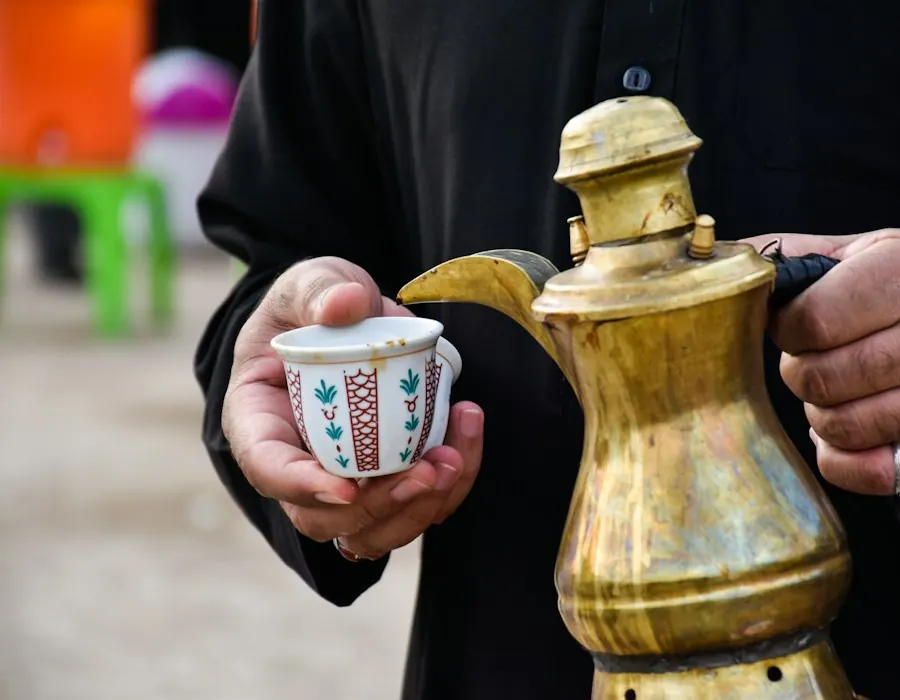 Coffee & conversationA friendship circle for people who enjoy cafés and unhurried conversation in Kuwait. Low-pressure first meetings, close to home.
 Food explorersA friendship circle for people who love trying new restaurants, traditional Kuwaiti dishes and food from around the world in Kuwait.
Keep reading
 IdeasWhere people meet in Salmiya, Kuwait City and beyond: friendship within 15 minutes of home
 IdeasAn evening in Souq Al-Mubarakiya with new friends
 FriendshipWhat the diwaniya teaches about friendship, and how to build your own weekly table
 FriendshipHow to make friends in Kuwait as a grown-up
 IdeasWinter in Kuwait: outdoor plans for a new circle
 IdeasKuwait’s café culture, and where a small group can really talk
 New in townNew in Kuwait: making friends after the move