For eight years, Yousef’s social life had an address: the fourth floor of an office tower in Kuwait City. He arrived early, had his first coffee with Khaled from the next desk, ate lunch with the same four colleagues, and belonged to a work group chat that never really slept. When people asked whether he had friends, he said yes without thinking. He did. They were simply all in the same building.
Then, within a single spring, everything moved. Khaled accepted an offer from another company. Two of the lunch group were transferred to a new branch, and the team was reorganised under a manager Yousef barely knew. For a few weeks the messages kept coming: “We must meet!”, “Next week, inshallah.” Then they slowed, and then they stopped. Nobody had fallen out. There was just nothing holding the friendships up any more. Yousef realised that what he had called friendship was, at least partly, a shared timetable.
Why work is such a good place to start
None of this means office friendships are fake. The workplace is one of the best places grown-ups have for making friends, and it is easy to see why. Friendship grows from repeated, unplanned contact, the small encounters you do not have to organise: a chat by the coffee machine, a shared complaint about a deadline, a joke in a meeting that only three people understood. Work provides that contact five days a week, for free.
Work also gives people a shared purpose. Solving a hard problem together, or surviving a difficult quarter, builds trust quickly. You see how someone behaves under pressure, whether they keep their word and whether they take credit or share it. These are exactly the things you would want to know about a friend, and an office reveals them faster than a dozen polite dinners.
In Kuwait, where many people stay with the same employer for years and offices often feel like extended families, colleagues can become some of the most important people in your life. Plenty of lifelong friendships started with a desk next to someone.
Why a circle that lives only at work is fragile
The trouble begins when work becomes the only place friendship happens. A circle built entirely inside one organisation has a few weaknesses that only show themselves later.
The first is that it depends on structures nobody controls. Promotions, transfers, resignations and restructures redraw the map, and when the map changes, the friendships that relied on proximity tend to fade with it. Yousef learned this the hard way.
The second is that work has a gravity of its own. Even at dinner, conversation drifts back to the manager, the project and the rumour about bonuses. It is hard to be fully yourself with people who are also, in some sense, your audience at work. There are things you cannot say about your own doubts, ambitions or plans to leave, because the people listening are part of the story.
The third is hierarchy. When one friend becomes the other’s manager, or both apply for the same role, something shifts, however mature both people are. Friendships can survive this, but they carry a weight that friendships outside work do not.
Dana’s opposite problem
Dana, who works for a firm in Sharq, had the reverse habit. After a bad experience at a previous job, she decided to keep work and life strictly separate. She was friendly and professional, but she never accepted after-work invitations, never shared much about her weekends and left at five o’clock sharp. Two years later she realised she knew almost nobody at the office well, even though she spent most of her waking hours there.
The change came from a colleague called Noura, who noticed Dana walking alone at lunch and asked whether she could join. The walks became a habit. They talked about books, families and the stubborn heat of September, and only occasionally about work. Dana discovered that a boundary does not have to be a wall. You can protect your private life and still let one or two colleagues become real friends.
Within a few months, Noura had introduced Dana to her sister and to an old school friend, and Dana found herself, for the first time since moving offices, with plans on a Saturday that had nothing to do with work. The office had been the door, not the room. That is often the healthiest shape for a work friendship: it starts at a desk, then grows roots somewhere else, so that it no longer depends on both people staying in the same job. When Noura eventually moved to another department, nothing changed between them, because by then they were meeting for reasons that had nothing to do with a shared corridor.
Moving a work friend outside the office
If you have a colleague you genuinely like, the test of the friendship is whether it can live somewhere else. The step is smaller than it feels. Suggest something short and specific outside working hours: a walk on a cool evening, a coffee on Saturday morning, a game of padel with a third person. Keep it low-pressure, so either of you can say no without awkwardness.
Once you are there, try one small rule: no work talk for the first half an hour. It sounds artificial, but it changes everything. You find out what your colleague cares about when nobody is assessing them. You discover the brother who lives abroad, the half-finished hobby, the opinions about football that never come up in meetings. That is where a work friendship becomes simply a friendship.
Bringing in a third person helps too. When Yousef finally invited Khaled for a Thursday-evening walk, months after the move, he also brought along a neighbour who runs. The three of them had nothing in common at work, because there was no work in common. They had to talk about everything else, and it was the best evening Yousef had spent in a long time.
Building the other half
The more important lesson for both Yousef and Dana was that they needed a second set of friendships that had nothing to do with their jobs. Not instead of colleagues, but alongside them.
Friends outside work give you somewhere to be yourself when work is going badly. They have no stake in your career, so their advice is uncomplicated. They do not disappear when you change employer. And they widen your world: a teacher, a nurse, a student and a small-business owner around the same table will talk about things an office never would.
The hard part is that friendships outside work do not come with a built-in timetable. You have to create the repetition that the office provides for free. The simplest way is a regular slot close to home: the same walk every Tuesday evening, the same café on Saturday mornings, the same small group meeting every couple of weeks. Repetition is what turns a pleasant evening into a friendship. Shared interests make it easier, because the activity carries the conversation until people know each other well enough not to need it.
A simple balance check
It is worth asking yourself a few honest questions now and then. If you changed jobs tomorrow, who would you still see next month? Is there at least one person you can talk to about work who does not work with you? When did you last spend an evening with someone you did not meet through your job? There is no perfect ratio. The aim is simply not to have everything resting on one building.
Where TruFriend fits
Building friendships outside work is hardest precisely when work is busiest, which is why TruFriend exists. It is an invite-only platform for friendship only, for grown-ups aged 18 and over, and it is open in Kuwait City. Tru, our assistant, learns what you enjoy and when you are realistically free, then introduces you to a few compatible people nearby, with the reasons you might get along. A conversation only opens when both of you say yes, and every plan happens in a public place. Circles such as Coffee and conversation, Walkers and runners, and Padel and tennis give you a small, regular group of three to ten people who have nothing to do with your office.
Yousef still has lunch with his colleagues, and he still enjoys it. But his Tuesday evenings now belong to a walking group, and Khaled joins them once a month. If you would like a social life that does not depend on your job title, request an invite and we will send you a personal invitation.
Don’t just read about it
Join a circle of people in Kuwait City who enjoy the same things. Members already on TruFriend can join from the app or suggest a plan in any chat.
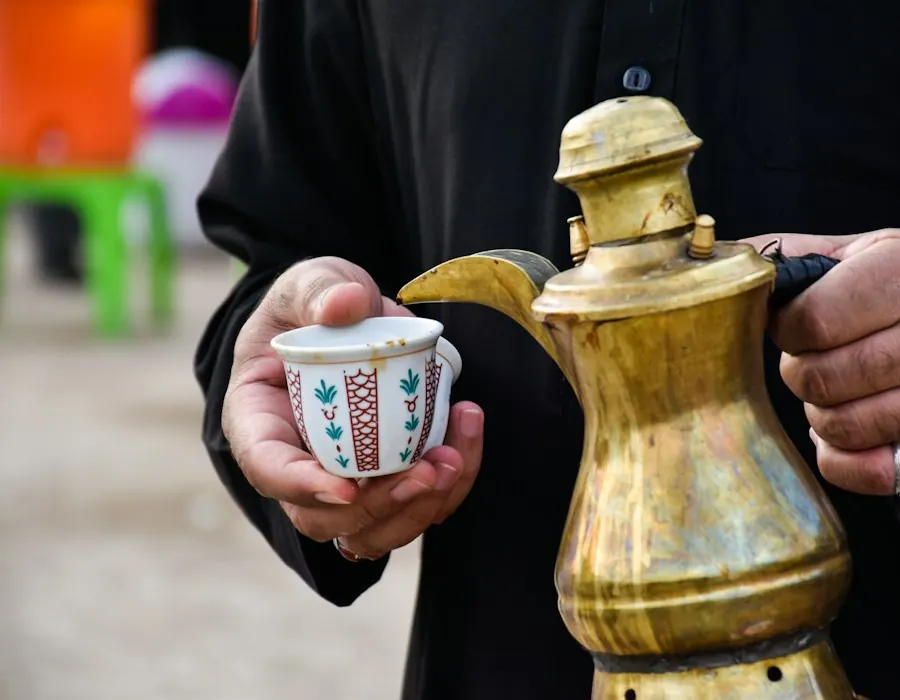 Coffee & conversationA friendship circle for people who enjoy cafés and unhurried conversation in Kuwait. Low-pressure first meetings, close to home.
 Walkers & runnersA friendship circle for people who like evening walks, early runs and park and seafront paths in Kuwait. Find a regular partner at your own pace.
 Padel & tennisA friendship circle for padel and tennis players in Kuwait, from beginners to regulars, looking for friendly games and people to play with.
Keep reading
 IdeasMuseums and culture in Kuwait, better with a friend
 FriendshipFriends, when Fridays and weekends belong to family
 IdeasWhere people meet in Salmiya, Kuwait City and beyond: friendship within 15 minutes of home
 IdeasAn evening in Souq Al-Mubarakiya with new friends
 FriendshipWhat the diwaniya teaches about friendship, and how to build your own weekly table
 FriendshipHow to make friends in Kuwait as a grown-up
 IdeasWinter in Kuwait: outdoor plans for a new circle
 IdeasKuwait’s café culture, and where a small group can really talk
- New in townNew in Kuwait: making friends after the move