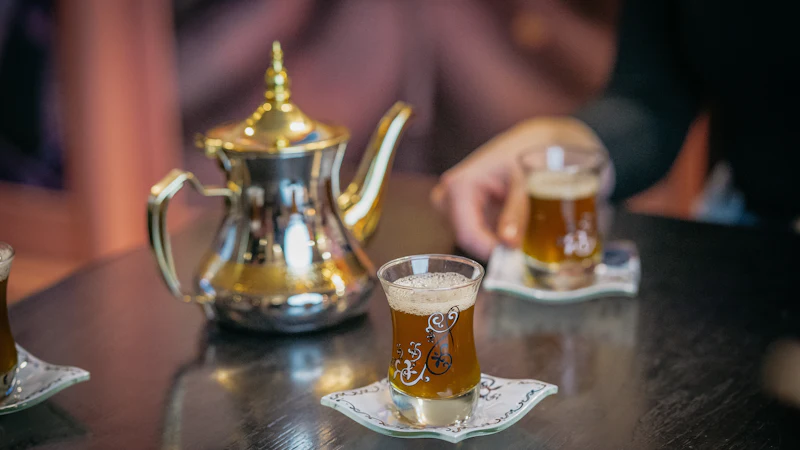
Yousef grew up with Monday nights. Every week, his grandfather’s diwaniya filled with the same voices: uncles, neighbours, an old schoolfriend of his grandfather’s who always took the seat by the door, and a few younger men who came mostly to listen. There was gahwa and tea, a long argument about football, quieter talk about whose son was getting married and whose father was unwell. Nobody sent an invitation. Everybody simply knew that on Monday the door was open.
At thirty-four, Yousef realised he had not been to a diwaniya in almost two years. His grandfather’s house had been sold after the family spread out across new areas. His school friends were busy with young children and long commutes. He lived in a flat in Jabriya, worked late, and found that his evenings had turned into a series of polite maybes. “We must sit together soon,” his friends kept writing in the group chat. Soon never came. It was not loneliness exactly. It was the quiet sense that something which used to happen by itself had stopped happening, and nobody had noticed.
What a diwaniya is, and why it matters
The diwaniya is one of Kuwait’s best-known traditions. It is a gathering, and often the room or space that holds it, where men come together to talk, catch up and share ideas. It can take place in a home, in a separate reception room or even a tent. Family members, neighbours and friends drop in to discuss family matters, community issues, politics, the news and, very often, sport. Some diwaniyas are formal, with traditional dress and careful customs. Others are relaxed and include games. Some gather people from the same profession. Many keep a set night of the week, and regulars know it without needing to be told.
Its importance is widely recognised. In 2025, UNESCO inscribed the Diwaniya on its Representative List of the Intangible Cultural Heritage of Humanity, describing it as a unifying cultural practice in Kuwait. Young men learn its manners by watching: how guests are welcomed, how elders are shown respect, where to sit and what is fitting to talk about. In that sense, the diwaniya is not only a place to relax. It is where a community passes on its values, quietly, week after week.
The diwaniya has traditionally been a men’s gathering, and it is right to say so plainly. Women in Kuwait gather too, among family and friends and in forms of their own, and in recent years more women have started diwaniyas of their own as spaces for conversation and leadership. We will not pretend these are all the same thing. What they share is the idea underneath, and that idea is useful to anyone.
Four lessons hidden in the tradition
Look at the diwaniya as a model of how friendship grows and four lessons stand out.
The same night, every week. A fixed night removes the hardest part of grown-up friendship, which is arranging it. Nobody has to send a message, compare calendars or worry about being the one who always asks. The plan already exists. You only decide whether to go.
An open door. In a diwaniya, you can arrive late, leave early or miss a week without explanation. That freedom matters. When missing one evening does not feel like letting people down, people come back more often, not less.
Low pressure. Nobody has to perform. You can talk for an hour or sit and listen, drink your tea and enjoy the company. A shy person can be a regular for months before saying much, and still belong.
Conversation is the point. There is no ticket, no show and no programme. The gathering exists so that people can talk, and over time the talk becomes trust. You learn who gives good advice, who makes everyone laugh, who will help when a car breaks down or a relative is in hospital.
Put together, these four lessons describe something researchers who study friendship also point to: friendships tend to form through repeated, easy contact with the same people over time, far more than through one memorable evening. The diwaniya simply built that into the calendar long before anyone wrote it down.
When there is no diwaniya to walk into
Plenty of people in Kuwait do not have a diwaniya of their own. Newcomers are the obvious example. Someone who has just arrived from Cairo, Amman, Manila or Kerala may hear about diwaniyas in the first week and never set foot in one. Women who would like a regular evening with friends may not find it ready-made. And, like Yousef, many Kuwaitis find that the gathering they grew up with no longer fits their life: the family house is gone, the regulars have scattered, or they live too far away to make Monday night realistic.
The answer is not to copy the room. A diwaniya belongs to a family, a host and its own customs, and it deserves respect as such. If a Kuwaiti colleague or neighbour invites you to theirs, accept warmly, follow the host’s lead and enjoy it. But for most people, the more practical step is to borrow the rhythm. A small group, a set night, a familiar place and a simple activity to sit around can give you much of what the diwaniya gives its regulars.
How to build your own weekly table
Start small. Three to six people is enough. A small table means everyone can hear, nobody is lost, and the group survives when one or two people cannot come.
Choose a night and keep it. Pick an evening that suits most of the group, perhaps a quiet weeknight rather than Friday, which many people keep for family. Then protect it. The value comes from repetition, so treat the night as fixed and let attendance vary. Four people one week and two the next is still a table.
Pick a public place that is easy to return to. A café with comfortable seating and a reasonable noise level works well, especially one that is central for the group and has easy parking. Keeping the gathering in a public place makes it simple for newcomers to join and keeps it comfortable for everyone. Later, if the group is close and it suits everyone’s families, you can host one another; there is no need to start there.
Give it a light activity. Some groups only need coffee and conversation. Others relax more easily around something to do: a board game, cards, a shared book, a match on the screen. A game night is a gentle way in for shy people, because the game fills the silences until the conversation takes over. Keep the activity simple enough that talking still comes first.
Keep the door open. Agree that anyone may bring a friend now and then, that missing a week needs no apology, and that a newcomer is always welcome to sit in. That one rule turns a closed group into something closer to a diwaniya, a place people can find their way into.
Share the small jobs. One person reminds the group each week, another chooses a new café now and then, someone else keeps the game box in the car. When the work is shared, the gathering does not depend on one tired organiser.
What happened to Yousef’s Tuesdays
Yousef did not announce anything grand. He asked two colleagues and an old classmate whether they would meet for coffee every Tuesday after work at a café near the Ring Road that suited everyone’s commute. One of the colleagues brought Karim, a new engineer from Egypt who had been in Kuwait for three months and had spent most evenings alone. The first Tuesday was mostly talk about work. The second, someone brought a card game. By the sixth, Karim was teaching the others an Egyptian version of it, and the classmate had started bringing his younger brother.
The table never became large. On some weeks it was just two of them. But it was always there, and slowly it started to feel like the Monday nights Yousef remembered: the same faces, the same easy start, the same feeling that you could arrive tired and leave lighter. When Karim’s father was ill back home, it was the Tuesday group who checked on him every day. That is what a regular gathering gives you in the end. Not entertainment, but people who notice.
Where TruFriend fits
TruFriend is an invite-only friendship platform, for friendship only, for grown-ups aged 18 and over, and it is now open in Kuwait City. Tru, our assistant, learns what you enjoy and when you are usually free, introduces you to a few compatible people nearby, and helps turn the introduction into a plan in a public place. A conversation only opens when both of you say yes. Circles such as coffee and conversation, board games and New in Kuwait are small groups of three to ten people who meet around something they already enjoy, which makes them a natural start for a weekly table of your own. If a regular evening with good company sounds like what your week is missing, request an invite and we will send you a personal invitation.
Don’t just read about it
Join a circle of people in Kuwait City who enjoy the same things. Members already on TruFriend can join from the app or suggest a plan in any chat.
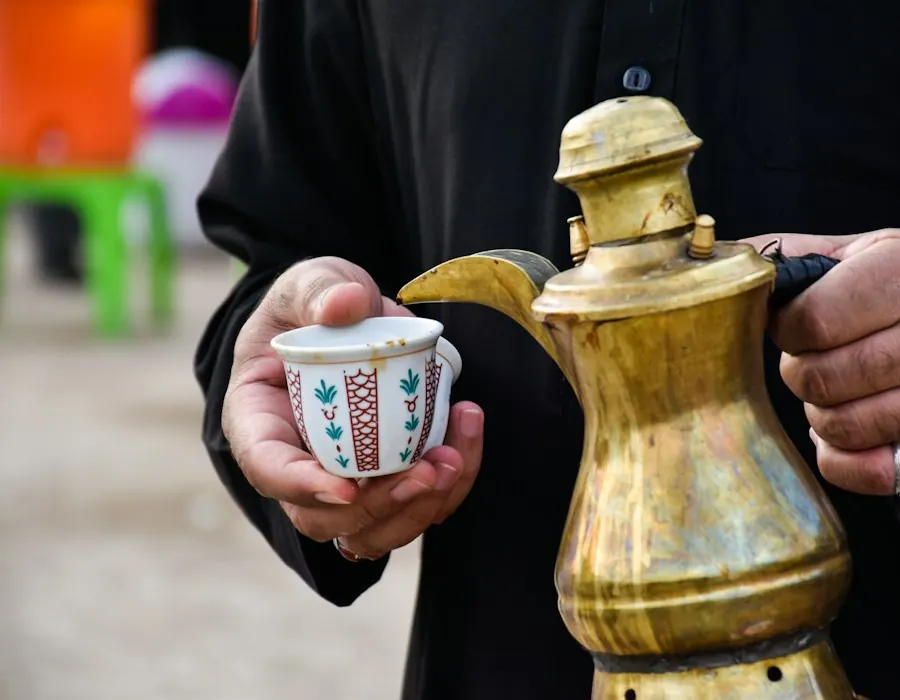 Coffee & conversationA friendship circle for people who enjoy cafés and unhurried conversation in Kuwait. Low-pressure first meetings, close to home.
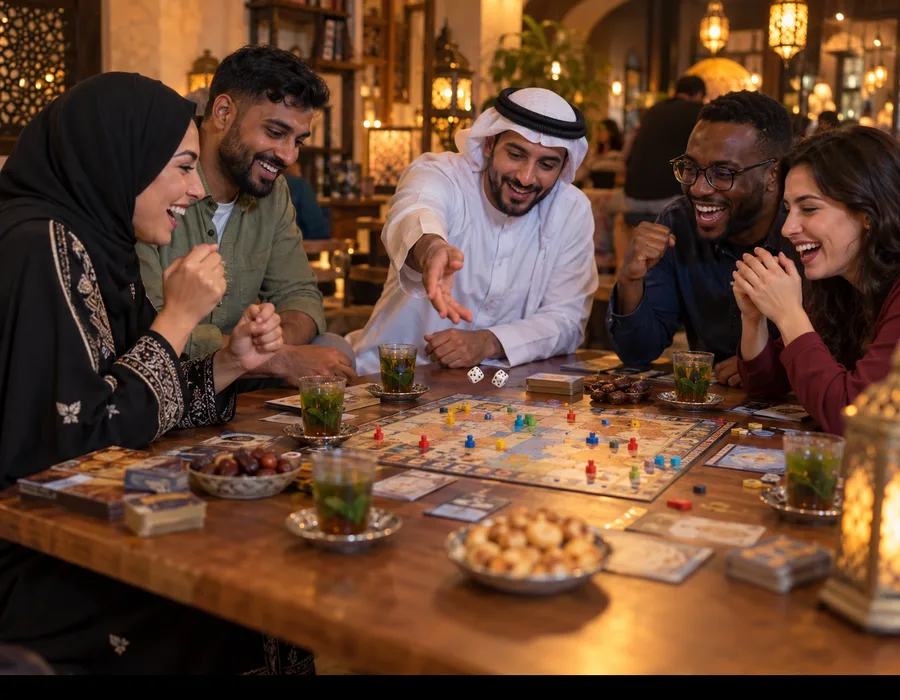 Board games & quizzesA friendship circle for board games, card games and quiz nights in Kuwait. Meet people for friendly competition and easy conversation.
 New in KuwaitA friendship circle for people who have recently moved to Kuwait: settle in, explore the city and build a social life with others doing the same.
Keep reading
 IdeasWhere people meet in Salmiya, Kuwait City and beyond: friendship within 15 minutes of home
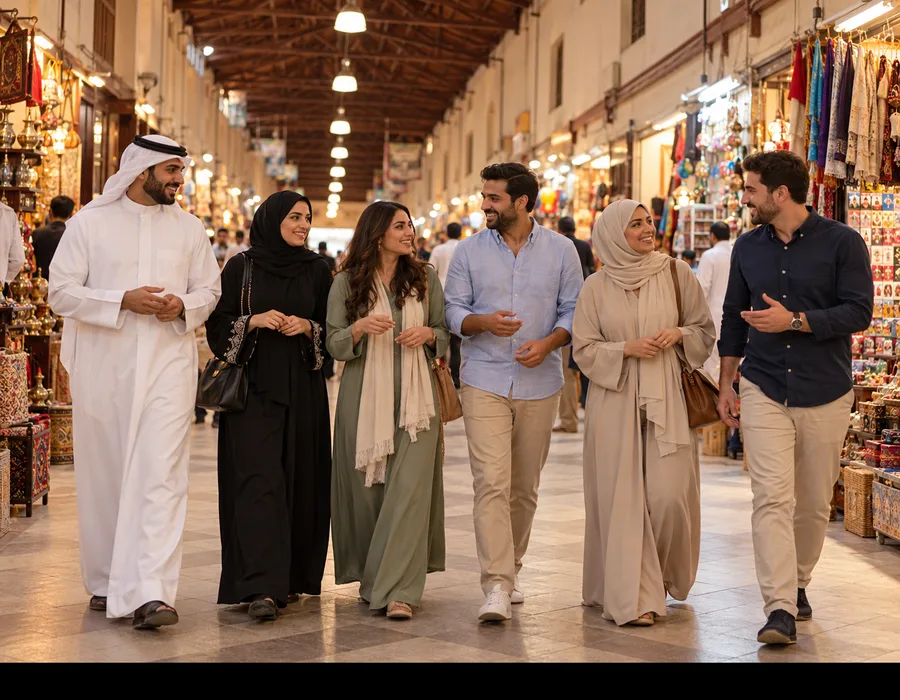 IdeasAn evening in Souq Al-Mubarakiya with new friends
 FriendshipHow to make friends in Kuwait as a grown-up
 IdeasWinter in Kuwait: outdoor plans for a new circle
 IdeasKuwait’s café culture, and where a small group can really talk
 New in townNew in Kuwait: making friends after the move