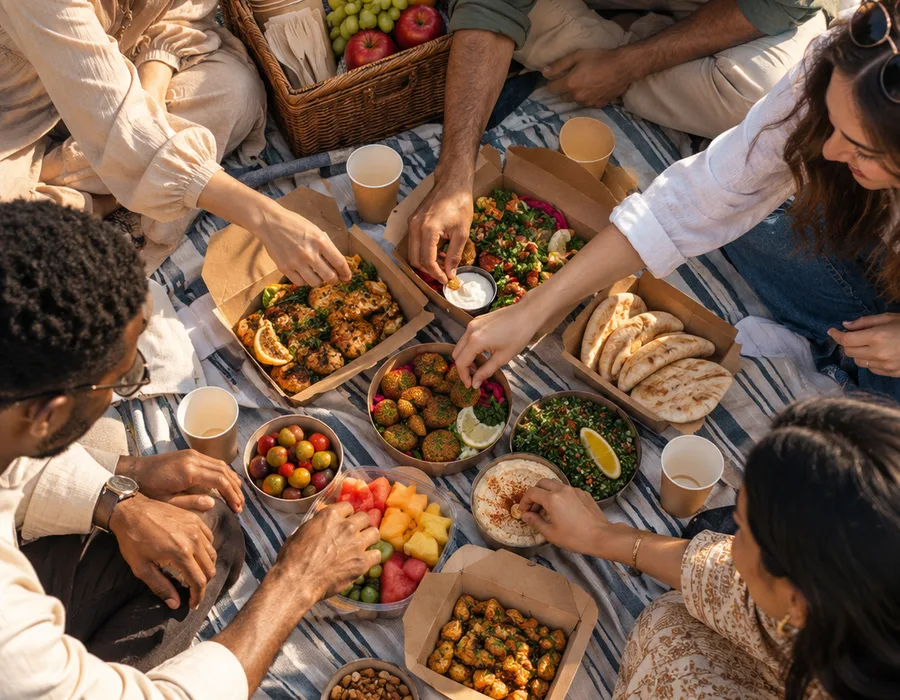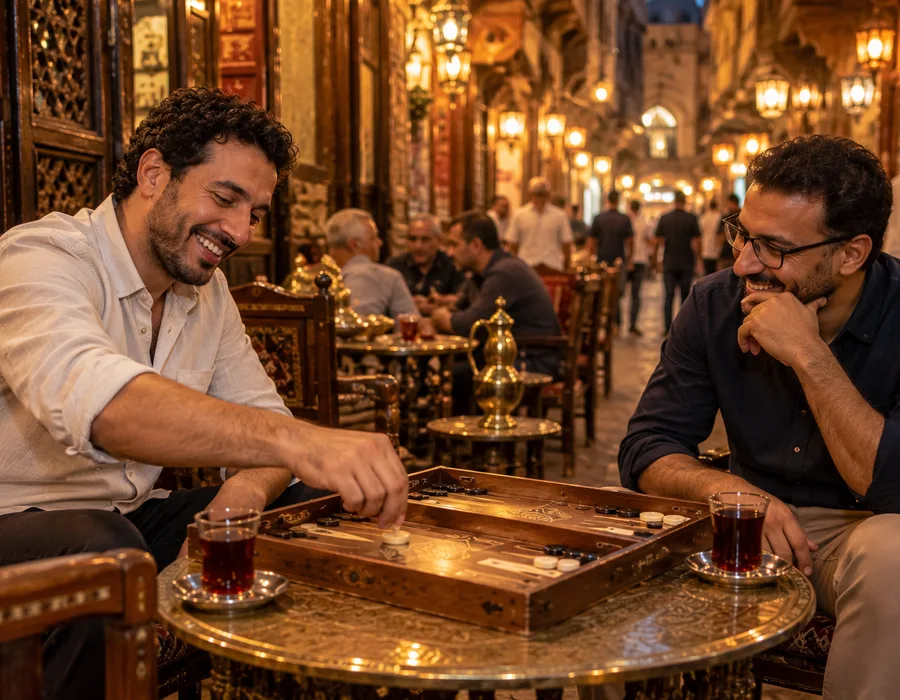
Karim moved to Cairo from Alexandria for a job in a bank, and for the first few months the city felt enormous and indifferent. He knew the road from his flat to the office and back, and very little else. His colleagues were friendly at lunch, but at six o’clock everyone disappeared into traffic and their own lives. On weekends he scrolled through his phone in a flat that still had boxes in the corner.
One evening, tired of his own four walls, he walked down to the small ahwa at the end of his street. Plastic chairs on the pavement, a television showing a football match, the click of tawla counters on wooden boards. He ordered tea and sat alone. At the next table, three men were arguing cheerfully about a backgammon move. One of them turned and asked Karim to settle it. He did not know the rules well enough to judge, and said so. They laughed and pulled up a chair for him. Two hours later he had lost four games, learned the opening moves properly and been told to come back on Thursday. He did. A year on, the Thursday table at that ahwa is the part of the week he would least like to give up.
The ahwa: Cairo’s oldest living room
For generations, the ahwa has been where Cairo meets itself. The word simply means coffee, but the traditional coffeehouse has always been about much more than what is in the cup. Most neighbourhoods have one, often several, spilling onto the pavement in the evening. Tea arrives in small glasses, coffee comes thick and sweet if you ask for it that way, and in the cooler months there is sahlab, warm and fragrant. In many of them the hiss of a shisha is part of the background, though nobody needs to smoke to belong at the table, and plenty of regulars never do.
What the ahwa really offers is time. Nobody hurries you. You can sit for three hours on a single tea, watching the street, and that is considered a perfectly reasonable way to spend an evening. Writers, workers, students and retired men have shared these chairs for a century or more. Naguib Mahfouz, Egypt’s Nobel laureate, was famously fond of the city’s cafés and set many of his scenes in them. The tradition he wrote about is still alive in every neighbourhood ahwa where the waiter knows your order before you sit down.
Tawla and dominoes: games that do the talking
The quiet heroes of the ahwa are its games. Tawla, the Egyptian name for backgammon, is played fast and loud, with the counters slapped down on the board and a running commentary from anyone watching. Dominoes are a close second, the tiles clattering on metal tables late into the night. Cards appear too, but tawla is the true signature of the place.
Games matter because they solve the hardest problem in making a friend: what to talk about. When you sit across a tawla board from a stranger, you do not need to invent a conversation. The game gives you one. You comment on a lucky throw, groan at a bad one and argue gently about whether a move was wise. Somewhere around the third game, the talk drifts from the board to work, to family, to the match on the television, and two people who were strangers an hour ago are now simply two people chatting.
There is a lovely equality in it too. The best tawla player at Karim’s table is a retired schoolteacher in his sixties, and the worst is Karim, a man with a university degree and a good job. The board does not care. You win, you lose, you laugh and you set the counters up again. That small humility, repeated week after week, is fertile ground for friendship.
The new café culture
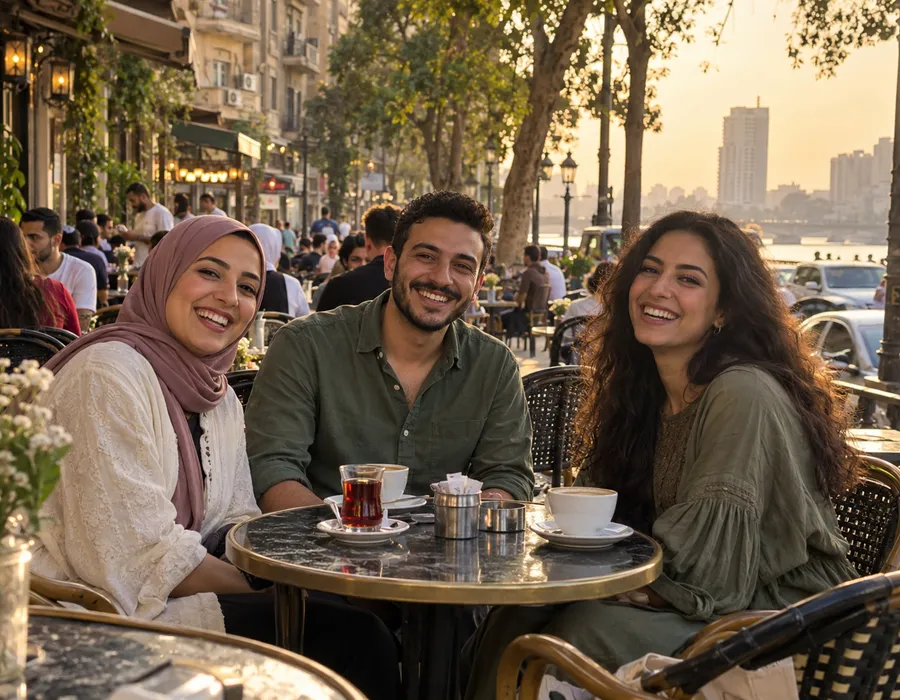
Alongside the traditional ahwa, Cairo has grown a second café culture over the past two decades. In Zamalek, Maadi, Heliopolis, New Cairo and Sheikh Zayed there are specialty coffee shops, bakeries with long tables and bright cafés full of laptops, books and conversation. Many of them are comfortable for mixed groups of friends, quiet enough to talk and busy enough to feel lively.
Salma, who works as a graphic designer in Heliopolis, describes these cafés as her office, her library and her meeting room all at once. For a long time, though, she always went alone. It was a friend of a friend who suggested they turn her habit into a regular thing: the same café, every second Saturday morning, whoever could come. The first time, there were three of them. By the end of the year there was a group of seven, and a long table that the staff now quietly keep free for them.
The two cultures are not rivals. Some groups meet at a modern café in the morning and end the day at a neighbourhood ahwa with tawla. What they share is the same idea: a table, a drink and enough unhurried time for people to get to know each other.
Why a regular table works
Psychologists who study friendship keep returning to the same simple finding. Friends are made through repeated, relaxed time together. Not one dramatic evening, but many ordinary ones. The ahwa understood this long before anyone measured it. The same chairs, the same faces, the same evening of the week. You do not have to plan anything or be particularly interesting. You only have to keep turning up.
A regular table also lowers the stakes. If you miss a week, nobody is offended, and the table is still there next time. If you are shy, you can watch a game before you join one. If the conversation runs dry, there is always the street to watch, the tea to order or the dominoes to shuffle. Slowness is not a weakness here. It is exactly what gives friendship room to grow.
Over time, the regular table quietly takes on the jobs that friends do for each other. At Karim’s ahwa, when one of the men went quiet for a few weeks after losing his job, it was the Thursday table that noticed first. Nobody made a speech. Someone simply mentioned a cousin whose company was hiring, someone else offered to look over his CV, and the games carried on as usual. That is how friendship often looks in practice: not grand gestures, but small attention from people who see you every week.
Making it work as a small group
If you want to build your own regular café evening, a few simple habits help. Choose one place and one time, and stick to them for at least two months. Pick somewhere busy, public and comfortable for everyone in the group, men and women alike, which in practice usually means a well-known café or a lively ahwa on a main street rather than a quiet corner. Keep the group small enough that one table holds everyone.
Bring a game, or learn the house game. A tawla board or a set of dominoes gives newcomers something to do with their hands while they find their feet. Take turns choosing the next place if the group wants variety, but keep the day fixed. And split the bill simply. Tea and coffee are a small cost, and an easy rule like taking turns to pay saves everyone the awkward arithmetic at the end of the night.
Above all, be generous to the newcomer. Every regular table started with someone sitting alone. When a person mentions they have just moved to Cairo, as Karim once had, pull up a chair. It costs you nothing and may change their year.
Where TruFriend fits
Not everyone has an ahwa at the end of their street with a friendly table, and not everyone feels comfortable walking up to strangers. That is where TruFriend can help. It is an invite-only platform for friendship only, for grown-ups aged 18 and over, and it is now open in Cairo. Tru, our assistant, learns what you enjoy, where you live and when you are usually free, then introduces you to a few compatible people nearby. A conversation only opens when both of you say yes, and every plan takes place in a public place, like a busy café.
The Coffee and conversation circle is made for slow evenings like Karim’s and Saturday mornings like Salma’s. Board games brings together people who would happily lose four games of tawla to make a friend, and New in Cairo is there for anyone who has just arrived and does not yet know where the good tables are. Groups are small, from three to ten people, so the same faces come back and the conversation has time to deepen.
Karim still loses at tawla most Thursdays. He no longer minds. If you would like a regular table of your own, request an invite and we will send you a personal invitation.
Don’t just read about it
Join a circle of people in Cairo who enjoy the same things. Members already on TruFriend can join from the app or suggest a plan in any chat.
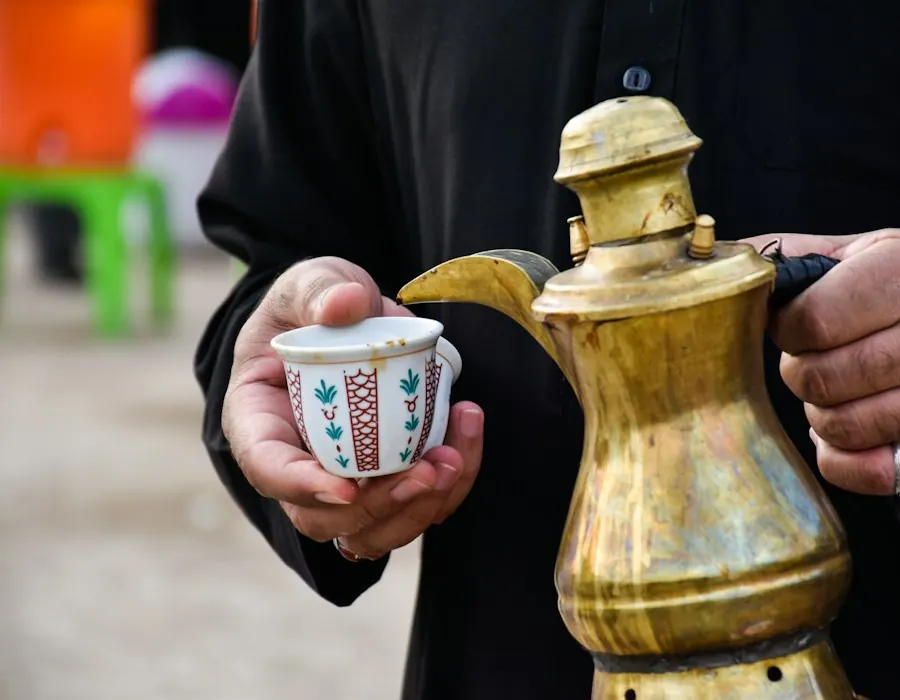 Coffee & conversationA friendship circle for people who enjoy cafés and unhurried conversation in Cairo. Low-pressure first meetings, close to home.
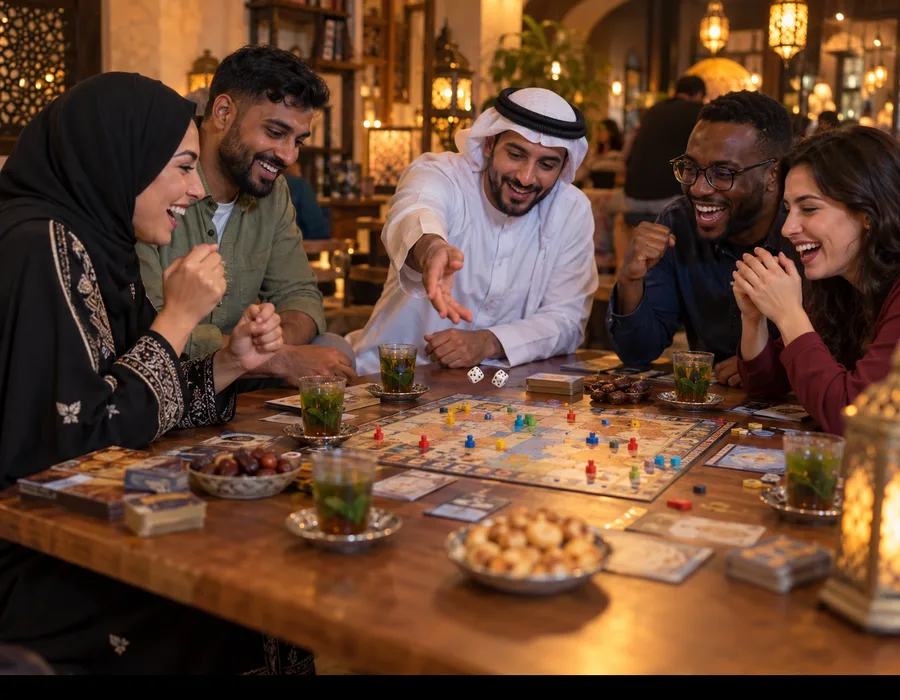 Board games & quizzesA friendship circle for board games, card games and quiz nights in Cairo. Meet people for friendly competition and easy conversation.
 New in CairoA friendship circle for people who have recently moved to Cairo: settle in, explore the city and build a social life with others doing the same.