Sophie came to Cairo from Lyon for a two-year job with an engineering company. She had studied Modern Standard Arabic at university and arrived feeling quietly confident. On her first day she asked a taxi driver to take her to Zamalek in perfect classical Arabic. He laughed kindly, answered in fast Egyptian Arabic, and she understood almost nothing. For the first month she lived on smiles, gestures and English.
Mahmoud, a pharmacist in Dokki, had the opposite problem. His English was good on paper and nervous in practice. He wanted to apply for a master's programme abroad and needed to speak with confidence, but the only English conversations in his week were with the occasional tourist asking for directions to the pharmacy next door.
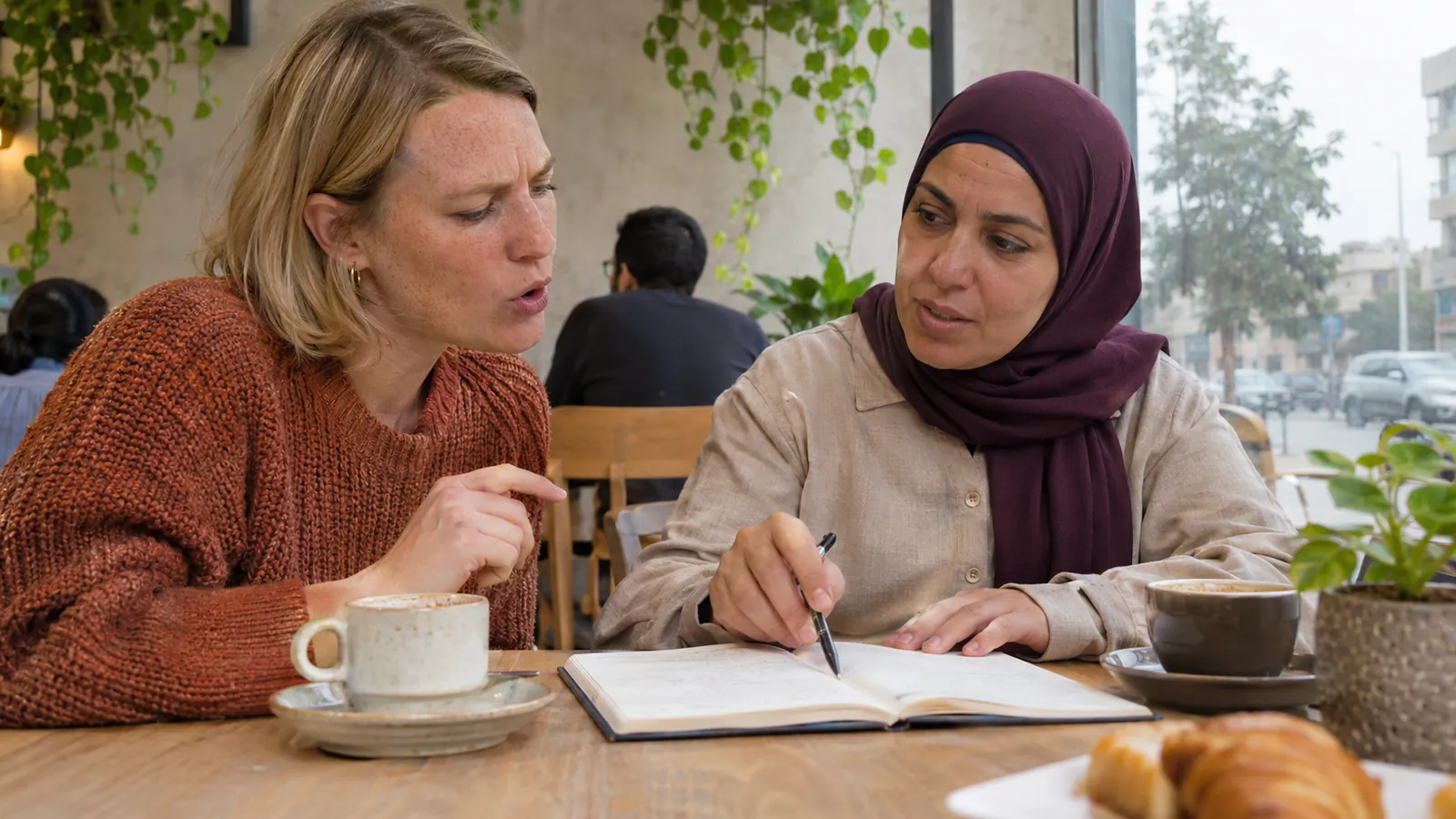
They met at a language exchange in a café in Zamalek, where a small group had been meeting every Wednesday evening. The idea was simple: half the evening in Arabic, half in English. Sophie spent her half asking how to say "turn left at the next street" the way Cairenes actually say it. Mahmoud spent his half telling a story about his grandmother in English, slowly at first and then faster, as he forgot to be nervous. By the end of the evening they had swapped numbers and a plan to meet again the following week.
A city full of learners
Cairo has always been a crossroads, and today it is full of people learning languages. Students come from across the world to study Arabic. Professionals arrive for work with international companies, embassies and organisations. Egyptians learn English for work and study, French because of the city's long ties to France, German, Spanish, Italian, Chinese. The city's cultural institutes, such as the Goethe-Institut and the Institut français, are busy with classes, and plenty of learners finish a course still looking for someone to actually talk to.
That is what a language exchange offers. Not a class, but a conversation. Two people, or a small group, who each want to practise the other's language, meeting regularly to talk, correct each other gently and laugh at their mistakes.
Why language exchange builds friendships so well
A language exchange has a quality that most social settings lack: everyone arrives a little vulnerable. You are going to make mistakes, sound strange and forget simple words, and so is everyone else. That shared vulnerability makes people kind to each other very quickly. It is hard to feel shy for long when the person opposite you has just accidentally said something ridiculous in your language and is laughing about it.
It also creates a natural fairness. Each person is the teacher for half the time and the student for the other half. Nobody is doing anyone a favour. The relationship is balanced from the start, and balanced relationships are the ones that last.
And the conversations go deep surprisingly fast. When you are speaking a language you are learning, you cannot hide behind clever phrases. You say simple, honest things: where you come from, what you miss, what you hope for. A language exchange is one of the few places where strangers talk about their families and dreams in the first hour, simply because those are the words they know.
How a good exchange works
The Wednesday group in Zamalek found a format that suited them. They meet for about two hours. The first hour is in one language, the second in the other, and they swap the order each week so neither language always gets the tired end of the evening. Someone usually brings a topic, a news story, a film, a question about the city, to help when conversation stalls. Corrections are gentle and only for mistakes that change the meaning.
A few habits help any language exchange:
- Split the time fairly. Use a clock if you need to. The exchange only works if both languages get equal space.
- Correct kindly and sparingly. Stopping someone at every word kills the conversation. Note one or two useful corrections and share them at the end.
- Talk about real things. Ordering food, haggling, giving directions, telling a story about your week. Real situations teach real language.
- Keep the group small. Pairs or groups of four work best, so everyone speaks rather than listens.
- Meet in the same place, same day. Regularity is what turns practice partners into friends.
More than two languages at one table
The Wednesday group soon grew beyond Arabic and English. A German engineer joined who wanted Arabic and offered German; an Egyptian student preparing to study in Berlin jumped at the chance. A Spanish teacher swapped Spanish for Egyptian Arabic with a woman who loved Latin American films. Some evenings the table switched between three languages in an hour, and nobody minded, because the rule was simple: whoever is learning sets the pace.
Mahmoud says those evenings taught him that confidence in a language comes less from vocabulary than from being listened to patiently. Every time someone waited for him to find the right word instead of finishing his sentence for him, he grew a little braver. By the spring he was the one waiting patiently for others.
Learning Egyptian Arabic, not just Arabic
For newcomers, one of the great discoveries of a Cairo language exchange is Egyptian Arabic itself: the dialect heard across the Arab world in films, songs and television, and the key to everyday life in the city. Textbooks can teach grammar, but only Cairenes can teach you how to joke, how to bargain politely, how to answer "how are you" five different ways, and the countless expressions that make conversation warm.
Sophie says the moment she felt at home was when she made a taxi driver laugh on purpose, with a phrase Mahmoud had taught her. For Egyptians, the exchange works the same way in reverse: practising English, French or German with someone who grew up speaking it gives a confidence no classroom can.
Comfortable settings for everyone
Language exchanges in Cairo usually meet in busy, friendly cafés in areas such as Zamalek, Downtown, Maadi, Heliopolis and New Cairo, in the late afternoon or evening. Women-only exchanges are common and comfortable, and many women prefer to practise in a small group of other women. Mixed groups work well in public cafés too. As always, the best setting is the one where everyone feels relaxed enough to make mistakes.
The cooler months are a lovely time to start. Winter evenings in Cairo are mild, cafés are lively and many newcomers arrive at the start of the academic year looking for exactly this kind of company.
From practice partners to friends
A year later, Sophie's Arabic is fluent enough that she argues with taxi drivers about the route. Mahmoud was accepted onto his master's programme and leaves next autumn. But what both of them talk about first is not the languages. It is the group: the Wednesday evenings, the people who became friends, the dinner at Mahmoud's family home where Sophie was fed until she could not move, the weekend trip to Alexandria the group took together. The languages were the reason to meet. The friendship is what they will keep.
Where TruFriend comes in
Finding the right exchange partner, someone at a similar level, with the language you want, living nearby and free at the same times, is usually the hardest part. That is what TruFriend is for. It is a free platform for friendship only, for grown-ups (18+), open in Cairo as well as Dubai, Riyadh, Kuwait City, London, New York and Toronto. Tru, our assistant, learns which languages you speak and want to practise, which part of the city suits you and when you are free, and introduces you to a few compatible people nearby, with the reasons you might get on. A conversation only opens when both of you say yes, and every plan happens in a public place.
The Language exchange circle is where Cairo's learners find each other, and the Coffee and conversation circle is there for when you simply want to talk. You can find cafés that suit a language exchange on our Cairo language exchange places page. If you are new to the city, read our guide to building a social life in your first months in Cairo, and for more on the cafés where so many of these conversations happen, see Cairo's ahwa and café culture.
Sophie still thinks about that first taxi ride, and how little she understood. Now she understands almost everything, and she has the friends to thank for it. If you would like friends like that, join TruFriend: it takes a minute.
Don’t just read about it
Join a circle of people in Cairo who enjoy the same things. Members already on TruFriend can join from the app or suggest a plan in any chat.
 Language exchangeA friendship circle for language exchange in Cairo: practise Arabic, English or another language over coffee, and help someone with yours.
 Coffee & conversationA friendship circle for people who enjoy cafés and unhurried conversation in Cairo. Low-pressure first meetings, close to home.
Where to meet in Cairo
Public places picked for small groups of 3 to 10, sorted by interest and area.
Keep reading
 IdeasBoard games and tawla nights in Cairo: how a table of strangers becomes a weekly circle
 IdeasArt and culture in Cairo with friends: museums, galleries and the Opera House
 IdeasPadel in Cairo: how a weekly game turns strangers into friends
 IdeasEating through Cairo with friends: koshary, ful and the joy of a shared table
 IdeasDesert and Fayoum trips from Cairo with friends: Wadi Degla, Wadi El Rayan and sunrise in the sand
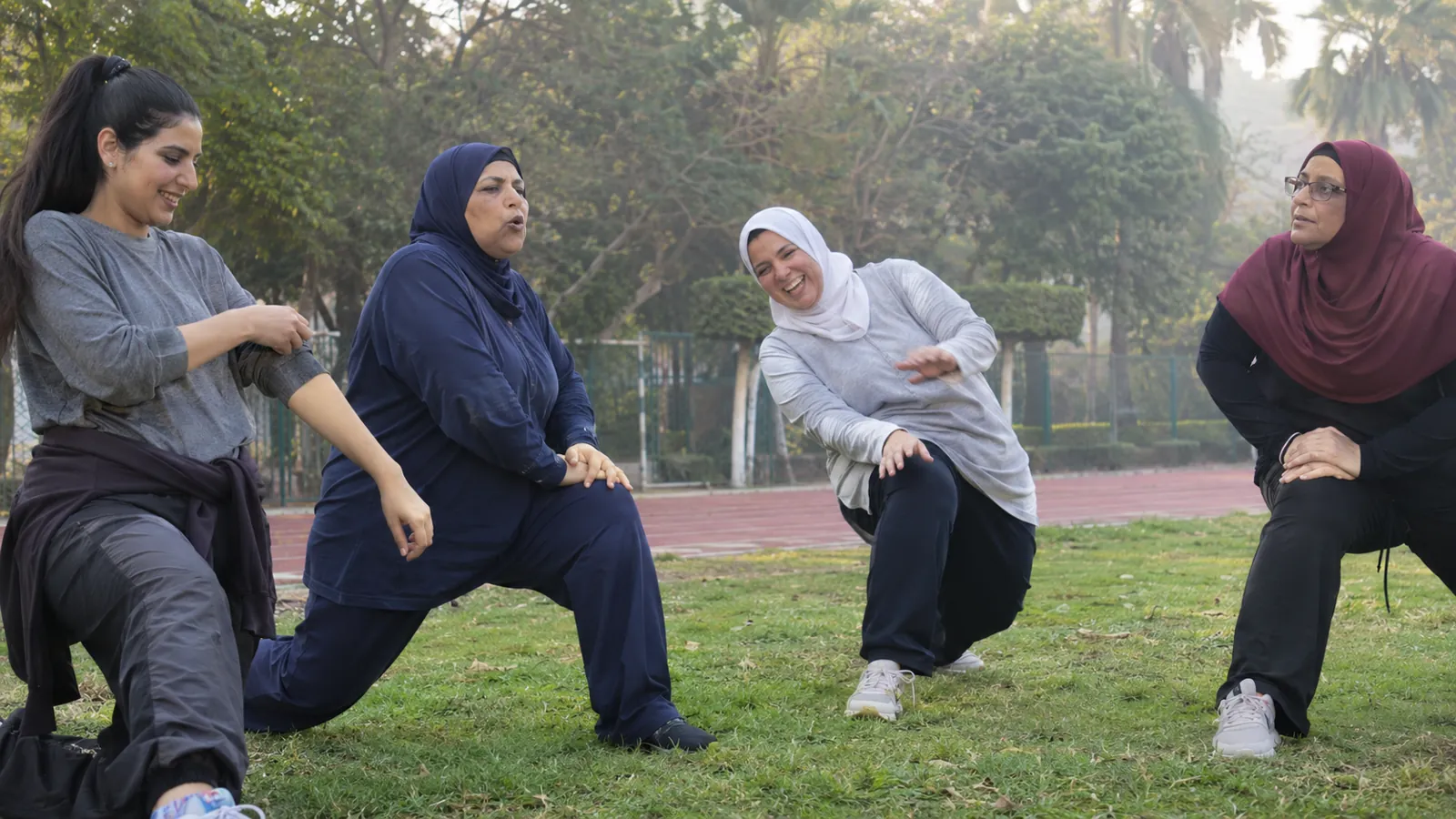 FriendshipMaking friends in Cairo as a woman: comfortable places, small groups and a steady routine
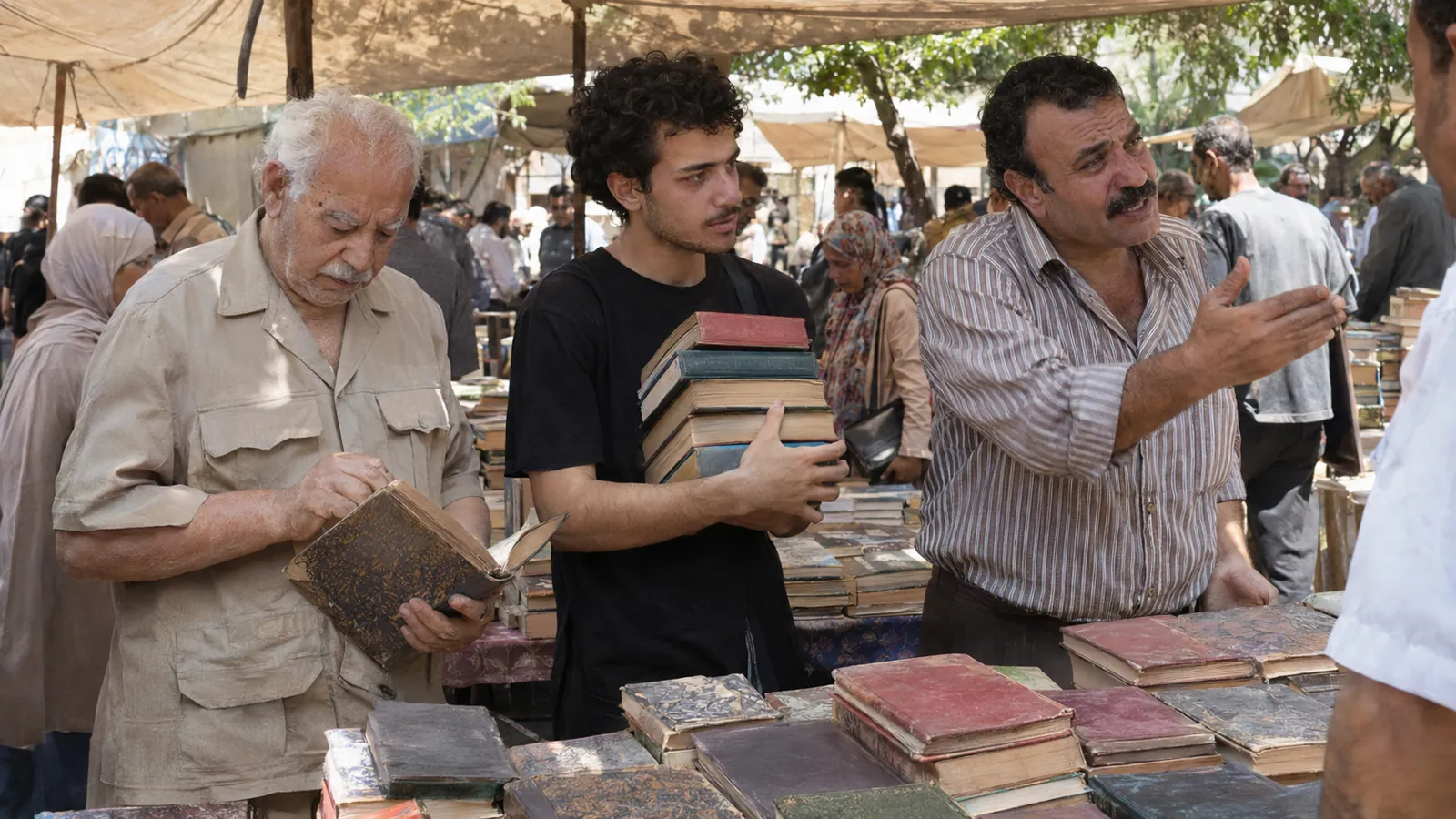 IdeasBook lovers in Cairo: bookshops, the Book Fair and the friends a shared book brings
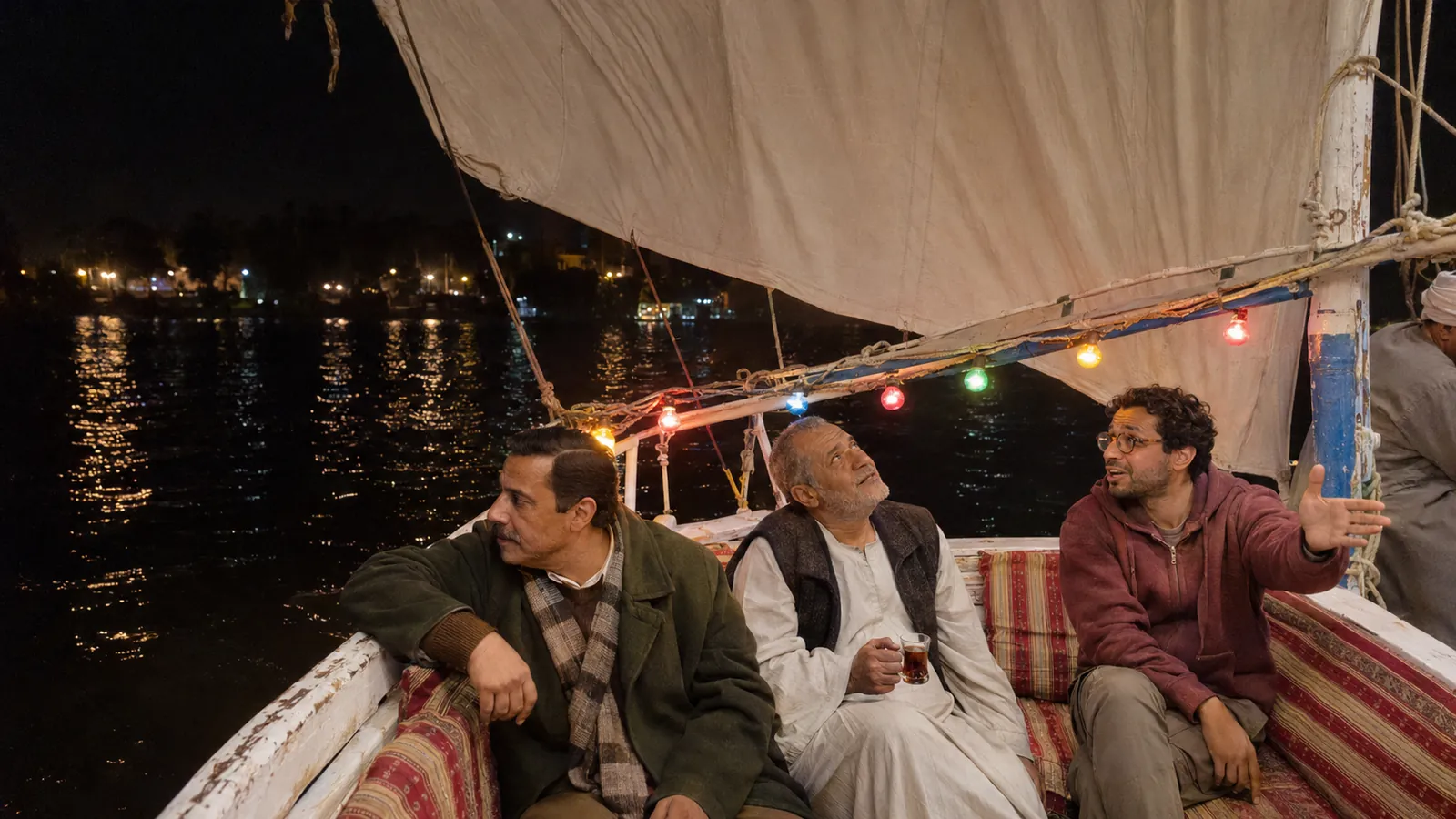 IdeasNile Corniche walks and a felucca with friends: why the same walk builds friendship
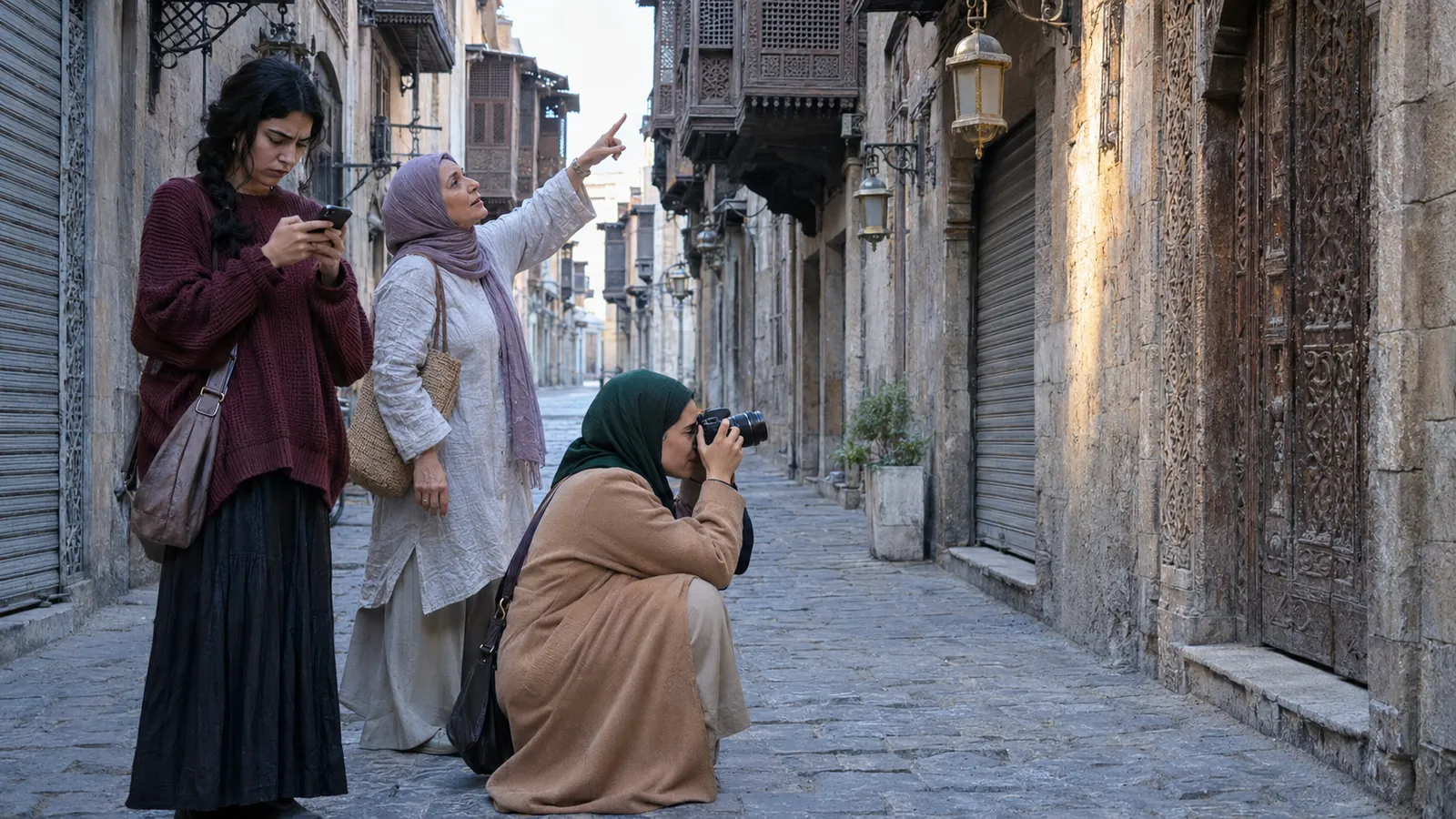 IdeasEl Moez Street and old Cairo with friends: history, photos and food in a small group
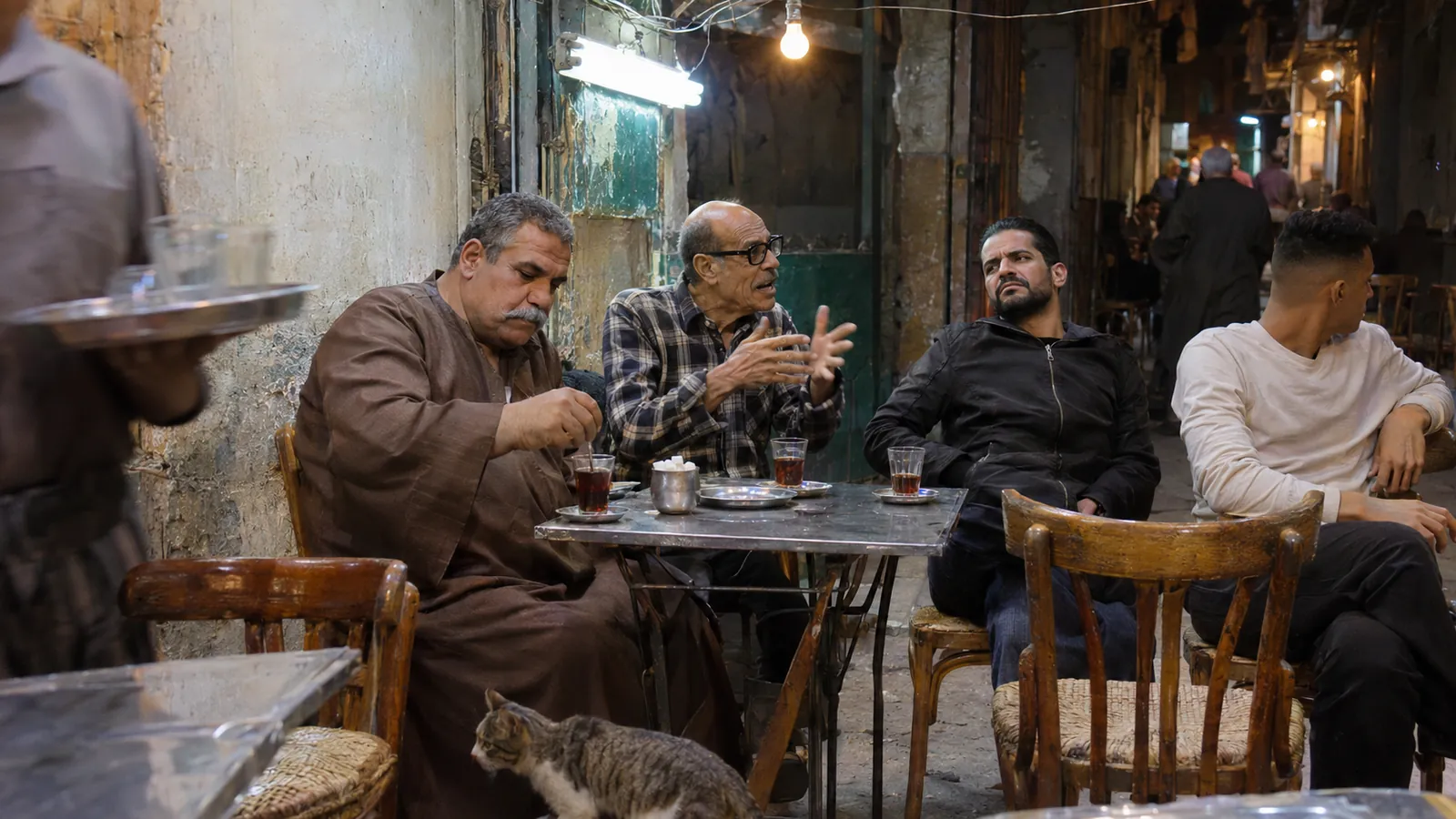 IdeasCairo’s ahwa and café culture: where friendships form over tea and tawla
 New in townNew in Cairo: how to build a social life in your first months
 FriendshipHow to make friends in Cairo as a grown-up
 NewsTruFriend is now open in Cairo