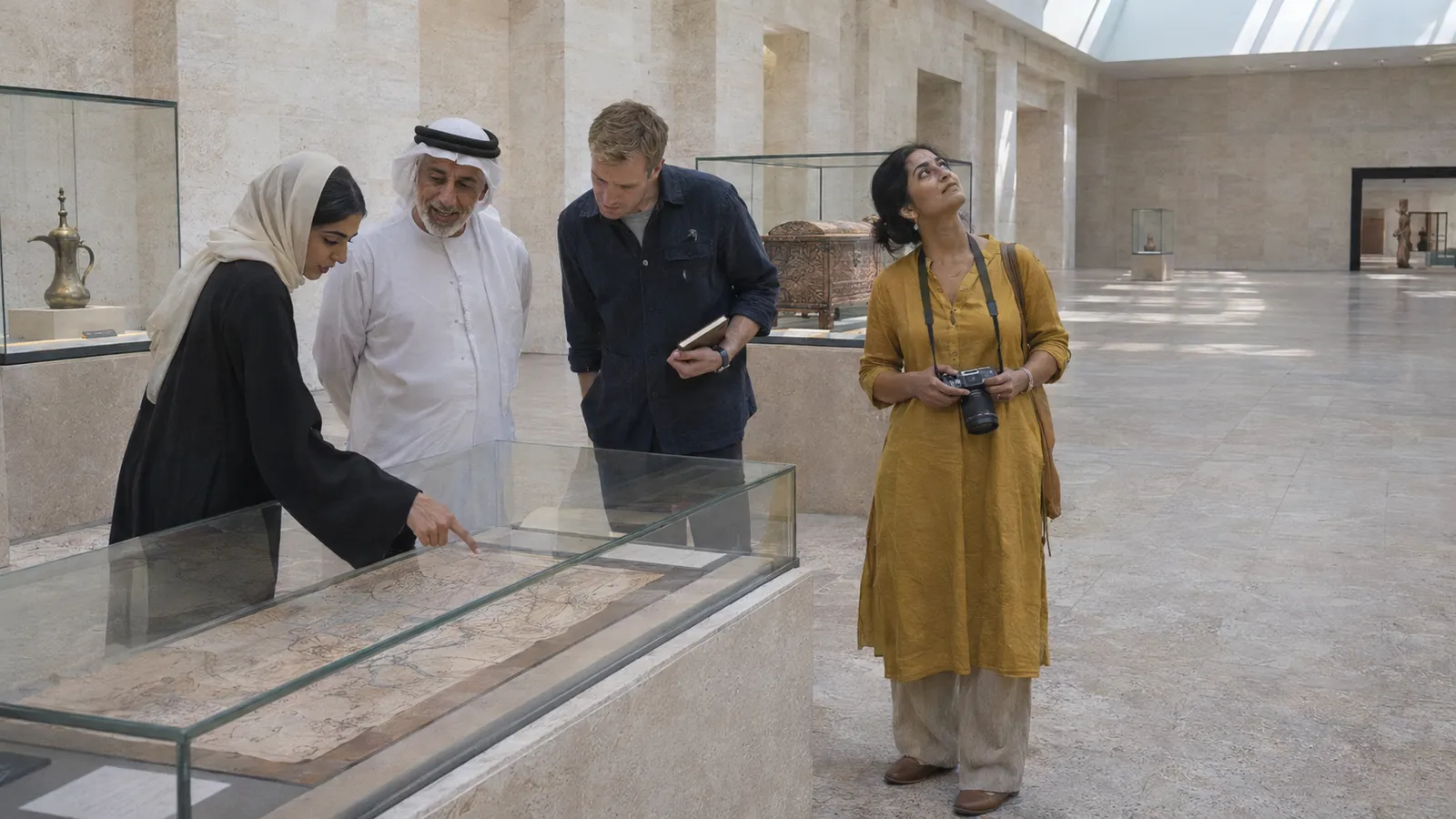
Hessa had lived in Abu Dhabi all her life and had been inside the Louvre Abu Dhabi exactly once, on a school trip, years before she really looked at anything. Lukas had moved from Munich for an engineering job and had been three times, always alone, always leaving with things he wanted to say and nobody to say them to. Divya, an architect from Chennai, went to every exhibition opening she heard about and still felt like a visitor in her own city. Khalid, a retired teacher from Al Ain who had moved to the capital to be near his grandchildren, had simply never thought of museums as a place to make friends.
They met on a Saturday morning in November, through a small plan in an art and culture circle: two hours in the galleries, then coffee. Four people said yes. None of them expected the coffee to last longer than the museum.
Why art makes a first meeting easy
The hardest part of meeting new people is the empty space at the start, when everyone is searching for something to say. A museum removes it. There is always something in front of you, and it is never awkward to stand beside a stranger and look at the same thing. Conversation starts sideways: "What do you think this was for?" "I would never have put those two next to each other." Nobody has to talk about themselves until they are ready.
There is a quieter benefit too. What people notice tells you who they are. Within twenty minutes Khalid had found every object connected to the sea, and told the story of his father's pearling boat. Divya kept stopping to look at ceilings. Lukas read every label and then argued with half of them. Hessa, who had expected to be bored, spent a long time in front of an old map of the Gulf, looking for places her grandmother used to talk about. By the time they sat down, they knew more about each other than an hour of small talk would have told them.
A city built for this
Abu Dhabi has become one of the great museum cities of the region in a remarkably short time. The Saadiyat Cultural District now brings together the Louvre Abu Dhabi, the Zayed National Museum, the Natural History Museum and teamLab Phenomena, with Manarat Al Saadiyat hosting exhibitions and the city's art fairs. On the island, Qasr Al Hosn tells the story of the city from its oldest stone building, and the Cultural Foundation beside it has galleries, a theatre and workshops. Warehouse421 at Mina Zayed shows contemporary art and design in an old port warehouse, and Qasr Al Watan opens the presidential palace to visitors.
For a small group, that variety matters. You can choose a big museum for a long Saturday, or a single exhibition for an hour after work. You can go somewhere famous or somewhere none of you knows. And because so much of it is new, longtime residents and recent arrivals are often discovering it together, which puts everyone on the same footing.
How the museum club worked
After the first Saturday, Divya suggested they do it again in two weeks. Then again. By the new year they had a name, half-joking, and a few simple habits that kept it going.
One place, not everything. They learned quickly that trying to see a whole museum in one visit leaves everyone tired and quiet. Two hours, one or two galleries, and then stop. The rest can wait for next time, which is a good reason for a next time.
Split up, then meet. Halfway through, they would separate for twenty minutes and each find one thing to show the others. It turned the visit into a small game, and it meant the quiet ones always had something to share.
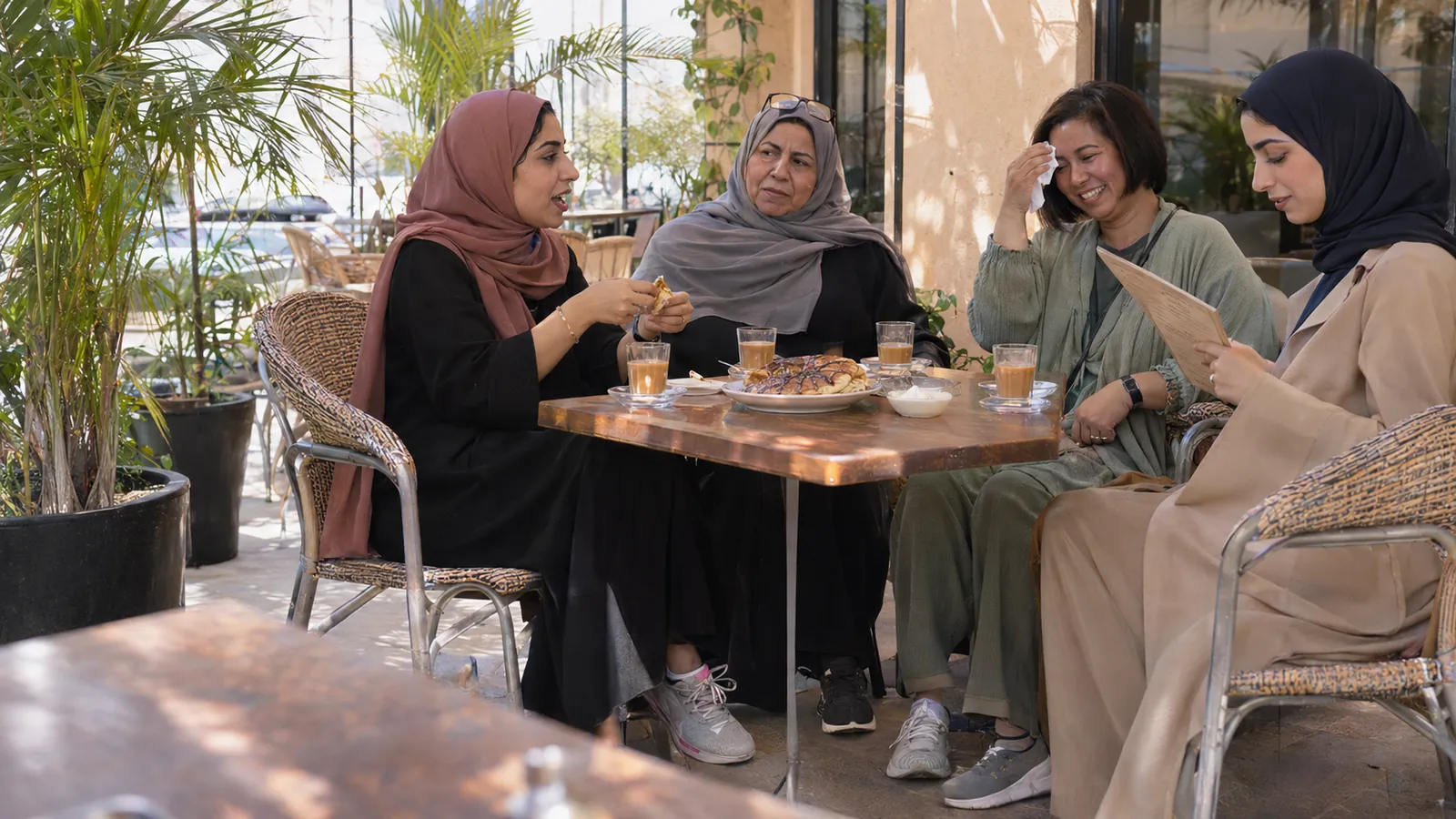
Coffee is part of the plan. The museum gave them something to talk about; the café afterwards was where they actually talked. Most weeks the coffee took longer than the galleries, and nobody minded.
Take turns choosing. Khalid picked Qasr Al Hosn, and told stories the guides did not know. Lukas found a design exhibition at Warehouse421. Hessa, to everyone's surprise, chose the natural history galleries and spent an hour with the dinosaurs. When everyone chooses, everyone feels the group is partly theirs.
Photographs, and permission
Divya brought a camera from the second week, and the group slowly turned into a photo walk as well. They learned the rules as they went: some exhibitions do not allow photography, the Grand Mosque and other sites have dress and photography guidelines, and people should always be asked before they appear in a picture. Within those rules there is a lot to enjoy. The light under the Louvre's dome changes by the hour, and the white walls of Qasr Al Hosn look different in the morning and late afternoon. A camera also gives a quieter person something to do with their hands.
Not just for experts
The thing Khalid said most often, in the early weeks, was "I don't know anything about art." It took him a while to notice that nobody else did either, not really. Lukas knew about engineering and argued with the labels. Divya knew about buildings. Hessa knew about her family's history. Khalid knew about the sea, and the old city, and how Abu Dhabi had looked before most of the towers existed. Together they knew a great deal.
That is the real point of going with other people. A museum on your own is a list of things to see. With three or four others it becomes a conversation, and conversations are how friendships start.
Where it went
By spring the museum club had six regulars and a group chat that was mostly photographs of things people had seen elsewhere and wanted to show the others. Khalid's grandchildren came along once and were, in his words, "more interested in the café". Lukas started bringing a colleague. Hessa took her mother to the Zayed National Museum and sent the group a long message afterwards about the things her mother had remembered.
None of them would say they were close friends after the first Saturday. But a regular plan, a shared interest and the habit of coffee afterwards did what those things usually do. Somewhere around the tenth visit, they stopped being people who went to museums together and became friends who sometimes went to museums.
When the group is mixed
One of the quiet pleasures of the museum club was how different its members were. Two were Emirati, two were not; two were women, two were men; the youngest was twenty-six and the oldest sixty-eight. In most of daily life those four would never have sat at the same table. In a gallery the differences became interesting rather than awkward. Khalid explained what an old coffee pot was used for and how his mother served guests. Lukas explained how a dome that size stays up. Divya pointed out details in a carved door that nobody else had seen. Hessa translated an Arabic inscription for the others and then admitted she had needed to read it twice.
Mixed groups also needed a few simple courtesies, which they settled without much discussion. They met in public places, in daylight or early evening. They chose cafés with space and good light rather than somewhere loud. Anyone could bring a friend or a relative, and sometimes did. Those small habits made it easy for everyone to feel comfortable, and easy for new people to join.
Weekday evenings and summer plans
Saturday mornings were the heart of the club, but not the only time it met. Several museums open later on certain evenings, which made it possible to see a single exhibition after work and still be home for dinner. When the summer came and the outdoor plans of other groups stopped, the museum club barely noticed: galleries are cool, quiet and open whatever the weather. If anything, the hot months were their busiest. Lukas said it was the only hobby he had ever had that improved in August.
They also learned to watch for talks, workshops and exhibition openings, which are announced on the museums' official channels. A talk gives a group something new to discuss; a workshop gives quieter members something to do with their hands. Once Divya persuaded them all to join a sketching session, and the resulting drawings, mostly terrible, were the most-shared thing in the group chat for a month.
Start your own
You do not need to know anything about art to begin. Pick a museum, suggest a morning, keep it to two hours and leave time for coffee. Three people are enough. If it works, do it again in two weeks.
The Art and culture, Photo walks and Coffee and conversation circles on TruFriend in Abu Dhabi are full of people who would like someone to go with. Join TruFriend: it is free and it takes a minute.
Don’t just read about it
Join a circle of people in Abu Dhabi who enjoy the same things. Members already on TruFriend can join from the app or suggest a plan in any chat.
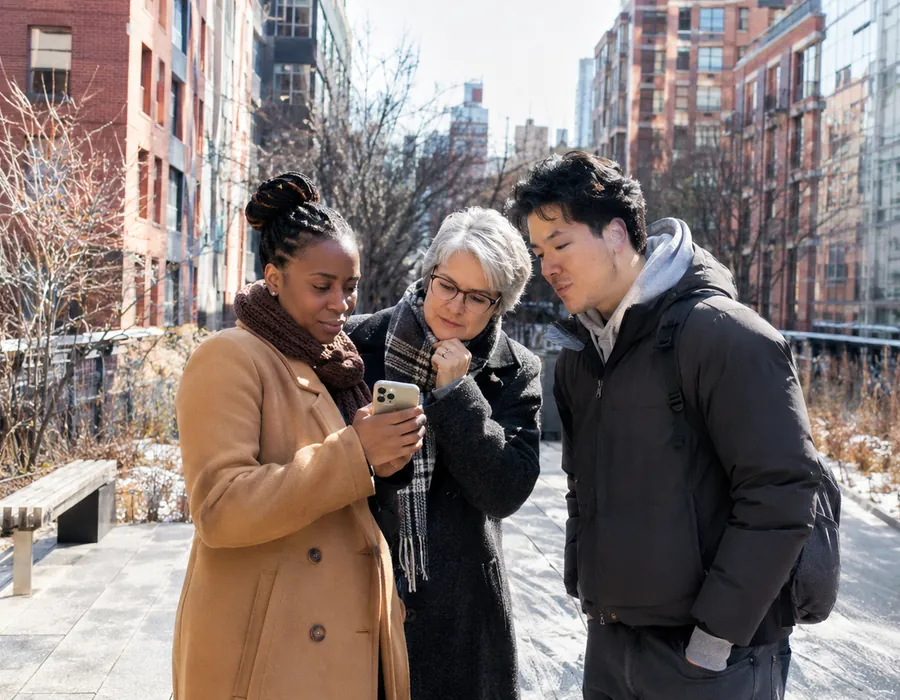 Art & cultureA friendship circle for people in Abu Dhabi who enjoy museums, galleries, design and talks, with someone to go with and talk to afterwards.
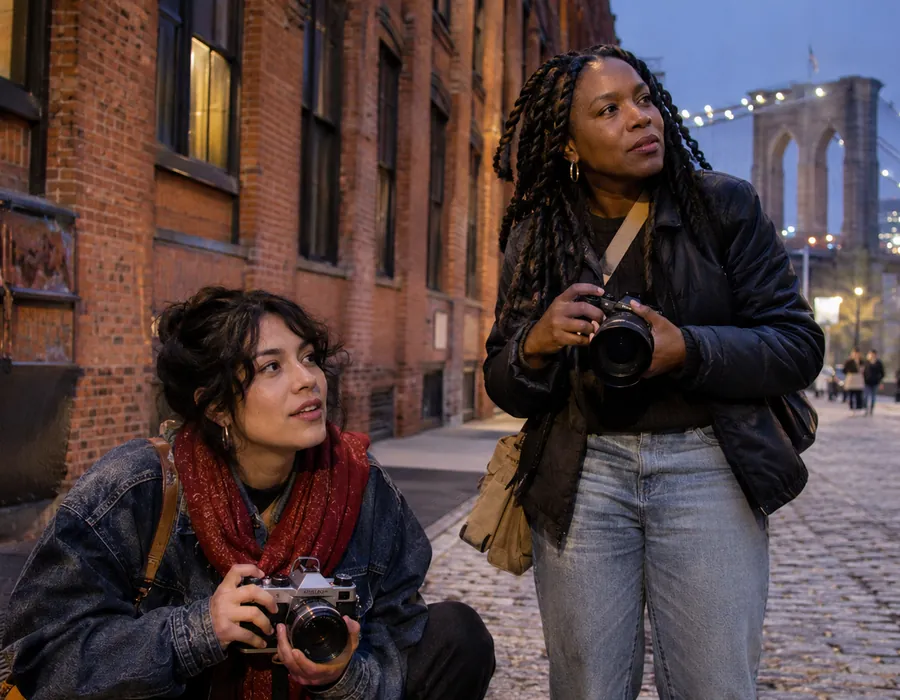 Photo walksA friendship circle for photographers in Abu Dhabi, phone or camera, who want company on walks around the city.
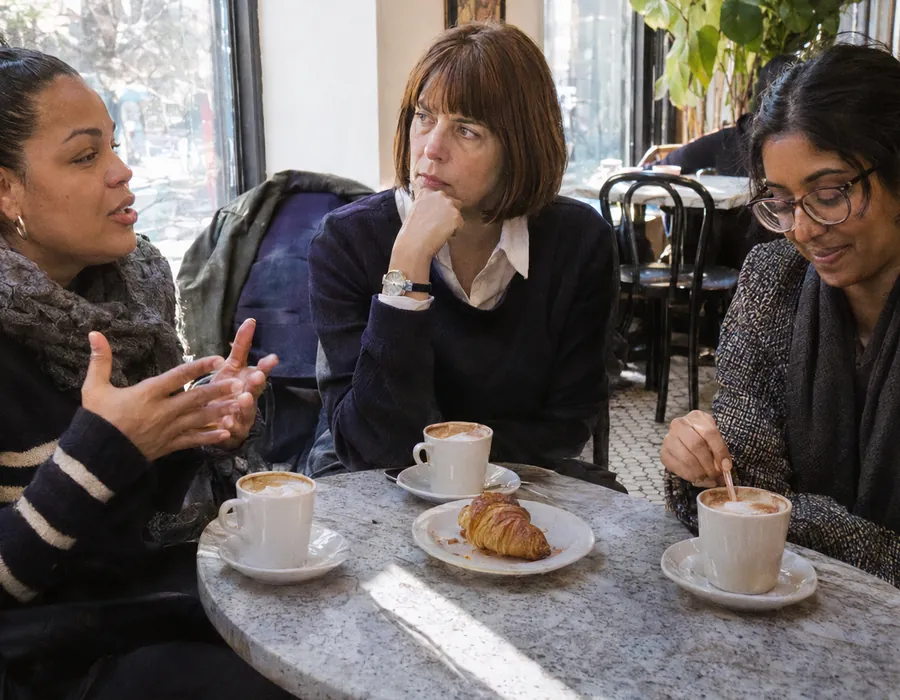 Coffee & conversationA friendship circle for people who enjoy cafés and unhurried conversation in Abu Dhabi. Low-pressure first meetings in small groups, close to home.
Where to meet in Abu Dhabi
Public places picked for small groups of 3 to 10, sorted by interest and area.